Published on December 19, 2025 by AG - Content Manager • 10 min read
Trading fees may look small, but they can quietly reduce your profit on every order. A difference of only 0.02% may not seem important in one trade, but it can become a serious cost after hundreds of spot or futures transactions.
That is why understanding Bitunix trading fees is important before placing your first order. The platform uses a maker and taker fee model for both spot and futures trading, with lower fees available through its VIP system.
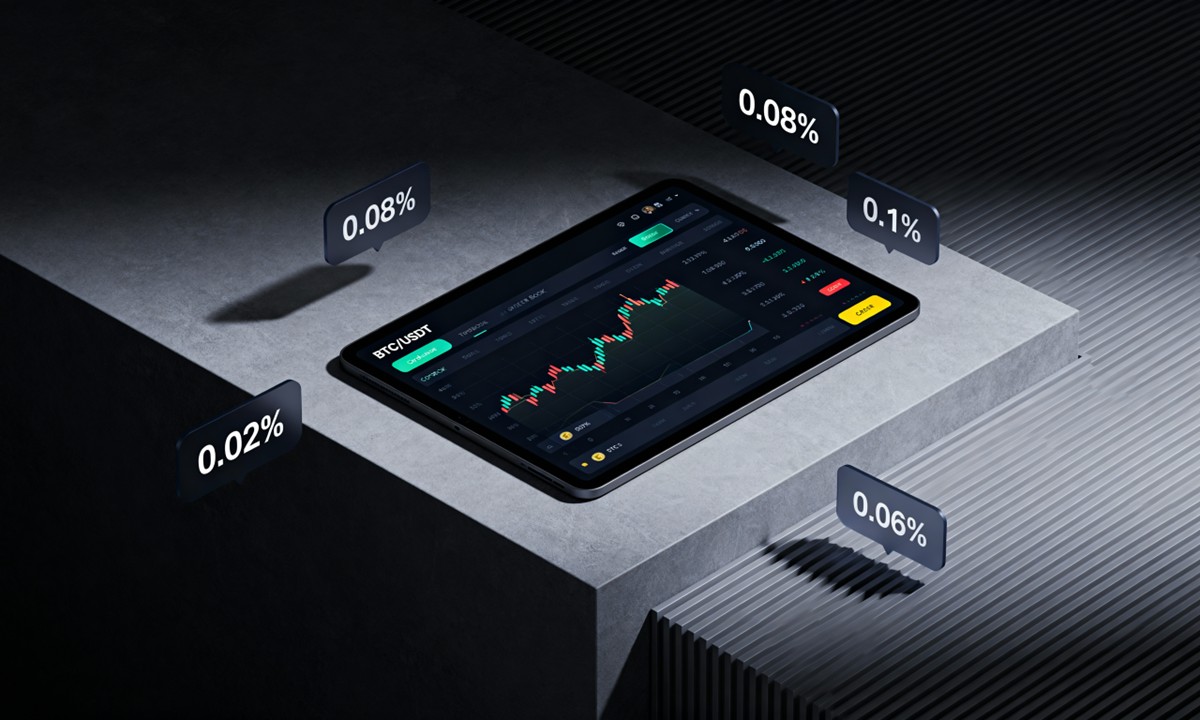
For standard VIP 0 users, Bitunix spot trading fees start at 0.0800% maker and 0.1000% taker. Futures trading fees start at 0.0200% maker and 0.0600% taker. These rates make Bitunix a cost-efficient option for traders who want access to both spot and derivatives markets from one platform.
This guide explains Bitunix fees in simple terms, including spot fees, futures fees, VIP discounts, deposit fees, withdrawal fees, and how Bitunix compares with Kraken.
What Are Bitunix Trading Fees?
Bitunix trading fees are the charges paid when users buy, sell, or trade cryptocurrencies on the platform. These fees apply whenever an order is executed in the spot or futures market.
Bitunix uses two main types of trading fees:
Maker fee: Charged when your order adds liquidity to the order book. This usually happens when you place a limit order that does not execute immediately.
Taker fee: Charged when your order removes liquidity from the order book. This usually happens when you place a market order or an order that executes immediately against an existing order.
In simple terms, maker fees are usually lower because they help create liquidity, while taker fees are slightly higher because they use existing liquidity.
Bitunix Spot Trading Fees
Spot trading means buying or selling crypto directly at the current market price. For example, if you buy BTC, ETH, SOL, or XRP on the spot market, you own the asset after the trade is completed.
For VIP 0 users, Bitunix spot trading fees are:
VIP Level
Spot Maker Fee
Spot Taker Fee
VIP 0
0.08%
0.10%
This means that if you place a $1,000 spot trade:
Order Type
Fee Rate
Estimated Fee
Maker Order
0.08%
$0.80
Taker Order
0.10%
$1.00
For regular spot traders, this fee structure is easy to understand. The more frequently you trade, the more important these small fee differences become.
Bitunix Futures Trading Fees
Futures trading allows users to trade contracts based on the price movement of a crypto asset without directly owning the asset. Traders can open long or short positions and use leverage to increase market exposure.
For VIP 0 users, Bitunix futures trading fees are:
VIP Level
Futures Maker Fee
Futures Taker Fee
VIP 0
0.02%
0.06%
This means that if you open a $1,000 futures position:
Order Type
Fee Rate
Estimated Fee
Maker Order
0.02%
$0.20
Taker Order
0.06%
$0.60
Futures fees are especially important for active traders because futures positions may involve opening fees, closing fees, and funding rate costs depending on how long the position is held.
Bitunix VIP Trading Fees
Bitunix uses a VIP system that gives lower trading fees to users with higher 30-day trading volume or larger account balances. This structure is useful for active traders because the cost per trade decreases as trading activity increases.
Here is the Bitunix VIP fee structure:
VIP Level
Spot Maker / Taker
Futures Maker / Taker
VIP 0
0.0800% / 0.1000%
0.0200% / 0.0600%
VIP 1
0.0700% / 0.0900%
0.0200% / 0.0500%
VIP 2
0.0600% / 0.0800%
0.0160% / 0.0500%
VIP 3
0.0350% / 0.0600%
0.0140% / 0.0400%
VIP 4
0.0200% / 0.0500%
0.0120% / 0.0375%
VIP 5
0.0150% / 0.0450%
0.0100% / 0.0350%
VIP 6
0.0125% / 0.0375%
0.0080% / 0.0315%
VIP 7
0.0100% / 0.0325%
0.0060% / 0.0300%
At the highest VIP 8 level, spot maker fees can drop to 0.0048%, while futures maker fees can drop to 0.0000%. This can make a major difference for users who trade large volumes or use frequent short-term trading strategies.
Bitunix VIP Requirements
Bitunix VIP levels are based on 30-day spot trading volume, 30-day futures trading volume, or account balance. Users only need to meet one of the listed conditions to qualify for the corresponding VIP level.
VIP Level
30-Day Spot Volume
30-Day Futures Volume
Balance
VIP 0
Below 100,000 USDT
Below 1,000,000 USDT
Below 1,000 USDT
VIP 1
100,000 USDT
1,000,000 USDT
1,000 USDT
VIP 2
500,000 USDT
5,000,000 USDT
10,000 USDT
VIP 3
800,000 USDT
8,000,000 USDT
50,000 USDT
VIP 4
2,000,000 USDT
20,000,000 USDT
200,000 USDT
VIP 5
4,000,000 USDT
50,000,000 USDT
1,000,000 USDT
VIP 6
6,000,000 USDT
100,000,000 USDT
2,000,000 USDT
VIP 7
8,000,000 USDT
200,000,000 USDT
3,000,000 USDT
VIP 8
100,000,000 USDT
500,000,000 USDT
–
The biggest discounts are designed for high-volume traders, but even the standard VIP 0 rates remain competitive for users who are just starting out.
How Much Are Bitunix Fees on a Real Trade?
Here is a simple example of using a $10,000 trade.
Spot Trading Example
Order Type
VIP 0 Fee Rate
Fee on $10,000
Maker
0.08%
$8.00
Taker
0.10%
$10.00
Futures Trading Example
Order Type
VIP 0 Fee Rate
Fee on $10,000
Maker
0.02%
$2.00
Taker
0.06%
$6.00
This is why futures traders usually pay close attention to maker and taker rates. A trader who opens and closes many positions per week can save more by using limit orders and qualifying for higher VIP tiers.
Does Bitunix Charge Deposit Fees?
Bitunix does not charge crypto deposit fees. However, users should still check whether their external wallet, bank, payment provider, or blockchain network charges any separate fee.
For crypto deposits, the main cost usually comes from the network used to send the asset. For example, the withdrawal fee from another platform may depend on whether the user selects Ethereum, TRON, BNB Smart Chain, or another supported network.
Does Bitunix Charge Withdrawal Fees?
Yes, Bitunix charges withdrawal fees depending on the asset and blockchain network selected. These fees are usually used to cover blockchain network costs.
Withdrawal fees are not fixed across every asset because different networks have different costs. Before confirming a withdrawal, users should always check the live withdrawal fee shown on the platform.
Are There Hidden Fees on Bitunix?
Bitunix displays trading fees, funding-related costs, and withdrawal fees on the platform. However, users should still understand that total trading cost may include more than the basic maker or taker fee.
Possible trading-related costs include:
Spot trading fees
Futures trading fees
Funding rates on perpetual futures
Withdrawal fees
Spread between buy and sell prices
Network fees from external wallets
For futures traders, funding rates are especially important. Even if the trading fee is low, funding costs can affect profitability when a position is held for a longer period.
How to Reduce Trading Fees on Bitunix
There are several ways to reduce the total cost of trading on Bitunix.
Use Maker Orders When Possible
Maker orders usually have lower fees than taker orders. Traders can use limit orders to add liquidity instead of immediately taking liquidity from the order book.
Increase VIP Level
Higher VIP levels unlock lower spot and futures trading fees. Traders who trade frequently may benefit from monitoring their 30-day volume and account balance.
Avoid Unnecessary Overtrading
Low fees are useful, but overtrading can still reduce profitability. Traders should focus on quality trade setups instead of placing too many unnecessary orders.
Check Funding Rates Before Holding Futures Positions
Funding rates can change depending on market conditions. Before holding a futures position for many hours or days, traders should check whether funding may increase the total cost.
Choose the Right Withdrawal Network
Withdrawal fees vary by asset and network. Selecting the correct network can help reduce unnecessary transfer costs, but users must ensure the receiving wallet supports the same network.
Bitunix Fees vs Kraken Fees
Bitunix and Kraken both use maker and taker fee models, but their fee structures are different.
For spot trading, Bitunix VIP 0 fees start at 0.0800% maker and 0.1000% taker. Kraken’s fee structure depends on the specific product and interface used, with Kraken Pro offering maker and taker fees through a volume-based model.
For derivatives, Kraken’s listed starting fees are 0.0200% maker and 0.0500% taker, while Bitunix starts at 0.0200% maker and 0.0600% taker for VIP 0 futures users. However, Bitunix futures fees can fall to 0.0060% maker and 0.0300% taker at VIP 7.
Platform
Spot Fees
Futures Fees
Bitunix VIP 0
0.0800% / 0.1000%
0.0200% / 0.0600%
Bitunix VIP 7
0.0100% / 0.0325%
0.0060% / 0.0300%
Kraken Derivatives Starting Fees
Product-dependent
0.0200% / 0.0500%
Kraken may appeal to users who prioritize a long operating history and broader fiat services. Bitunix may be more attractive for users who want lower spot fees at the entry level and strong VIP discounts for active trading.
Is Bitunix Good for Low-Fee Trading?
Bitunix can be a strong option for traders who want access to spot and futures markets with competitive maker and taker fees. The platform is especially relevant for users who trade frequently, use futures, or want to reduce trading costs through VIP levels.
The most important advantage is that the fee structure is simple to understand. New users can start with clear VIP 0 rates, while active traders can work toward lower fees through higher volume or larger balances.
Conclusion
Bitunix trading fees are designed to support both beginner and active crypto traders. Standard VIP 0 users pay 0.0800% maker and 0.1000% taker on spot trades, while futures traders pay 0.0200% maker and 0.0600% taker.
The VIP system makes the platform more cost-efficient as trading activity increases. At higher levels, users can access significantly lower maker and taker fees across both spot and futures markets.
For traders who care about fee efficiency, Bitunix offers a clear and competitive structure. Before trading, users should also consider funding rates, withdrawal fees, spreads, and overall risk management, especially when using futures or leverage.
FAQ
What are Bitunix trading fees?
Bitunix trading fees are the charges paid when users buy, sell, or trade crypto on the platform. VIP 0 spot fees start at 0.0800% maker and 0.1000% taker, while VIP 0 futures fees start at 0.0200% maker and 0.0600% taker.
Are Bitunix futures fees lower than spot fees?
Yes. Bitunix futures fees are lower than spot fees at the standard VIP 0 level. Futures fees start at 0.0200% maker and 0.0600% taker, while spot fees start at 0.0800% maker and 0.1000% taker.
Does Bitunix have VIP fee discounts?
Yes. Bitunix has a VIP system that reduces trading fees based on 30-day trading volume or account balance. Higher VIP levels receive lower maker and taker fees.
Does Bitunix charge deposit fees?
Bitunix does not charge crypto deposit fees. However, external wallets, payment providers, or blockchain networks may charge separate fees.
Does Bitunix charge withdrawal fees?
Yes. Withdrawal fees depend on the cryptocurrency and blockchain network used. Users should check the live withdrawal fee before confirming any transfer.
Is Bitunix cheaper than Kraken?
Bitunix has lower entry-level spot fees than many platforms and offers strong VIP discounts. Kraken derivatives starting fees are slightly lower on taker fees at the base level, but Bitunix futures fees can become lower at higher VIP levels.
Glossary
Maker Fee: A trading fee charged when an order adds liquidity to the order book.
Taker Fee: A trading fee charged when an order executes immediately and removes liquidity from the order book.
Spot Trading: Buying or selling crypto directly at the current market price.
Futures Trading: Trading contracts based on the price movement of an asset without directly owning it.
VIP Tier: A user level that gives lower trading fees based on trading volume or account balance.
Funding Rate: A periodic payment exchanged between long and short futures traders.
Liquidity: The ease of buying or selling an asset without strongly affecting its market price.
Spread: The difference between the best available buy price and sell price.
About Bitunix
Bitunix is a global cryptocurrency derivatives exchange trusted by over 5 million users across more than 100 countries. The platform is committed to providing a transparent, compliant, and secure trading environment for every user. Bitunix offers a fast registration process and a user-friendly verification system supported by mandatory KYC to ensure safety and compliance. With global standards of protection through Proof of Reserves (POR) and the Bitunix Care Fund, Bitunix prioritizes user trust and fund security. The K-Line Ultra chart system delivers a seamless trading experience for both beginners and advanced traders, while leverage of up to 200x and deep liquidity make Bitunix one of the most dynamic platforms in the market.
Disclaimer: Trading digital assets involves risk and may result in the loss of capital. Always do your own research. Terms, conditions, and regional restrictions may apply.
Table Of Contents
Ready To Place Your Next Trade?
Choose a market, set your order, and manage risk in one place.
AG | Content Manager | Bitunix
May 27, 2026 No Comments
Learn how stablecoin regulation in 2026, the GENIUS Act, AML rules, DeFi yield limits, and stablecoin payments may affect crypto traders and everyday users.
AG | Content Manager | Bitunix
May 27, 2026 No Comments
Discover which Layer 1 blockchains will survive 2026 and learn how traders can park liquidity long-term across the best L1 crypto networks with Bitunix tools.