Published on April 15, 2026 by AG - Content Manager • 26 min read
Summary
• Under heavy pressure from the U.S.-Iran geopolitical conflict, crypto assets such as BTC and ETH remained in a low-range consolidation phase. • The Ethereum Foundation published an article outlining its vision for L1 and L2 collaboration, clarifying the role of each layer. • The Solana Foundation launched SDP, an AI-enabled developer platform. • ListaDAO entered the top 10 gas fee ranking for the first time, generating about $310,000 in fees on BNB Chain. • Kalshi and Polymarket continued to widen their lead in the prediction market sector. • The U.S. Clarity Act draft proposed restrictions on stablecoin rewards, causing Circle’s stock price to fall by as much as 18%.
Digital Gold: Bitcoin
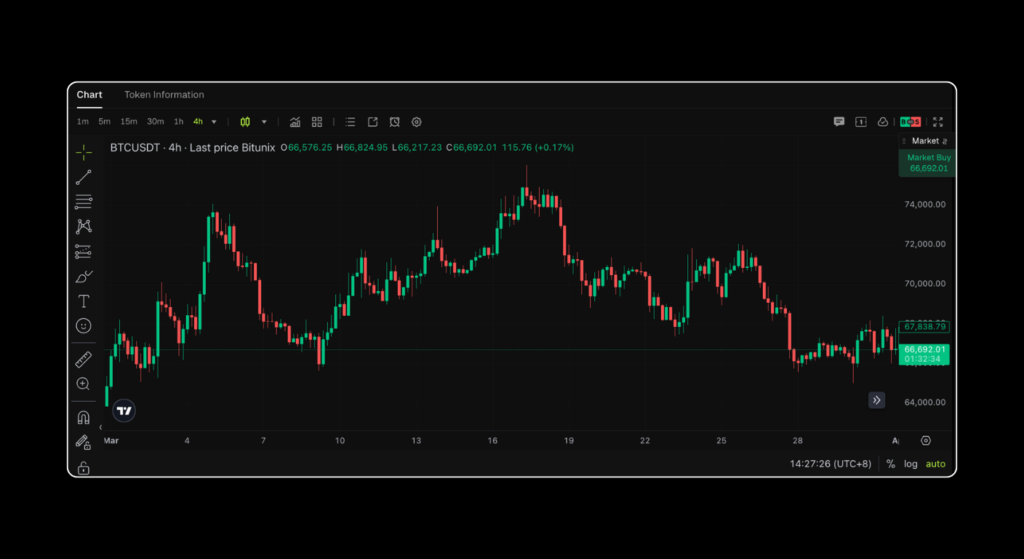
In March 2026, the global macro environment remained under heavy pressure from the U.S.-Iran geopolitical conflict. Risk assets were broadly constrained by the evolving situation and failed to build sustained rebound momentum. At the beginning of the month, signs of U.S.-Iran peace talks briefly improved risk appetite, pushing BTC toward the $75,000 resistance level. However, as geopolitical uncertainty intensified again, major assets quickly gave back their gains and moved back into a downward channel.
By the end of March, risk-off sentiment remained strong. BTC traded in a narrow $66,000 to $69,000 range, suggesting that both bulls and bears remained cautious amid multiple external shocks. Overall, the market stayed in a consolidation phase without a clear trend.
Bitcoin Futures Market
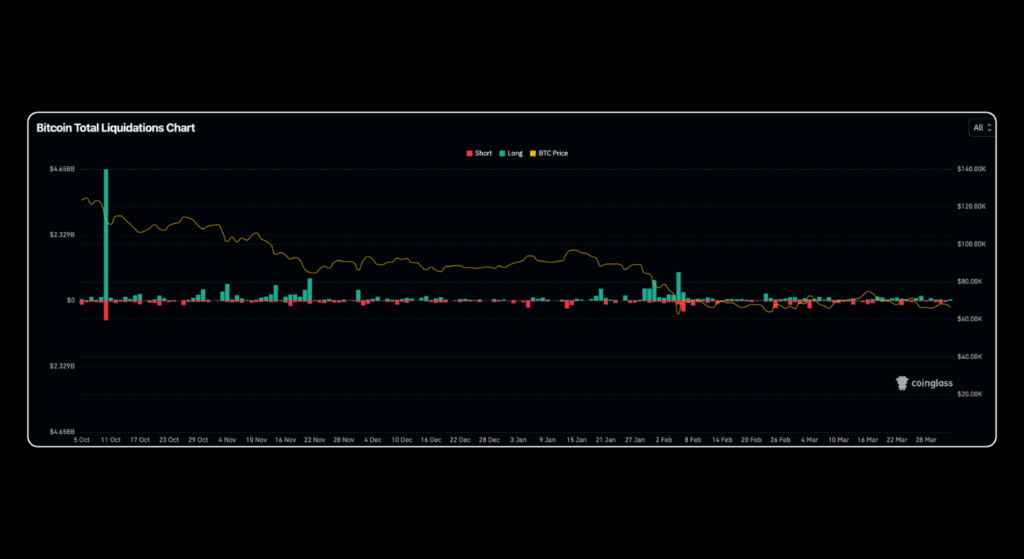
Compared with February, BTC mainly traded in a low-range consolidation pattern in March. As market volatility narrowed, liquidation volume fell sharply. The largest single-day liquidation event occurred on March 4. Driven by a brief price rally, short liquidations reached $274 million, while long liquidations totaled $40 million, bringing total liquidations across the market to $314 million. Overall, cumulative liquidations in March were far lower than in February, suggesting that market leverage had been partially flushed out during the range-bound phase and speculative sentiment had become more cautious.
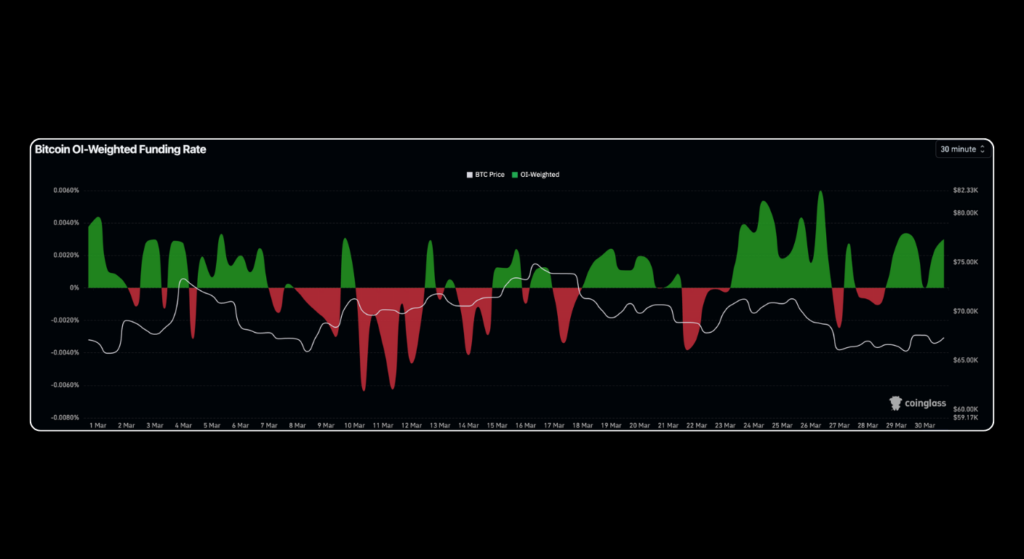
From the perspective of BTC futures funding rates, bearish sentiment dominated the market in March, with rates generally fluctuating within a low range. The monthly low occurred on March 11, when the funding rate dropped to -0.0064%, indicating that bearish sentiment was strongest at that time. Although funding rates later recovered, the monthly high only reached 0.0060% on March 27. Across the month, dominant short positioning reflected cautious market expectations around macro and geopolitical risks, while the long-side leverage premium had clearly narrowed.
Bitcoin Options Market
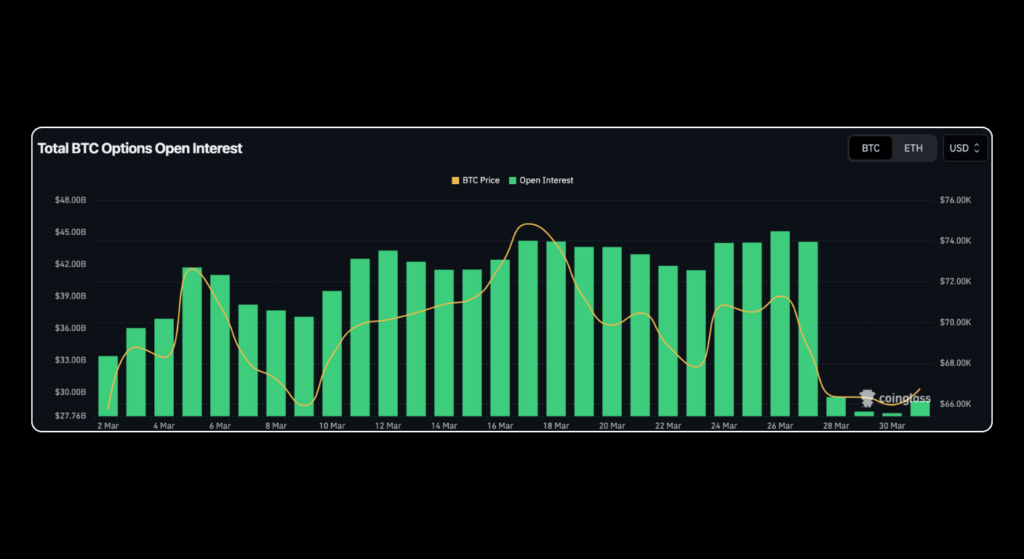
Looking at aggregate BTC options open interest, market participation rose significantly in March compared with February. Data showed that from March 11 to March 24, aggregate notional open interest remained above $40 billion. In comparison, February saw only two days above this threshold. This indicates that institutional and hedging funds showed stronger interest in positioning during the month.
Later, affected by the quarterly options expiry at the end of March, some positions were closed for profit-taking or settled at expiry, causing aggregate options open interest to fall back to around $28 billion. Overall, the increase in open interest during March reflected a deeper use of derivatives for both risk hedging and directional positioning in a volatile market environment.
Bitcoin Institutional Holdings
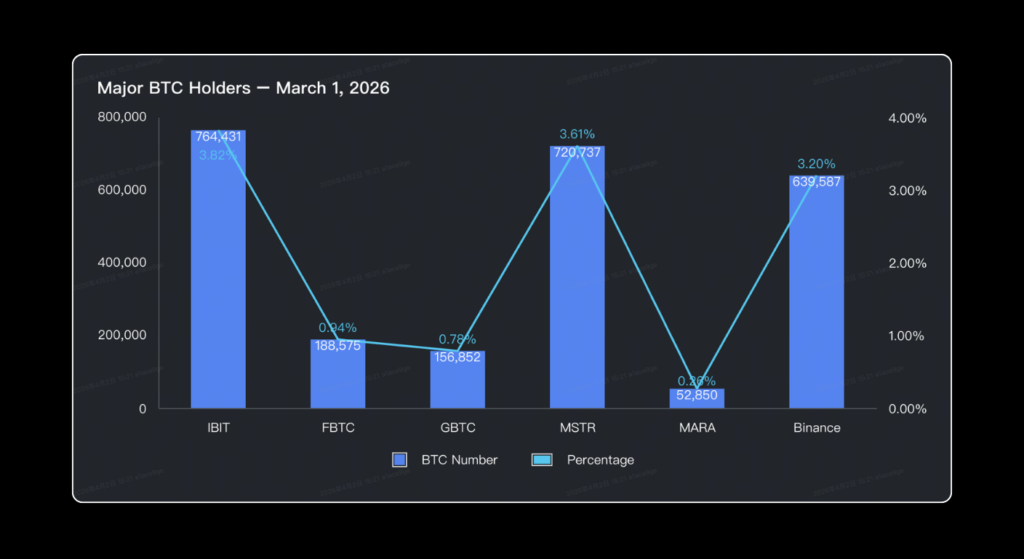
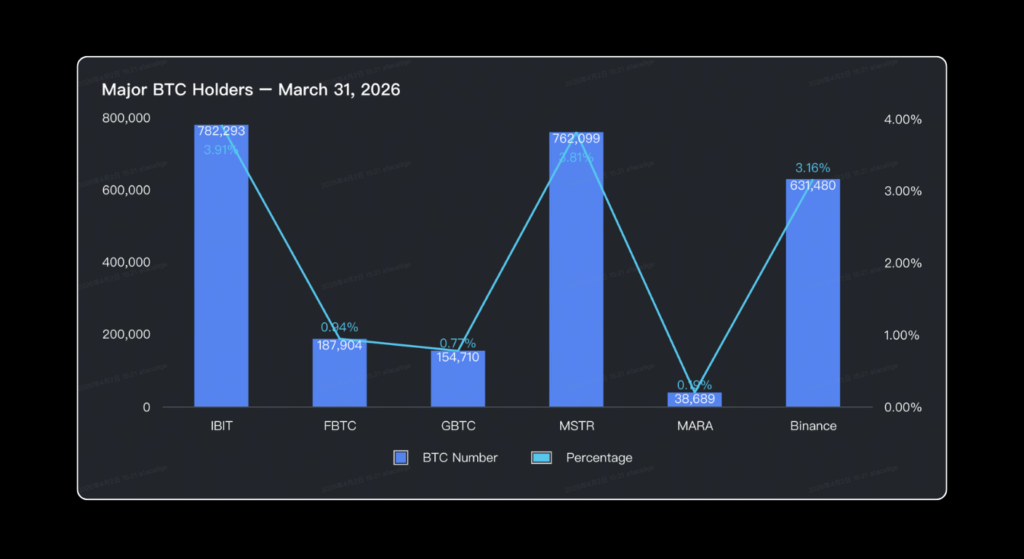
Institutional holdings showed clear divergence in March 2026. As BTC traded at a relatively low level, spot ETFs and corporate treasuries recorded strong net inflows. BlackRock’s IBIT increased its holdings by 17,862 BTC during the month, raising its share of total BTC supply to 3.91%. Strategy also added 41,362 BTC, lifting its share to 3.81%.
In contrast, mining companies generally reduced their holdings. Marathon sold 14,161 BTC to repay convertible debt, while Bitfarms confirmed during its March 31 earnings call that it had liquidated its holdings and announced a full transition toward AI infrastructure. This pattern of institutional accumulation and miner selling shows that the market’s underlying logic is shifting from mining-based production toward asset allocation and hashrate redistribution.
Bitcoin Network Hashrate
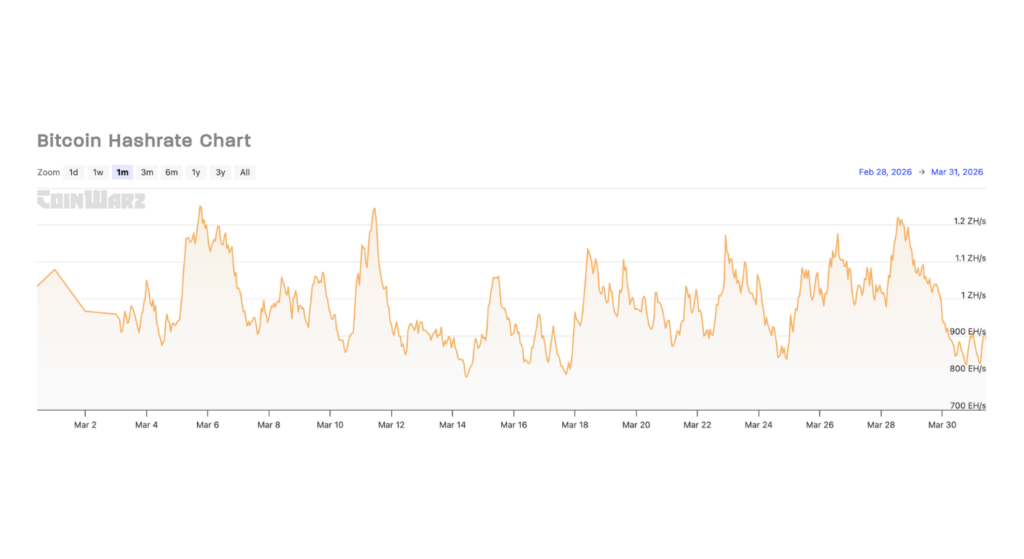
Affected by instability in the Middle East geopolitical situation, Bitcoin’s network hashrate fluctuated within a wider range in March 2026. It briefly dropped below 800 EH/s and later climbed above 1,200 EH/s, reflecting the impact of external factors on miner behavior and network stability.
According to Checkonchain’s difficulty-adjusted cost model, the average production cost for Bitcoin miners is currently around $88,000, while the spot price is around $70,000. This implies an average loss of about 21%, placing miners under pressure. On the energy side, oil prices rose above $100, while expectations of tighter supply caused by a potential blockade of the Strait of Hormuz further pushed up electricity costs and intensified operating pressure for miners.
Against this backdrop, several listed mining companies, including Marathon, Cipher, Core Scientific, and Bitfarms, are accelerating business diversification. Some resources are being redirected toward AI and high-performance computing, or HPC, to hedge against profitability pressure caused by crypto mining cycles.
Ethereum: The World Computer
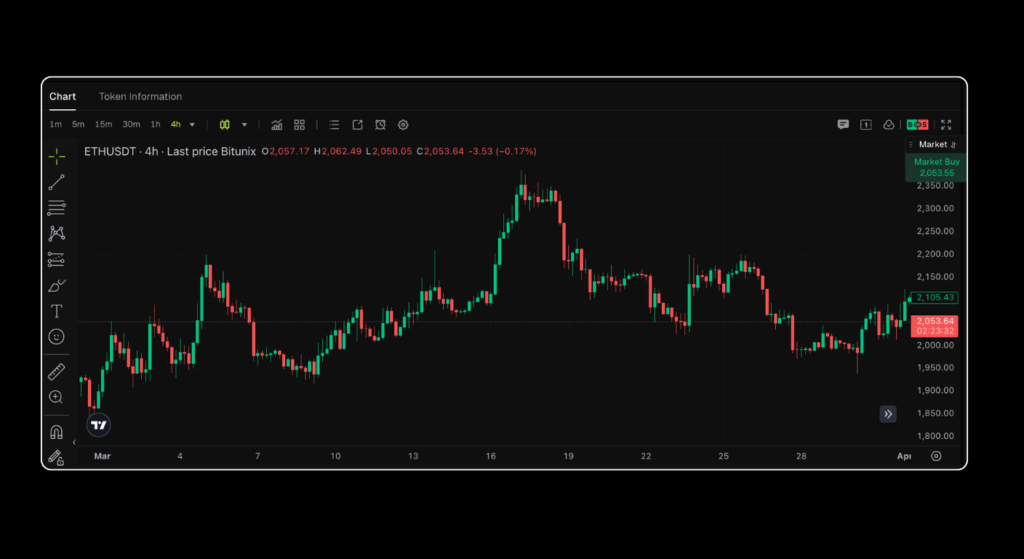
Compared with BTC, ETH showed stronger relative price resilience in March 2026. Starting from around $1,930 on March 1, ETH rebounded to a mid-month high of around $2,385, representing a gain of 23.57%. Although it later pulled back to around $1,938 by month-end, it still remained above its opening level for the month, indicating relatively firm downside support.
By comparison, BTC faced more pressure over the same period. BTC started the month around $66,000 and rebounded to a mid-month high of $76,000, a gain of 15.15%. However, it later fell back to around $65,000, slipping below its opening level. Overall, ETH showed stronger downside resistance and price resilience during this round of market volatility, reflecting some structural divergence in capital allocation among major crypto assets.
Ethereum Futures Market
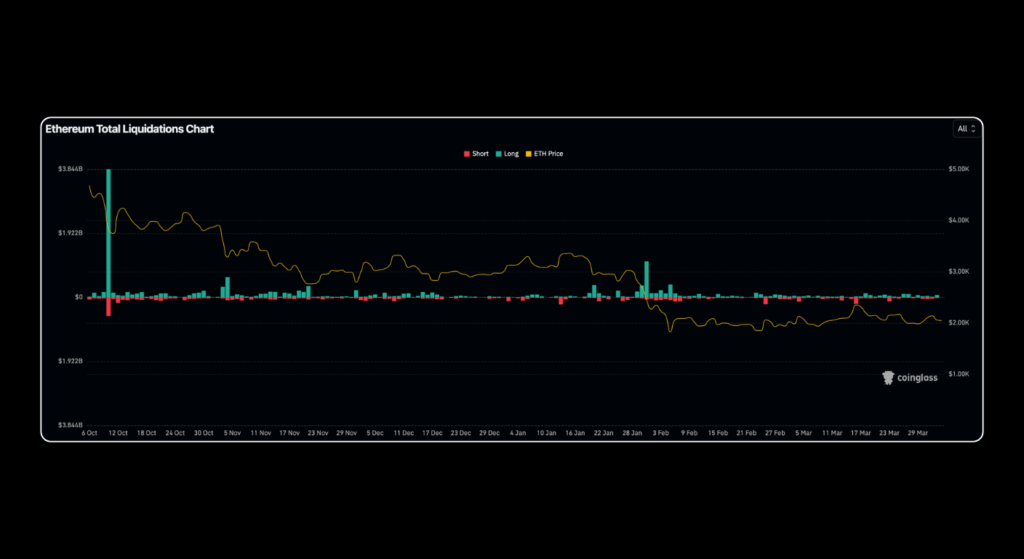
Due to ETH’s notable price resilience in March, the liquidation structure in the derivatives market was clearly skewed toward short positions. Overall, liquidations during the month were mainly concentrated in shorts, showing that the market had mispriced ETH’s upside momentum to some extent.
On a daily basis, March 16 marked the monthly liquidation peak. ETH rose sharply and broke above the $2,300 level, causing short liquidations of nearly $200 million, while long liquidations were only around $30 million. This showed a clear short squeeze pattern. In addition, short liquidations on March 23 reached around $124 million, the second-highest level of the month. Overall, multiple rounds of concentrated short liquidations during the rebound further strengthened ETH’s short-term upside momentum structure.
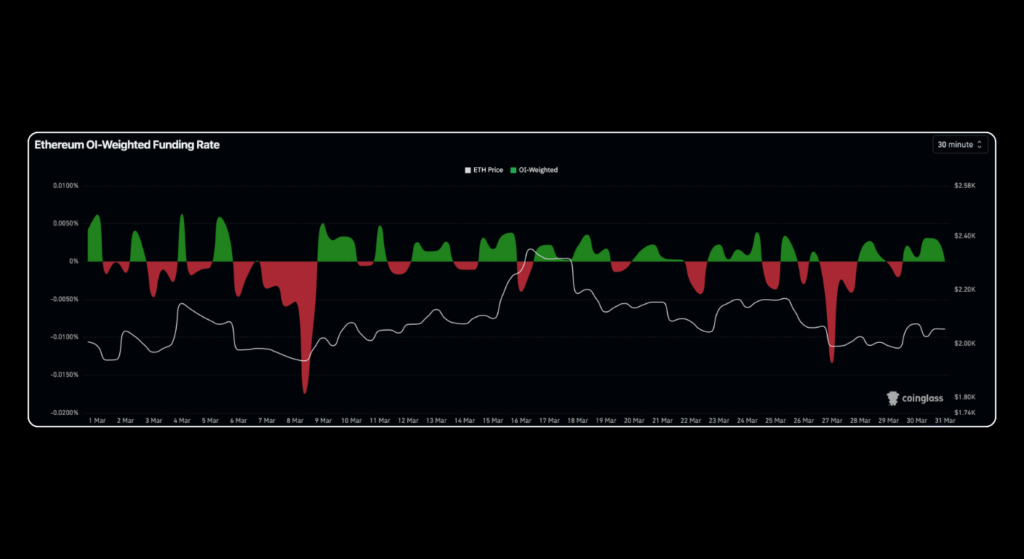
From the funding rate perspective, ETH futures market sentiment was similar to BTC, with bearish sentiment still dominant overall. On March 8, the ETH futures funding rate dropped to -0.0175%, the lowest level of the month. This indicated that short positioning dominated and shorts were paying funding costs, reflecting cautious or even bearish investor expectations toward short-term price action.
Ethereum Options Market
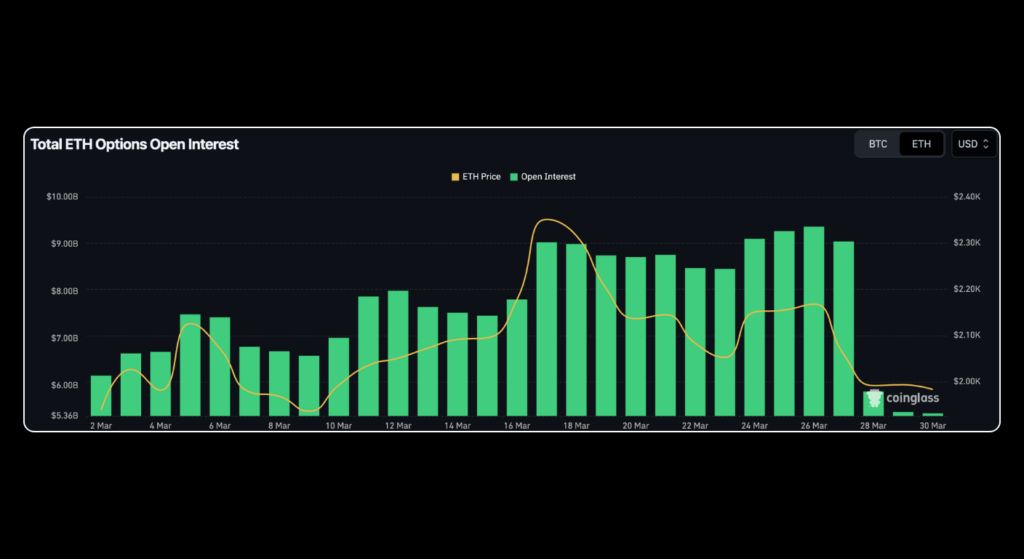
In March 2026, ETH options open interest recovered significantly from February, with the average size increasing from around $6 billion to around $8 billion. This showed that derivatives market participation and capital activity both strengthened.
From March 17 to March 27, open interest climbed above $9 billion, reflecting greater market attention toward volatility and directional opportunities. As the quarterly options expiry approached at the end of March, some positions were closed for profit-taking or settled at expiry, causing aggregate open interest to fall back to the $5 billion to $6 billion range. Overall, the options market showed a typical pattern of expansion before expiry and contraction after expiry.
Ethereum Institutional Holdings
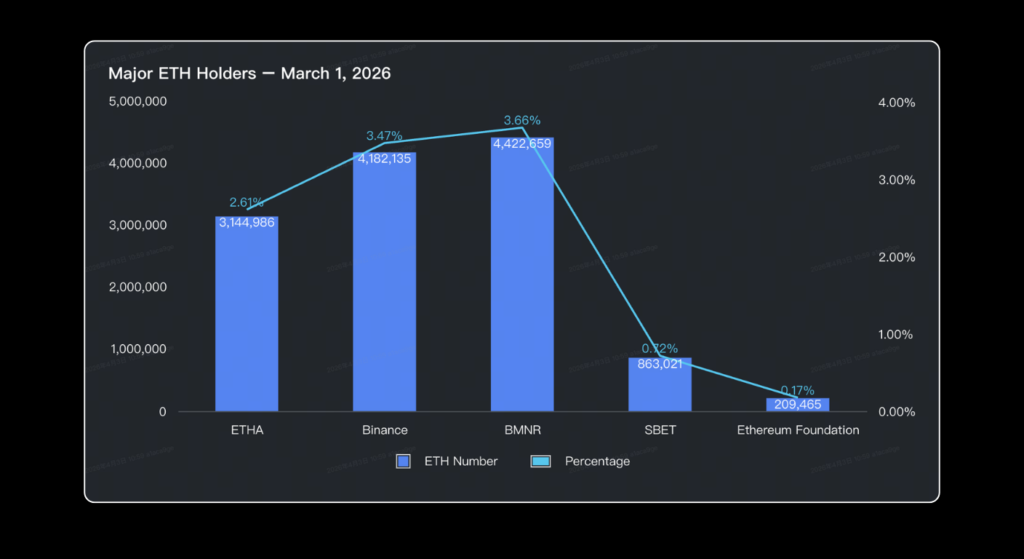
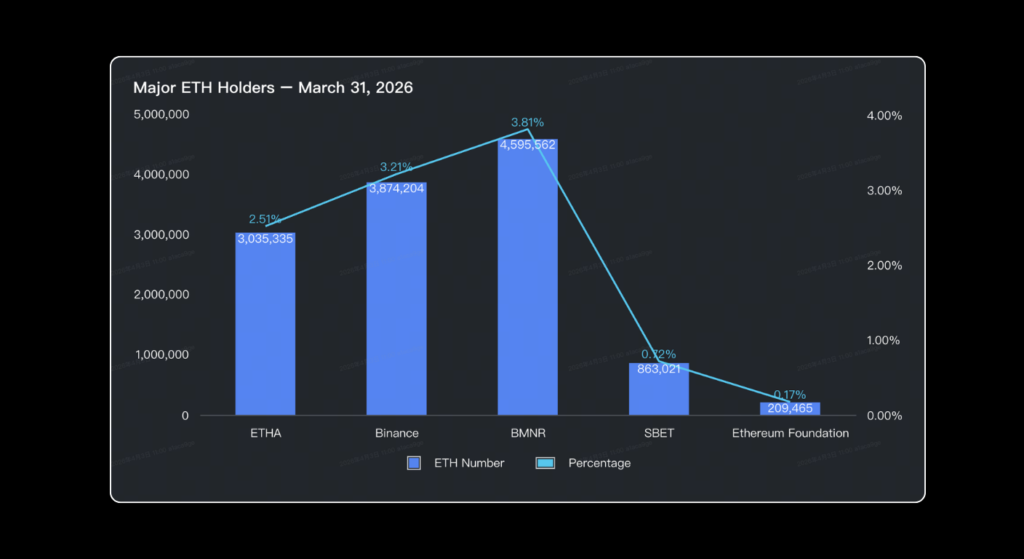
In March 2026, the structure of institutional ETH holdings largely continued its previous trend, with no major structural changes. BMNR continued to increase its ETH holdings, while BlackRock’s ETHA and Binance’s ETH holdings declined further. This widened the gap between BMNR and other institutions.
At present, BMNR’s ETH holdings have risen to 3.81%, keeping it firmly in place as the largest single institutional holder. At the business level, BMNR launched MAVAN in March, an institutional-grade Ethereum staking platform designed to provide institutional clients with secure, high-performance, and stable staking infrastructure.
Data showed that as of March 24, 2026, Bitmine had completed staking of about 3.1426 million ETH. This reflects the acceleration of institutional capital into on-chain yield opportunities.
Ethereum Staking
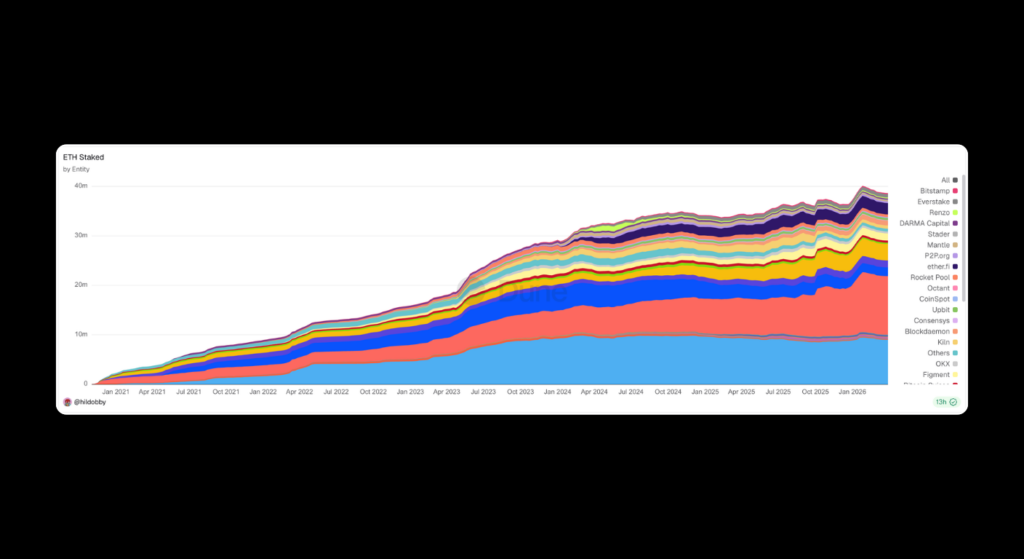
In March 2026, total ETH staked declined slightly overall, falling from around 38.95 million ETH at the beginning of the month to around 38.63 million ETH by month-end. This represented a net decrease of about 320,000 ETH, suggesting that some capital chose to exit staking or shift toward other allocation options in the short term.
By platform, Lido, the leading liquid staking platform, also saw its ETH staking volume fall from around 9.09 million ETH to 8.99 million ETH, in line with the broader trend. However, from the perspective of new staking demand, data on March 4 showed that around 3.4 million ETH was waiting to enter the validator queue, one of the longest queue levels since the network transitioned to proof of stake. The estimated waiting time reached as long as 60 days, a significant increase from around 904,000 ETH in early January.
Analysts believe the rapid expansion of the validator queue reflects that large investors, companies, and exchanges are more inclined to earn stable yield through staking rather than sell assets in the current market environment. This suggests that medium to long-term allocation demand remains resilient.
Data Overview
Major Public Blockchains
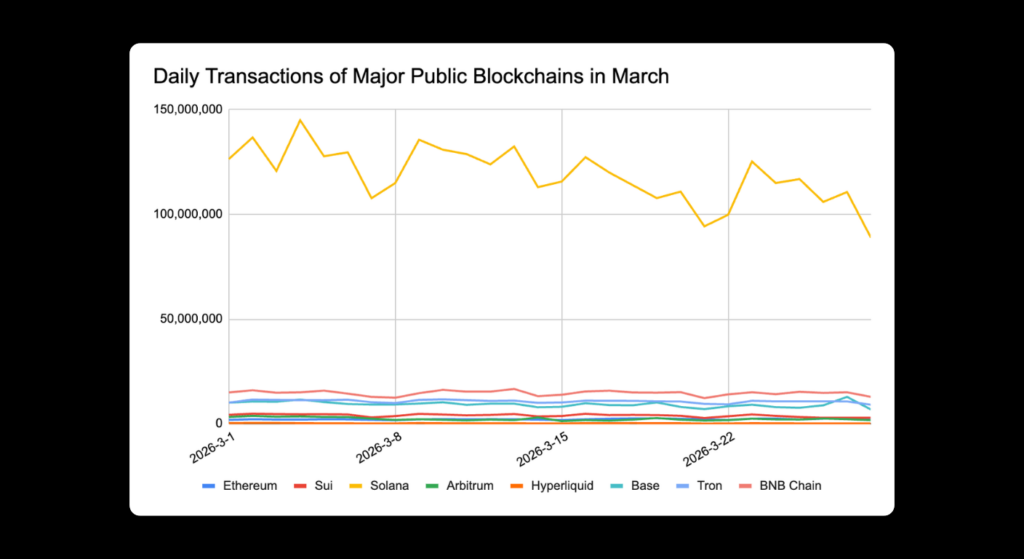
Affected by weaker overall market conditions, transaction activity across major public blockchains generally declined in March 2026. Solana recorded around 118 million average daily transactions, down slightly from the previous period, but still maintained its leading position. Apart from Solana, only BNB Chain and TRON recorded average daily transaction volume above 10 million, showing that on-chain activity remained concentrated.
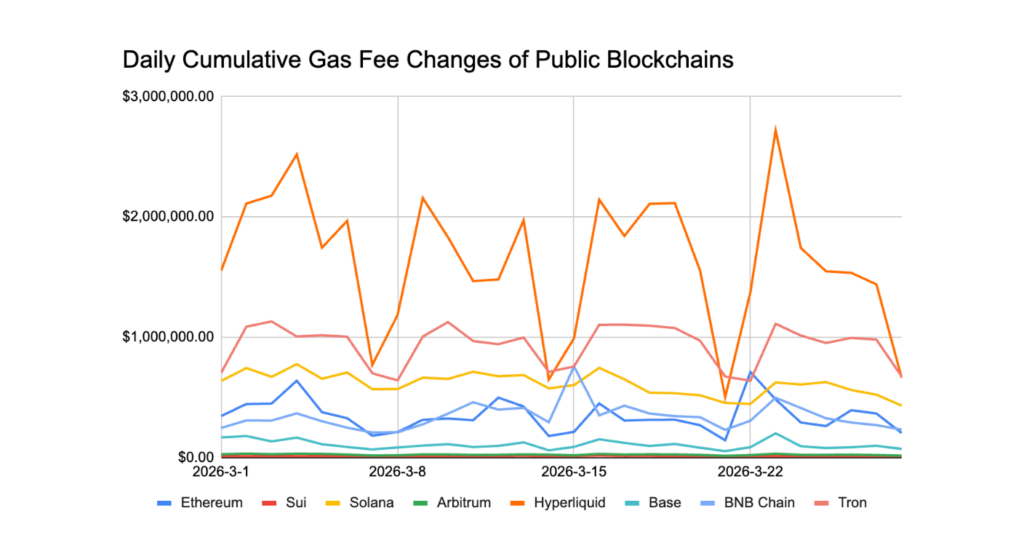
In terms of gas fees, the network where Hyperliquid is located still recorded the highest gas fees in the market, with average daily gas fees of around $1.61 million, slightly lower than February. TRON, supported by strong stablecoin transfer demand, saw its gas revenue rise significantly in March to an average of around $930,000 per day.
By comparison, Ethereum, Solana, and Base all saw varying degrees of decline in gas fee levels, reflecting a simultaneous cooling of overall on-chain usage demand and capital activity.
DEX and Perp DEX
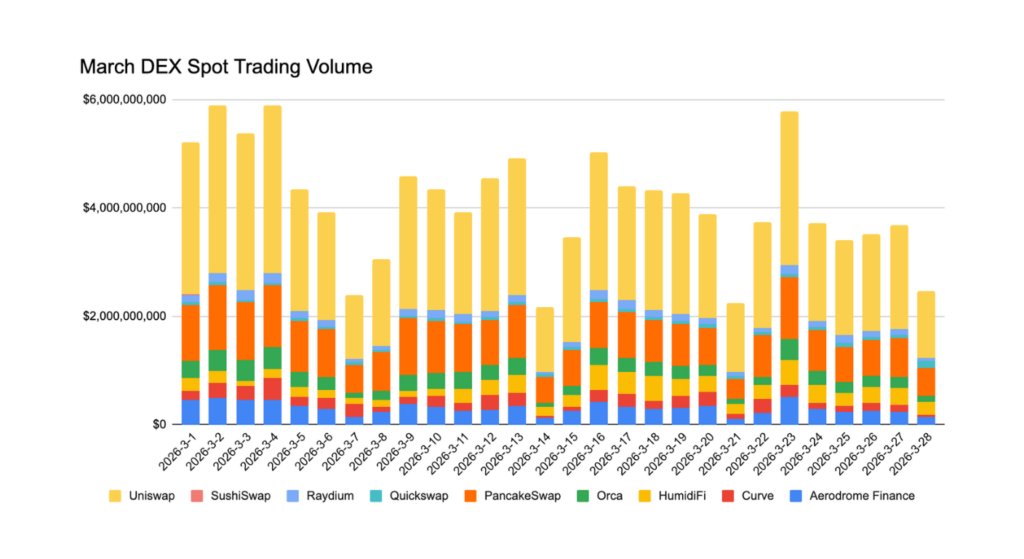
As Middle East geopolitical uncertainty intensified, risk-asset trading sentiment weakened overall. This was reflected not only in lower trading volume across traditional financial markets, but also in a clear slowdown across decentralized exchanges, or DEXs, in March 2026.
In spot DEX trading, Uniswap recorded average daily trading volume of around $2.09 billion, down 25.3% month over month. PancakeSwap recorded average daily trading volume of around $790 million, down 15.9% month over month. This reflected a significant decline in overall on-chain trading activity.
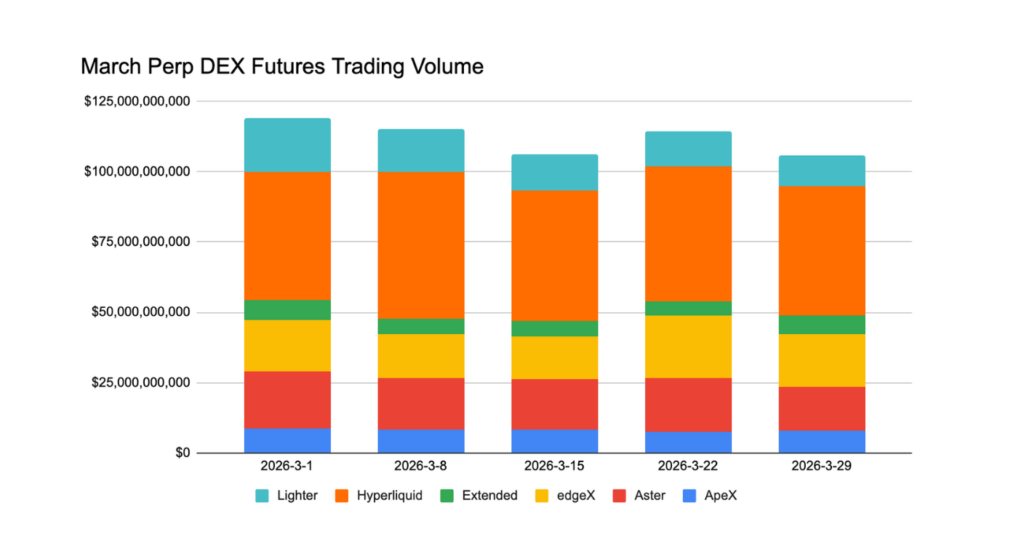
In perpetual DEX, or Perp DEX, trading, Hyperliquid recorded average daily trading volume of around $6.9 billion, only slightly lower than February, showing relative resilience. Aster, EdgeX, and Lighter ranked second to fourth by trading volume. Among them, EdgeX saw trading volume increase against the broader trend, mainly driven by the launch of its airdrop page, which significantly boosted users’ short-term trading motivation.
Prediction Markets
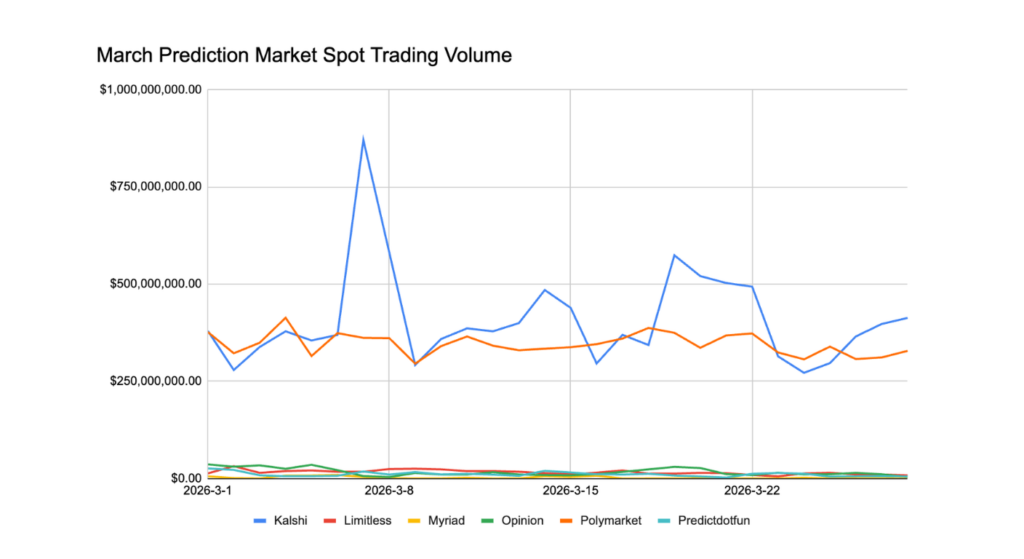
In the prediction market sector, trading volume became more concentrated among leading platforms in March 2026, with Kalshi and Polymarket continuing to widen their lead.
Kalshi reached average daily trading volume of $402 million, up about 15% month over month. Polymarket reached $341 million, up about 20% month over month, showing continued growth in overall market activity.
Structurally, Kalshi’s trading volume was highly concentrated in sports, with related prediction markets accounting for more than 80% of its volume. The platform also strengthened its brand and traffic channels by signing NBA players such as Giannis Antetokounmpo and Devin Booker. By contrast, Polymarket had a more balanced business structure, covering sports, crypto markets, macroeconomic data, and other themes.
On the other hand, Opinion’s market share declined sharply. Its average daily trading volume fell to around $16 million in March, down 85% from February. This shows that mid-tier and long-tail platforms are facing clear pressure in liquidity and user scale. Overall, the prediction market sector is becoming increasingly concentrated among leading platforms, showing a clear “strong get stronger” pattern.
On-Chain Gas Fee Ranking by Contract Address
Artemis summarized and analyzed gas fee sources across multiple public blockchains in March, including Ethereum, Solana, BNB Chain, and TRON. Data showed that among many contract addresses, Tether’s contract on TRON still contributed the highest gas fees, reaching $24.039 million, up by more than $1 million from January. This continued to reflect high stablecoin transfer demand.
However, against the backdrop of global financial market volatility, on-chain activity for most applications cooled. Cross-chain applications such as Pump.fun, Polymarket, and PancakeSwap all saw varying degrees of decline in contract gas consumption. On the other hand, ListaDAO entered the top 10 gas fee ranking for the first time, generating about $310,000 in fees on BNB Chain.
Ethereum Foundation Published an Article on the L1 and L2 Collaboration Vision, Clarifying Each Layer’s Role
On March 24, the Ethereum Foundation published a blog post stating that the relationship between L1 and L2 is being redefined as the ecosystem evolves. Its core goal is to allow all users to clearly access and scale the key properties provided by Ethereum.
In the past, the main role of L2 was to provide scalability for L1. Today, that role is shifting toward differentiated features, customized services, and innovation, while still supporting scaling. Meanwhile, L1 serves as a decentralized global settlement and liquidity hub with high security and censorship resistance.
As the technology matures, L2s not only extend the security and liquidity of L1, but also gradually form their own economies and communities. Through both competition and collaboration, they provide diverse application scenarios and blockspace. The future Ethereum ecosystem will be built on a strong L1 foundation while developing a highly interoperable L2 network with differentiated advantages. Each layer will take on different but complementary roles.
Solana Foundation Launched SDP, an AI-Enabled Developer Platform
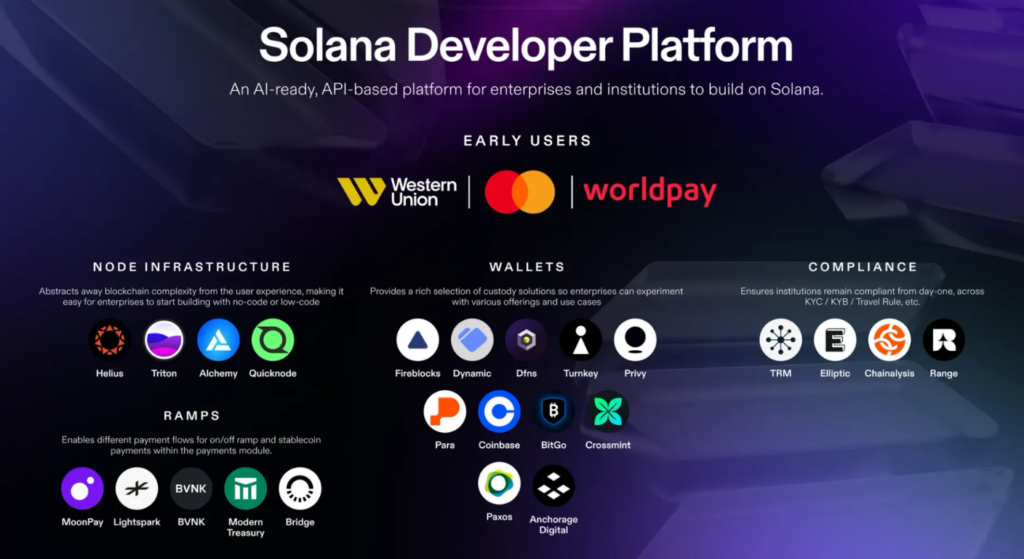
On March 24, the Solana Foundation launched the Solana Developer Platform, or SDP. SDP is an AI-ready developer platform for enterprises and financial institutions. Through API-based access, it allows users to build and launch financial products on Solana more easily.
The platform integrates multiple infrastructure components across the ecosystem and provides a unified interface. This enables enterprises to enter the market in a more efficient, compliant, and scalable way. SDP includes three core modules: issuance, payments, and trading.
At present, the issuance and payment modules have already gone live. They can help enterprises quickly build and scale institutional-grade blockchain solutions. Early adopters include Mastercard, Worldpay, and Western Union, which are using SDP for stablecoin settlement, merchant payments, and cross-border transfer scenarios.
On March 17, Stacks Labs announced that Stacks, its Bitcoin Layer 2 network, had completed the SIP-034 upgrade. By optimizing the transaction processing mechanism, the upgrade increased network capacity for some DeFi applications by up to about 30 times.
The upgrade was first approved through a governance vote last November and has now been officially deployed to mainnet. Developers can use the related improvements directly in real applications.
The core change is an adjustment to how resource limits are handled. In the past, whenever any resource limit was triggered, the system would reset all limits and stop further processing, causing remaining capacity to be wasted. Now, only the exhausted specific resource is reset, significantly improving overall resource utilization and allowing more transactions to be processed in a single block.
This improvement affects different applications in different ways. DeFi scenarios with high read frequency and complex logic, such as concentrated liquidity and advanced AMM designs, benefit the most. Overall, the upgrade effectively eased previous performance bottlenecks and unlocked greater potential for DeFi development on Layer 2.
Aave Launched v4 on Ethereum to Expand DeFi Into Real-World Credit Markets
In March, Aave accelerated the rollout of its V4 upgrade. On March 5, Aave Labs announced its V4 security plan, which includes a 345-day audit cycle and a $1.5 million budget. On March 14, Aave proposed a governance proposal to launch V4 on the Ethereum mainnet.
V4 uses a modular architecture and introduces Liquidity Hubs, or shared liquidity, and Spokes, independent lending environments with governance limits. It also plans topology design, a promotion pathway, and risk parameterization mechanisms.
On March 30, Aave launched V4 on Ethereum, with the goal of extending DeFi into real-world credit markets. This upgrade restructures the market mechanism, allowing different lending markets to operate independently while sharing capital pools. In the future, it will also support lending demand beyond crypto assets.
Founder Stani Kulechov stated that lending is built on trust and must reflect market conditions. At the same time, V4 also improves developer scalability and capital efficiency, allowing idle capital to be reused more effectively.
Market Indicators
Bitcoin May Have Entered the Middle Stage of a Bear Market, While Extreme Selling Has Become More Moderate
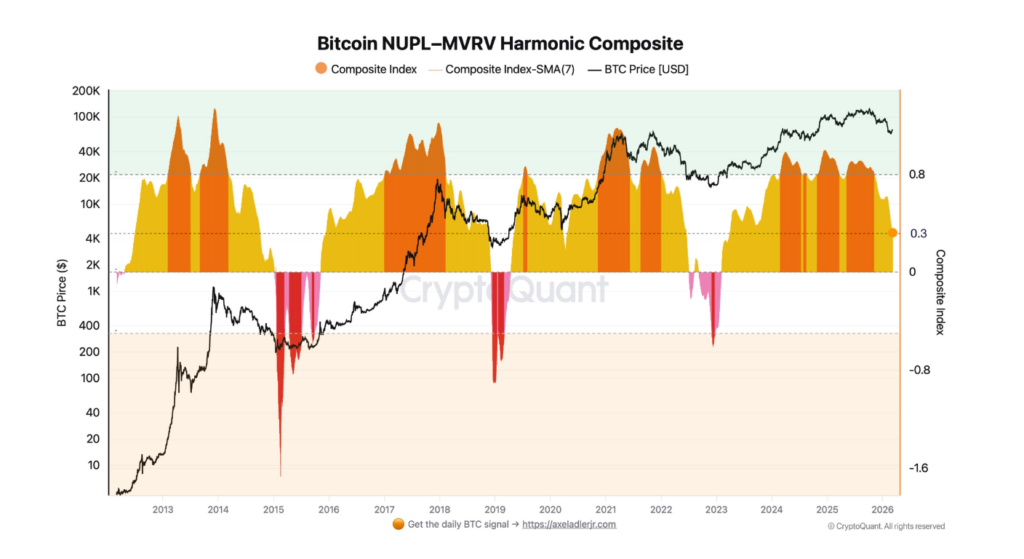
On March 8, CryptoQuant analyst Axel posted on X that Bitcoin is currently in the middle stage of the current cycle. The NUPL-MVRV composite indicator stood at 0.33, while historical cycle bottoms were usually close to -0.5.
The chart also showed that cycle lows are gradually moving higher, suggesting that the extreme level of panic selling is weakening. However, the indicator remains clearly above historical bottom ranges, meaning that the market has not yet shown a clear signal of complete capitulation.
The combination of NUPL, or Net Unrealized Profit and Loss, and MVRV, or Market Value to Realized Value, can reflect both the overall unrealized profit or loss status of the market and the degree of valuation deviation. It is an important on-chain indicator for assessing market sentiment and cycle position.
When the value approaches negative territory, it usually means that most holders are in a loss position and the market is closer to a bottom. When the value is higher, it means the market still contains some profitable supply, and selling pressure has not yet been fully released.
Glassnode: BTC Has Not Yet Formed Clear Upside Momentum and Is Temporarily Near the Lower End of New Buyers’ Cost Basis
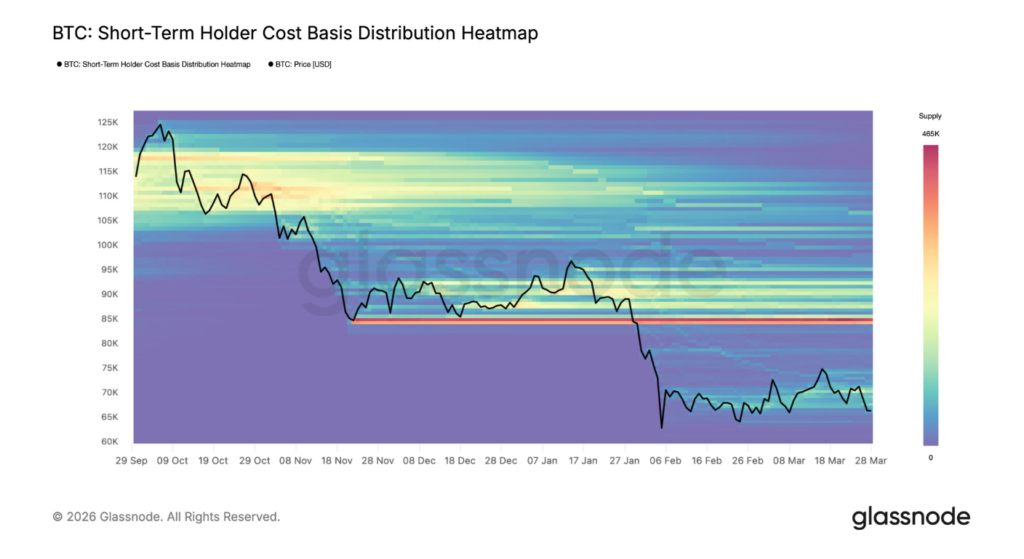
On March 29, Glassnode posted on X that the current Bitcoin price is temporarily near the lower end of the cost basis range for new investors, around $60,000 to $70,000.
Data showed that some accumulation has already appeared within this range, but the overall scale is still below the level that historically supported strong rebounds. The concentration of supply remains relatively weak.
Glassnode noted that the current accumulation structure is constructive in shape, but still insufficient in strength. It has not yet formed a clear upside momentum signal.
BTC Short-Term Holder Cost Basis Distribution is mainly used to observe the cost basis range and concentration of recently entering capital. It is an important tool for identifying market support and resistance.
When price trades above this cost range, it means most short-term holders are in profit, and market sentiment is relatively bullish. If price falls below this range, a large amount of short-term supply moves into loss, which may trigger selling pressure and intensify volatility.
A Dormant ETH OG for One Year Deposited 15,000 ETH Into Coinbase, With a Return of 17,680%
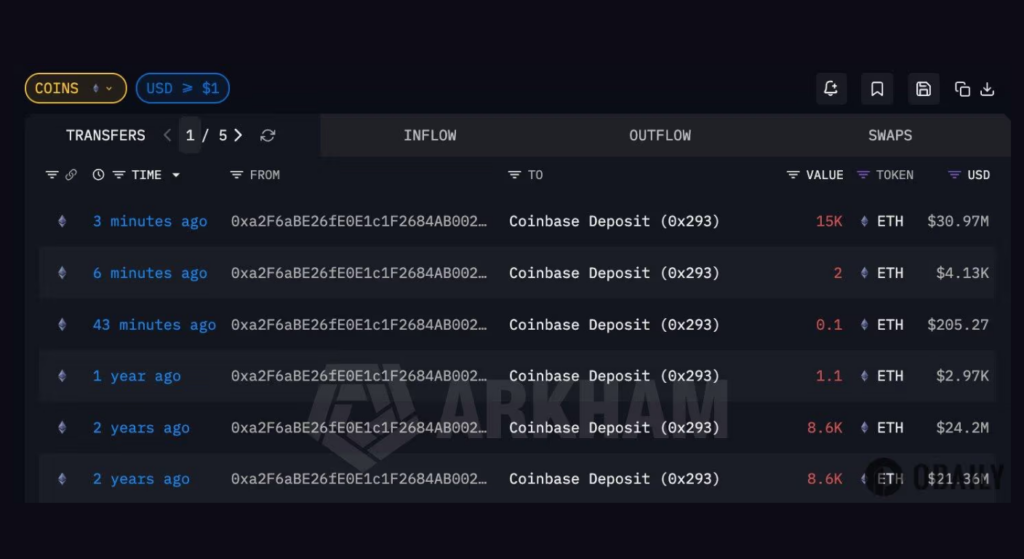
On March 23, according to monitoring by on-chain analyst Ai Yi, an ETH OG from 2016 who had been dormant for one year was suspected of selling 15,000 ETH, achieving a 10-year return of 17,680%.
The address 0xa2F…bF85A deposited ETH worth $30.97 million into Coinbase three minutes earlier. This OG had started accumulating Ethereum as early as 2016, when the entry price was as low as $11.61.
Regulatory Updates
U.S. Clarity Act Draft Proposed Restrictions on Stablecoin Rewards, Causing Circle’s Stock Price to Drop by as Much as 18%
On March 24, the latest public draft amendment of the U.S. Senate’s Clarity Act, the digital asset market structure bill, triggered volatility across the crypto industry. Stablecoin issuer Circle saw its stock price fall by 18% in a single day.
This version, promoted by Senators Angela Alsobrooks and Thom Tillis, seeks to prohibit passive income earned solely from holding stablecoins and restrict any arrangement that is “economically equivalent to interest.” This directly affects the reward model used by Circle and Coinbase, which distributes reserve asset income to users.
Although the bill had previously passed the House and the Senate Agriculture Committee, it still faces disagreements in the Senate Banking Committee over provisions related to decentralized finance regulation. In addition, USDT issuer Tether stated that it had hired a Big Four accounting firm to audit its reserves. Analysts noted that after Circle’s stock price had risen 170% since early February and the market had priced in expectations of rate hikes, the single-day drop reflected potentially overly sensitive market sentiment.
U.S. Republicans Proposed the “Mined in America Act” to Expand Mining and Strengthen Bitcoin Reserves
On March 31, U.S. Senators Cynthia Lummis and Bill Cassidy formally introduced the Mined in America Act. The bill aims to use the legal system to strengthen President Trump’s executive order establishing a “Strategic Bitcoin Reserve” and reinforce crypto mining’s strategic role in the U.S. economy.
The bill states that the reserve will mainly consist of Bitcoin seized by the Treasury Department. It also requires the Department of Commerce to establish a voluntary certification system to regulate mining farms and mining pool management. Certified mining farms would also be required to gradually reduce their reliance on mining equipment produced by companies from “foreign adversary” countries.
The bill’s sponsors emphasized that this move is a core strategy for making the United States a global digital asset hub. It is intended to strengthen the country’s leadership and security across the crypto industry supply chain.
Circle Called on the EU to Accelerate DLT Reform and Relax Stablecoin Settlement Rules
On March 24, stablecoin issuer Circle recently called on the European Union to accelerate digital asset regulatory framework reform. It warned that the current pace could slow institutional adoption of tokenized markets and even cause related financial activity to shift to faster-moving markets such as the United States.
In its feedback on the EU’s “Market Integration Plan,” Circle stated that although the proposal is an important step toward capital market modernization, it remains insufficient in scalability, regulatory mechanisms, and settlement rules.
To address this, the company recommended optimizing the distributed ledger technology, or DLT, pilot framework. Suggestions included expanding the range of eligible assets, raising transaction limits, and introducing a dynamic threshold mechanism that can automatically adjust with market conditions, instead of relying on periodic legislative updates.
South Korean Lawmaker Proposed Abolishing the Crypto Income Tax Plan Scheduled for 2027
Song Eon-seog, floor leader of South Korea’s right-wing People Power Party, proposed an amendment to the Income Tax Act on Thursday, calling for the complete abolition of the crypto gains tax plan originally scheduled to take effect in 2027.
The plan was originally intended to impose a tax rate of up to 22% on crypto profits exceeding 2.5 million Korean won, or about $1,665. However, due to strong opposition from the industry, it has already been postponed three times.
The proposal argues that since South Korea abolished the financial investment income tax on stocks and other financial products at the end of 2024, imposing a separate tax on crypto investors would be unfair. Although the National Tax Service is developing an AI system to strengthen transaction tracking in 2027, the bill aims to protect investor rights through tax consistency and ensure equal tax treatment across different investment instruments.
Security Watch
In March 2026, the crypto industry recorded 19 security incidents, with total losses reaching $31.82 million, a significant increase from February. The main focus of the month’s security incidents was Resolv Labs’ stablecoin USR, which was suspected of having multiple large minting events, with losses reaching $25 million.
In addition, attackers exploited a vulnerability in Venus Protocol and used flash loans to obtain a large amount of assets, causing losses of up to $2.15 million. The attackers used a large amount of THE tokens as collateral to borrow Cake, BTCB, and BNB, causing continued liquidation of THE tokens.
Date
Project Name
Loss Amount
Incident Summary
March 2
Inverse Finance
$240,000
According to BlockSec Phalcon monitoring, its system detected a suspicious transaction targeting an Inverse Finance contract on Ethereum several hours earlier, causing about $240,000 in losses. The incident appeared to involve DOLA price manipulation, forcing multiple users’ contracts into liquidation.
March 6
Solv Protocol
$2.7 million
Bitcoin staking protocol Solv Protocol posted on X that its BRO Vault suffered a limited exploit, affecting fewer than 10 users and causing a loss of 38.0474 SolvBTC. Other vaults and user funds were not affected, and measures had been taken to prevent similar incidents from happening again.
March 10
Gondi
$230,000
NFT platform Gondi recently suffered a smart contract vulnerability attack, resulting in the theft of about 78 NFTs and losses of about $230,000. According to Gondi’s official announcement, the attack was related to a new Sell & Repay contract deployed on February 20. Its Purchase Bundler function had a logic flaw and failed to correctly verify whether the caller was the legitimate owner or borrower of the NFT.
March 15
Venus Protocol
$2.15 million
Attackers exploited a vulnerability in Venus Protocol and used flash loans to obtain a large amount of assets. To prevent further losses, Venus Protocol paused lending and withdrawals involving THE assets and other markets with highly concentrated liquidity.
March 22
Resolv Labs
$25 million
PeckShield posted an alert on X stating that Resolv Labs’ stablecoin USR was suspected of having multiple large minting events. At that time, $80 million worth of USR had already been minted.
March 23
PancakeSwap
$680,000
PancakeSwap’s BCE-USDT pool on BSC was attacked several hours earlier, causing losses of about $680,000. The root cause was a flaw in the BCE token burn mechanism. The attacker deployed two malicious contracts, bypassed buy and sell restrictions, and triggered token burns inside the pool.
The crypto security environment became tense again in March 2026. The projects attacked during the month covered multiple sectors and technical mechanisms, showing that attackers are continuing to optimize their attack strategies and are capable of identifying complex smart contract logic flaws.
The frequent occurrence of these security incidents again emphasized the urgency of strengthening risk prevention mechanisms. Developers and project management teams must place on-chain security at the core of their priorities. During smart contract deployment and version upgrades, they must strictly implement more rigorous logic verification and code audits. Otherwise, business model innovation without a stable security foundation will remain highly exposed to systemic on-chain risks, making it difficult to protect protocols and user assets over the long term.
Key Events Ahead
Date
Event Name
Event Summary
April 3
U.S. March Nonfarm Payrolls, NFP
Labor market strength is a key indicator used by the Federal Reserve to assess recession risk. If employment data remains strong or the unemployment rate stays low, market expectations for rate cuts may be delayed further.
April 10
U.S. March CPI Inflation Data
The pace of inflation decline directly determines the direction of monetary policy and will be the most important economic data point shaping the rate-cut tone for the Fed meeting at the end of April.
April 15
Paris Blockchain Week
One of Europe’s leading digital finance summits, held at the Louvre in France. The conference will focus on the integration of traditional finance and digital assets, stablecoin regulation, and institutional-grade asset tokenization.
April 20
Hong Kong Web3 Festival 2026
One of Asia’s largest Web3 events. Against the backdrop of Hong Kong’s strong push for stablecoins and compliant trading licenses, the conference will be a key window for observing regulatory and compliance trends in Asia.
April 27
Bitcoin 2026
The world’s largest Bitcoin-focused summit, held in Las Vegas, United States. It will bring together Bitcoin core developers and discuss progress in promoting Bitcoin as a national strategic reserve.
April 29
Federal Reserve FOMC Interest Rate Decision
This is a highly important monetary policy meeting for the second quarter of 2026. Markets will closely watch the Fed’s comments on recent inflation and employment data.
The crypto market in April 2026 will enter a key volatility period shaped by both macroeconomic data and major industry events. The nonfarm payrolls and CPI data released at the beginning of the month will directly set expectations for the Federal Reserve’s FOMC interest rate decision on April 29.
On the industry side, Paris Blockchain Week and Hong Kong Web3 Festival will respectively showcase new regulatory and technological trends in Europe and Asia. The Bitcoin 2026 conference in Las Vegas at the end of the month will focus on the progress of promoting Bitcoin as a national strategic reserve.
Unfortunately, due to the situation in the Middle East, the TOKEN2049 Dubai event originally scheduled for this month has been postponed to April 2027. This dense convergence of macro and industry events makes April a key battleground for market sentiment in the first half of the year.
Conclusion
Looking across March 2026, the crypto market remained in range-bound consolidation with lower volume under the dual pressure of macro geopolitical risks and liquidity expectations. Although the secondary market lacked clear directional momentum on the price side, the industry itself is undergoing deep structural reshaping.
From institutional and corporate treasury buying during market weakness, to traditional miners strategically shifting toward AI computing power, to continued architecture upgrades by leading protocols such as Ethereum and Aave, these developments show that defensive allocation and underlying fundamental construction are gradually becoming more resilient.
Looking ahead to April, the release of U.S. nonfarm payrolls and CPI data, the Federal Reserve’s interest rate decision, and several major industry conferences across Europe and Asia will place the market in a critical observation period where macro pressure and emerging narratives interact.
The market may enter a decisive phase that shapes the broader trend for the first half of 2026 amid the interaction of existing capital competition and expectation adjustments.
About Bitunix
Bitunix is a global cryptocurrency derivatives exchange trusted by over 5 million users across more than 100 countries. The platform is committed to providing a transparent, compliant, and secure trading environment for every user. Bitunix offers a fast registration process and a user-friendly verification system supported by mandatory KYC to ensure safety and compliance. With global standards of protection through Proof of Reserves (POR) and the Bitunix Care Fund, Bitunix prioritizes user trust and fund security. The K-Line Ultra chart system delivers a seamless trading experience for both beginners and advanced traders, while leverage of up to 200x and deep liquidity make Bitunix one of the most dynamic platforms in the market.
Disclaimer: Trading digital assets involves risk and may result in the loss of capital. Always do your own research. Terms, conditions, and regional restrictions may apply.
Table Of Contents
Ready To Place Your Next Trade?
Choose a market, set your order, and manage risk in one place.
AG | Content Manager | Bitunix
May 27, 2026 No Comments
Learn how stablecoin regulation in 2026, the GENIUS Act, AML rules, DeFi yield limits, and stablecoin payments may affect crypto traders and everyday users.
AG | Content Manager | Bitunix
May 27, 2026 No Comments
Discover which Layer 1 blockchains will survive 2026 and learn how traders can park liquidity long-term across the best L1 crypto networks with Bitunix tools.