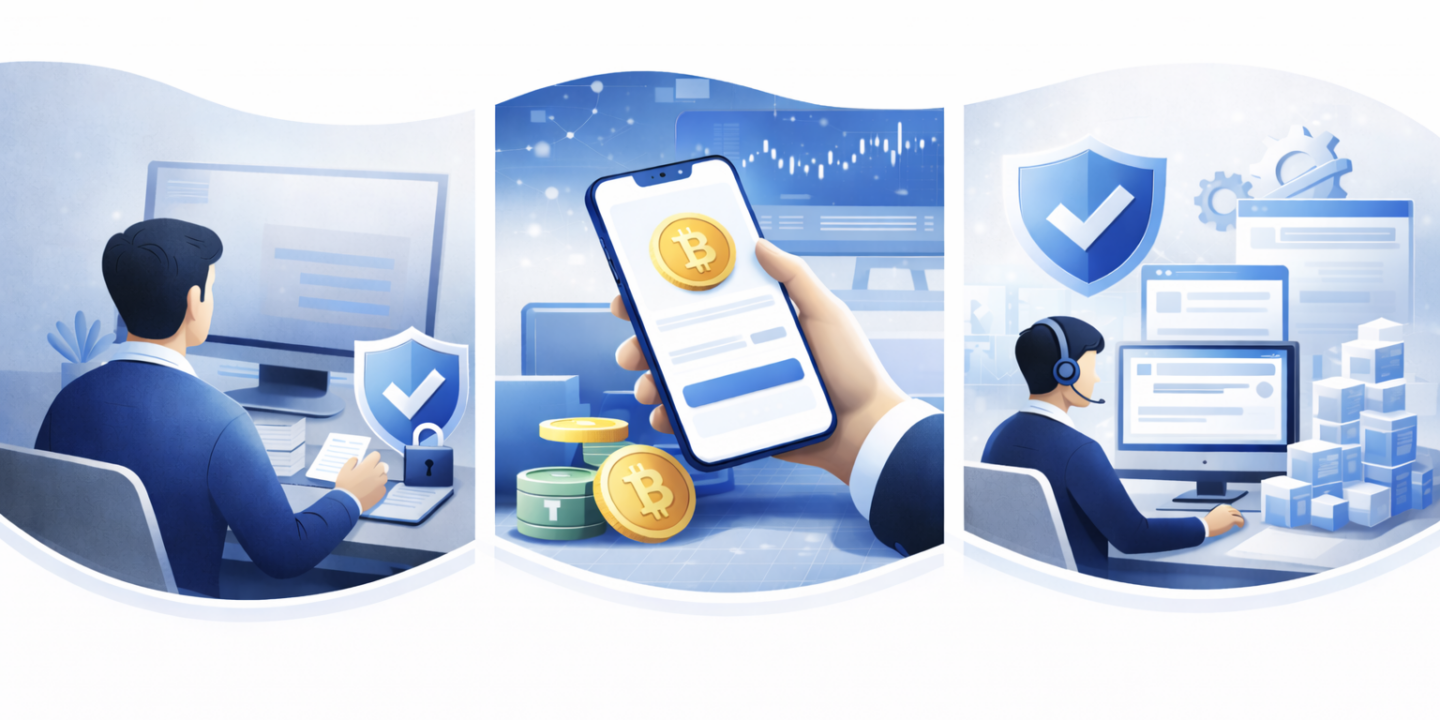
You are not only choosing a trading interface. You are choosing where you will store funds, where you will execute orders, and where you will rely on support if something goes wrong.
This guide explains, in a practical way, what we do before, during, and after you deposit to support crypto security and user protection. We also share what you should check on your side to reduce avoidable risk, because security is strongest when platform controls and user actions reinforce each other.
[ez-toc]
Before You Deposit: The Safety Checks That Matter Most
Use Official Access Only
The most common avoidable risk in crypto is phishing. Before you enter any credentials or make a deposit, confirm you are using the official Bitunix website or official Bitunix app. Avoid login links sent via direct messages or unfamiliar channels.
Secure Your Account First
Before funding, we recommend enabling core account protections. Strong security starts with access control.
Practical checklist:
- enable two-factor authentication
- set a strong, unique password
- do not share verification codes with anyone
- treat unsolicited messages as untrusted until verified
These steps reduce the chance that a password leak or a social engineering attempt turns into account access.
Understand The Product You Are Using
Different products carry different risk. Spot and futures behave differently. Futures include leverage and liquidation mechanics. If you plan to trade futures, ensure you understand margin and liquidation behavior before you fund and trade.
This matters because user protection is not only about custody. It is also about understanding the risk profile of what you trade.
During The Deposit: What We Focus On Operationally
Once you initiate a deposit, a safe experience depends on accuracy and traceability.
Clear Deposit Information
We provide deposit flows designed to give you the correct address information and deposit steps inside official channels. This reduces errors and supports safer execution.
Monitoring And Risk Controls
We maintain monitoring and risk controls intended to detect abnormal activity patterns. This supports platform integrity and contributes to a safer trading environment.
For security reasons, we do not publish granular monitoring thresholds or internal detection rules. The important point is that monitoring is active and designed to reduce risk, especially in abnormal conditions.
Compliance Standards
We apply identity verification and compliance controls that support platform integrity. These controls are part of how exchanges reduce abuse and support safer operations. For some users, this is a key factor when evaluating whether an exchange is safe to use.
After You Deposit: How We Support Ongoing User Protection
Depositing is only the beginning. Ongoing safety depends on how funds are protected during normal use and how issues are handled if they arise.
Account Protection Remains The Baseline
After you deposit, keep your account protections enabled. Avoid logging in from unknown devices, and avoid clicking on unknown links. Many security incidents occur after a deposit because attackers target funded accounts.
Transparency And User Confidence
Transparency supports trust. We publish Proof of Reserves information and provide verification methods designed to help users confirm inclusion in the published dataset. This is part of our broader focus on transparency.
Incident Response And Support Processes
If something goes wrong, the response process matters. We provide official support channels for users to submit requests and receive assistance. Using official channels helps protect you from impersonation and ensures your case goes through the correct verification steps.
What You Should Do If You Ever See A Problem
If you notice anything unusual, act quickly and use the correct process.
- Stop further activity if possible
- Change your password immediately
- Review two-factor authentication settings
- Document what you see, including timestamps and transaction references
- Contact Bitunix customer support through official channels
Never share passwords or authentication codes with anyone. Support does not need your sensitive access credentials to help you.
A Practical “Safe Deposit” Checklist
If you want a short checklist you can follow every time:
- Verify official domain or app before logging in
- Enable two-factor authentication
- Double-check the deposit network and address details
- Start with a small test deposit if you are unsure
- Keep records of transaction IDs
- Contact support through official channels if anything looks wrong
This checklist is simple, but it covers the most common avoidable failures.
Why Users Ask “Is Bitunix Safe” After A Deposit
Some users deposit and then feel uncertain, especially if they are new to crypto. In most cases, that uncertainty comes from two places:
- unfamiliar transaction mechanics
- fear of making a mistake or being scammed
The solution is structure. Use official channels, follow the correct steps, and keep your account protections enabled.
Conclusion
A safe exchange experience is built through layered controls and disciplined user habits. Before you deposit, use official access and secure your account. During the deposit, follow the platform’s deposit steps carefully and keep records. After you deposit, maintain account protections, use transparency tools where available, and contact official support if you need help.
If you are evaluating whether Bitunix exchange is a fair standard, focus on what is verifiable: security controls, operational processes, transparency practices, and reliable support channels.
FAQ
What is the safest way to deposit to Bitunix?
Use the official Bitunix website or app, enable two-factor authentication first, and double-check network and address details before sending funds.
What should I do if I deposited but cannot see my funds yet?
Confirm the network and transaction status first, then contact customer support through official channels with the transaction reference details.
Should I deposit before enabling two-factor authentication?
We recommend enabling account protections before funding, because it reduces avoidable account risk.
How do I contact Bitunix customer support?
Use the official support channels inside the app or website, and do not trust direct messages claiming to be support.
Glossary
Two-Factor Authentication: A security method that adds a second verification step beyond your password.
Phishing: Attempts to steal credentials using fake sites or impersonation.
Transaction ID: A reference identifier used to track a blockchain transaction.
Compliance Controls: Measures used to support platform integrity and reduce misuse.
Proof of Reserves: A transparency method designed to help users verify reserve-related information using published datasets and verification steps.
About Bitunix
Bitunix is a global cryptocurrency derivatives exchange trusted by over 3 million users across more than 100 countries. At Bitunix, we are committed to providing a transparent, compliant, and secure trading environment for every user. Our platform features a fast registration process and a user-friendly verification system supported by mandatory KYC to ensure safety and compliance. With global standards of protection through Proof of Reserves (POR) and the Bitunix Care Fund, we prioritize user trust and fund security. The K-Line Ultra chart system delivers a seamless trading experience for both beginners and advanced traders, while leverage of up to 200x and deep liquidity make Bitunix one of the most dynamic platforms in the market.
Bitunix Global Accounts
X | Telegram Announcements | Telegram Global | CoinMarketCap | Instagram | Facebook | LinkedIn | Reddit | Medium
Disclaimer: Trading digital assets involves risk and may result in the loss of capital. Always do your own research. Terms, conditions, and regional restrictions may apply