Brazil Crypto Market Growth: How BBRL and Polygon Are Driving Adoption
Brazil Crypto Market Growth: How BBRL and Polygon Are Driving Adoption

Every smart contract needs reliable data, and for years, Chainlink has been the undisputed king of oracle services. Now, with the launch of its Cross-Chain Interoperability Protocol (CCIP) and the explosion of real-world asset tokenization, is LINK poised to lead the next multi-trillion dollar boom?
Chainlink is more than a price provider. It is the trust layer that lets smart contracts talk to the real world. While many blockchains focus on speed or scalability, the real value of a dApp often depends on the quality and integrity of the data that powers it.
LINK dominates this space with oracles widely used across DeFi, on-chain insurance, gaming, and enterprise applications. There is genuine excitement around CCIP, which aims to deliver a secure layer for cross-chain value and message transfers, and around the large-scale tokenization of real-world assets (RWA), which could multiply demand for reliable oracles.
This article offers a comprehensive LINK price outlook 2026–2030. We examine how CCIP, the RWA push, and evolving protocol economics, staking, and Economy 2.0, could shape supply, demand, and network value over the next few years.
The goal is to combine technical fundamentals, adoption metrics, and macro scenarios to form a grounded view of LINK’s potential in Web3’s next phase. While retail participants compare fees, onramps, and the best app to buy crypto for building positions efficiently
Chainlink is a decentralized oracle network that securely and verifiably connects smart contracts to external data and services. Instead of relying on a single source that could create risk and a single point of failure, Chainlink uses independent nodes, aggregation mechanisms, and cryptographic proofs to deliver trustworthy data to on-chain applications.
The network’s primary use is price feeds for DeFi, asset quotes that power lending, margin, and derivatives, yet its oracles also cover weather data for parametric insurance, sports results for betting platforms, IoT sensor inputs, and conditional execution for enterprise contracts.
Beyond price data, tools such as VRF (Verifiable Random Function) provide on-chain randomness for games and lotteries, extending use cases well past simple pricing. With the rollout of what the team calls Chainlink Economics 2.0, the protocol introduces a staking model designed to strengthen service security and align incentives.
A structure familiar to users exploring earn rewards crypto mechanics. Operators stake LINK to guarantee performance, consumers pay for data, and part of that value flows back to network security, creating explicit pathways for value accrual to the token.
LINK has a track record of early adoption and high visibility during market cycles. Since launch, the token has served not only as a means of payment within the network but also as a signal of institutional trust. Major projects and DeFi protocols integrated Chainlink Price Feeds, making it one of the most frequently cited oracle solutions for maturity and reliability.
During volatile periods, LINK has shown relative resilience, maintaining technical relevance even through extended bear markets and often acting as a proxy for the health of DeFi infrastructure.
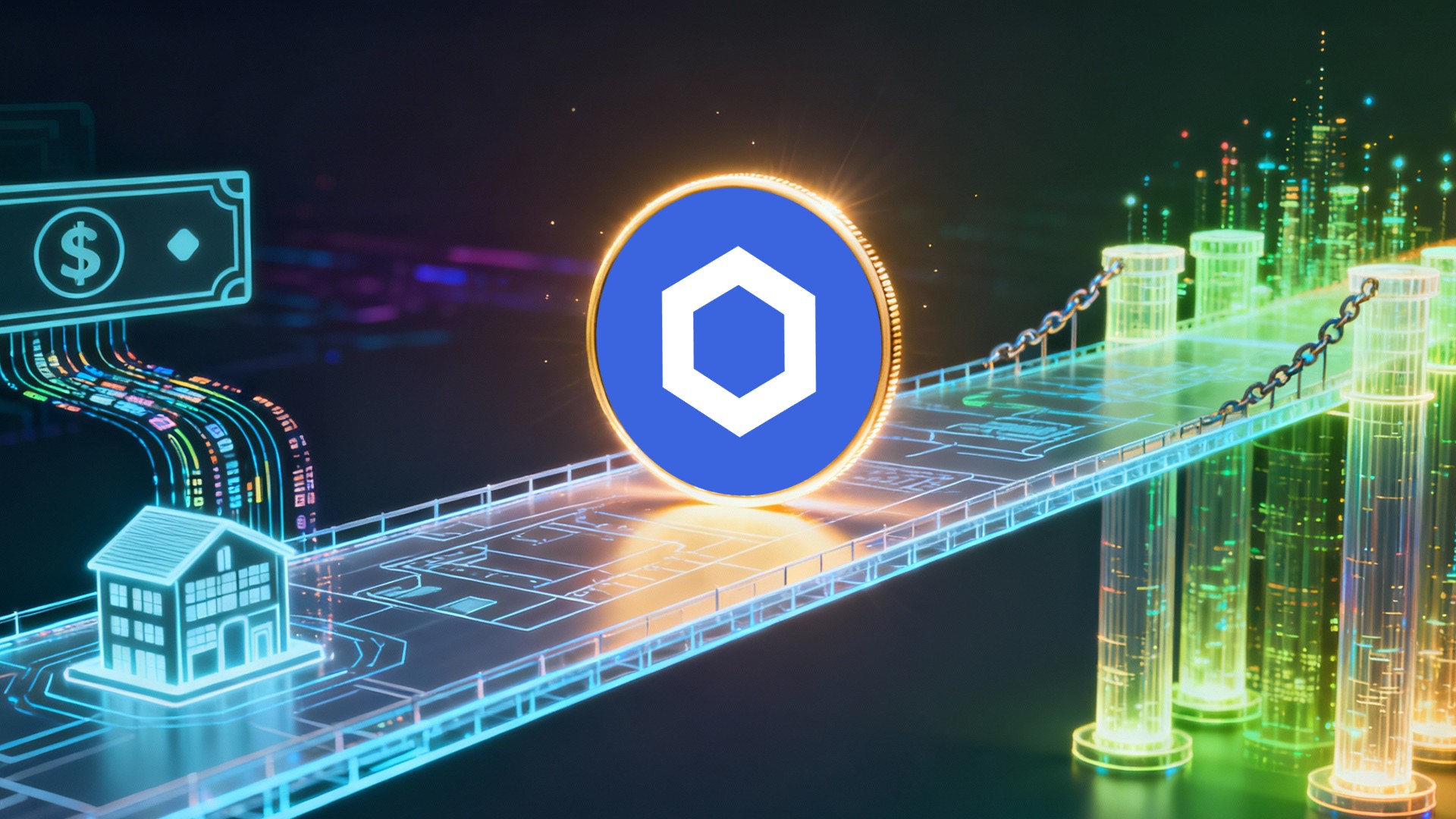
Milestones shaping LINK’s trajectory include the official rollout of Price Feeds, the introduction of VRF, critical for on-chain games, partnerships with data providers and institutional players, and, more recently, the announcement and progressive implementation of CCIP (Cross-Chain Interoperability Protocol).
This step can evolve Chainlink from a data provider into a cross-chain interoperability infrastructure. Each advance has expanded the token’s utility and opened new demand channels.
In 2026, the main driver is the growing adoption of the Cross-Chain Interoperability Protocol (CCIP) and the surge in real-world asset tokenization. As financial institutions and blockchain platforms look for reliable interoperability, Chainlink’s role as core infrastructure strengthens.
As more networks use CCIP at scale, demand should rise for secure, auditable, multi-chain oracles, which can further increase LINK consumption. Tokenization of bonds, real estate, treasuries, and other assets also requires trustworthy, verifiable data feeds.
Chainlink is positioned to deliver these services in an industry measured in trillions. The staking and service-reward model aligns incentives so LINK can accrue value. Under these assumptions, an annual average in the $40 to $60 range is plausible.
In 2026–2027, Chainlink, as the interoperability standard, is well-positioned. If CCIP becomes the backbone for cross-chain communication, the demand for oracles and related services could expand significantly. In that case, LINK staking becomes even more important.
As more services are secured by staked tokens, lockups can reduce circulating supply and create upward pressure on price. For 2026, a baseline average near $75 is reasonable, with upside to $110 and downside around $50.
In 2027, an average of $95 is expected, within a band of $65 to $140, assuming robust CCIP adoption and accelerating asset tokenization. CoinCodex places 2026 in the mid-teens, DigitalCoinPrice sees ~$37-38 in 2026 and ~$58 in 2027, and CoinPriceForecast guides to ~$51 in 2026 and ~$54 in 2027.
Imagine a market where a large share of finance, securities, fractional real estate, tokenized corporate debt, and even commodities live on-chain. In that world, every tokenized asset needs robust, auditable, interoperable oracles to power pricing, settlement, and contractual logic.
If tokenization reaches even a fraction of its potential, Chainlink could serve not only as a data provider but also as a critical trust layer for oracles, cross-chain messaging via CCIP, and auxiliary services such as VRF, Price Feeds, and off-chain event verification.
When infrastructure secures real value, some of that value tends to accrue to the native token that guarantees the network’s security and operations. With Economics 2.0 and staking, a growing share of LINK may be locked as collateral for nodes and services, reducing circulating supply.
At the same time, recurring usage creates steady demand flows. Paired with network effects, more chains and applications standardizing on the same rails, this provides a credible path for LINK to capture a slice of the economic volume it helps secure. With these assumptions, an average near $120 for 2028, $150 for 2029, and $200 or higher for 2030 is within reach.
No matter your plans for LINK, Bitunix is the ideal crypto exchange.
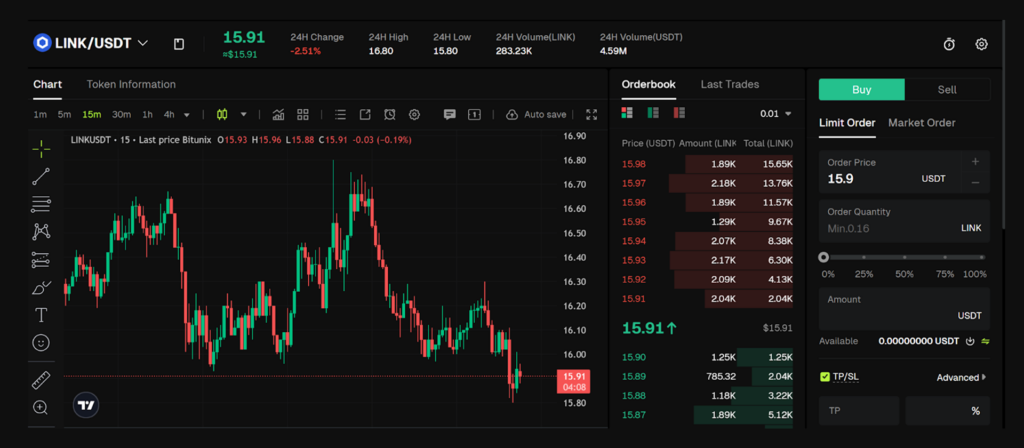
On Bitunix, buying LINK on the spot exchange is easy.
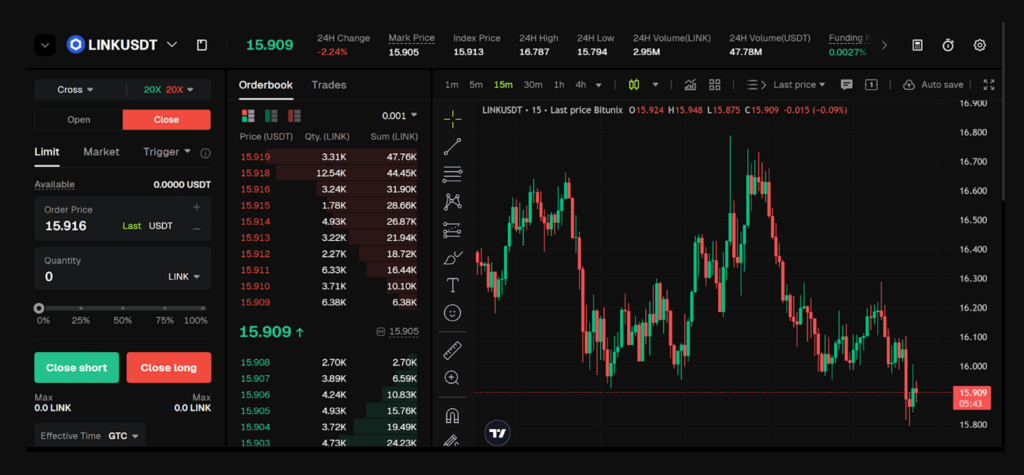
The One Chart interface brings charts, the order book, trade history, and execution into one window, so traders at any level get a simple buying experience. With many listed assets, finding pairs and liquidity is quick.
Bitunix offers LINK perpetual contracts for traders who want to speculate or hedge with leverage. The platform lists multiple popular crypto futures pairs with leverage up to 200x in select markets and deep order books, ideal for execution quality and competitive spreads.
Invest in the backbone of Web3. Trade LINK on Bitunix and get exposure to the future of decentralized data and cross-chain communication. Sign up now.
Bitunix makes trading a high-liquidity, foundational token like LINK simple, fast, and reliable. Registration is quick, your account is live in minutes, and verification is streamlined and only required for fiat deposits and withdrawals.
The platform provides tools such as proof of reserves to strengthen transparency and reduce uncertainty around custody and solvency. Around-the-clock customer support with fast response times reinforces that commitment. For traders seeking leverage, Bitunix offers deep futures markets and low-latency execution.
The LINK price outlook 2026-2030 centers on CCIP, which could make Chainlink the default interoperability layer across chains, and on large-scale RWA tokenization, which creates structural demand for reliable oracles. Combined with Economics 2.0 and staking, these vectors offer a credible path for the token to capture real value over time.
Institutional and large financial infrastructure adoption tends to be gradual and dependent on regulation, technical integration, and macro cycles. Even so, Chainlink currently holds an almost monopolistic position in the oracle space, a competitive edge that does not vanish overnight.
If CCIP and RWA adoption accelerate in line with the optimistic scenario, the token has room to surpass prior highs. The tokenization of all assets is coming, and Chainlink is at the center of it. Be part of the revolution and trade LINK on Bitunix today.
Technically, yes, especially if CCIP and RWA tokenization scale institutionally. Prices in that range depend on favorable macro conditions, significant staking lockups, and broad adoption.
CCIP is Chainlink’s Cross-Chain Interoperability Protocol, a messaging and value-transfer layer between blockchains. If it becomes standard, demand for Chainlink services, and by extension LINK, can increase meaningfully.
RWAs are real-world assets, real estate, bonds, debt, and commodities represented on-chain. Chainlink provides price feeds, verification, and oracle services that make these tokens usable, auditable, and operational.
It can be, given its technical advantages and partnerships. Still, it carries market, regulatory, and competitive risks.
Under Economics 2.0, node operators and data providers stake LINK to guarantee services and receive rewards and fees in return. This strengthens security and can reduce the circulating supply.
The network integrates with many DeFi protocols, data providers, and blockchains. Partnerships evolve over time across infrastructure projects, price-oracle users, and traditional data firms.
Chainlink leads in adoption and maturity across price feeds, VRF, and CCIP, though competitors exist. Superiority depends on security, latency, cost, and integration metrics. Today it is widely respected.
Total supply is finite. Emissions and supply dynamics follow project policies; with staking and lockups, the effective circulating supply can decrease.
LINK pays for oracle services, serves as collateral via staking for operators, and functions as a unit of exchange to access network services.
A P2P crypto exchange with strong liquidity and derivatives products is an excellent option for buying and trading LINK. Bitunix offers both spot and futures markets plus security features, making it suitable for traders at different experience levels.
Bitunix is a global cryptocurrency derivatives exchange trusted by over 3 million users across more than 100 countries. The platform is committed to providing a transparent, compliant, and secure trading environment for every user. Bitunix offers a fast registration process and a user-friendly verification system supported by mandatory KYC to ensure safety and compliance. With global standards of protection through Proof of Reserves (POR) and the Bitunix Care Fund, Bitunix prioritizes user trust and fund security. The K-Line Ultra chart system delivers a seamless trading experience for both beginners and advanced traders, while leverage of up to 200x and deep liquidity make Bitunix one of the most dynamic platforms in the market.
Bitunix Global Accounts
X | Telegram Announcements | Telegram Global | CoinMarketCap | Instagram | Facebook | LinkedIn | Reddit | Medium