How AAPLUSDT Trading Works on Bitunix
Learn how to trade Apple stock on Bitunix with USDT, understand how AAPLUSDT works, and explore volatility, leverage, and risk management for beginners.

When you sign in to Bitunix exchange, what you see is a trading interface, charts, and prices that move in seconds. What you do not see is the security work happening in the background, the controls that protect assets, and the monitoring systems that help identify risk before it becomes a problem. That hidden layer is where trust is built, and it is where Bitunix has continued to invest as the platform grows.
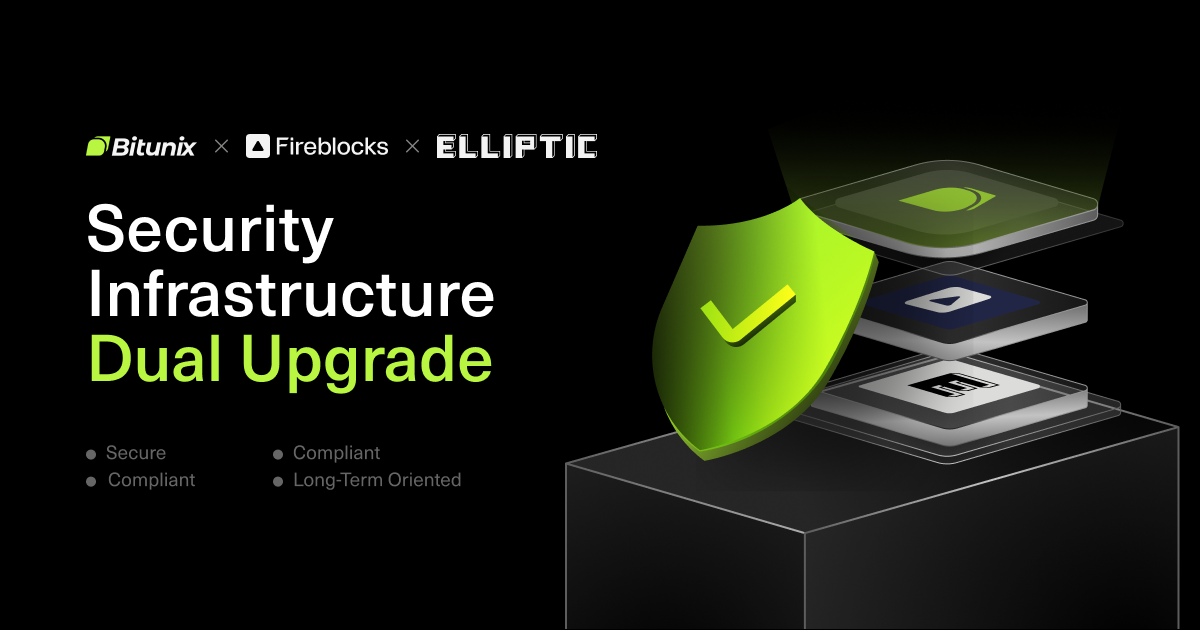
This post is about a major milestone in that journey. Bitunix has completed a dual security infrastructure upgrade that elevates Bitunix exchange security and strengthens crypto compliance through two integrations: Fireblocks for institutional-grade digital asset custody, and Elliptic KYT for real-time AML monitoring and risk control. In other words, Bitunix security is being elevated, not introduced. We already had safeguards in place. This Bitunix security upgrade takes them to a higher, more institutional standard.
At a high level, the unified message is simple. Fireblocks brings institutional-grade custody and MPC wallets that take our existing security to the next level. Elliptic brings real-time AML and KYT monitoring that enhances Bitunix compliance and risk control. The result is stronger security and compliance for all users, from first-time traders to professionals managing larger positions.
[ez-toc]
The digital asset industry has matured, but it has not become risk-free. Users have seen exchanges targeted, wallets compromised, and funds moved quickly across chains. In this environment, security is not defined by a single feature. It is defined by an integrated system that protects assets at rest, controls how assets move, and monitors activity for risk signals.
That is the lens Bitunix uses for Bitunix exchange security. Custody is the foundation, because it determines how assets are stored and protected. Monitoring is the second pillar, because it determines how quickly risk can be identified and acted on. This upgrade strengthens both pillars at the infrastructure level.
Just as importantly, it supports a more robust compliance posture. Strong custody and strong monitoring work together to strengthen Bitunix AML, Bitunix KYT, and Bitunix compliance in a way that is systematic, consistent, and scalable. For users, that translates into a safer environment and greater confidence that the platform is designed to manage real-world threats.
Fireblocks is a digital asset infrastructure provider used by many institutions to support secure custody operations and controlled asset transfers. For Bitunix, the Fireblocks custody integration is focused on custody hardening and operational controls. It strengthens how assets are protected and how sensitive actions are governed.
At the core of this integration is Fireblocks MPC, which supports a multi-party approach to key security. You will often see this described as an MPC wallet model. Traditional wallet systems can rely on a single private key. That design creates a clear single point of failure. MPC changes that structure by distributing key control across secure components. The purpose is straightforward: to make unauthorized access significantly harder and to reduce the risk that any single compromise results in loss.
This matters because custody security is not only about storage. It is also about how custody actions happen. Fireblocks custody infrastructure is designed to support structured approvals, policy driven controls, and multi layer authorization for higher risk operations. In practice, this helps ensure that sensitive actions follow defined rules and that operational workflows are more resilient.
For Bitunix security, this is an elevation. It builds on existing safeguards and takes custody operations closer to the standards expected in institutional environments, where controls, separation of responsibilities, and policy enforcement are treated as essentials rather than optional enhancements.
An MPC wallet is a custody model built on Multi-Party Computation. Instead of one private key controlling an address, control is split into multiple pieces that must work together to authorize actions. This is not simply a technical detail. It is a risk management upgrade.
MPC helps reduce the chance that a single compromised device, a single exposed credential, or a single operational mistake can lead to a catastrophic outcome. It also supports stronger internal governance because custody operations can be tied to policies and approvals rather than individual discretion. That is one reason why the term institutional-grade is often linked with MPC adoption.
In the context of Bitunix exchange security, Fireblocks MPC strengthens asset protection while supporting operational efficiency. The goal is not to make the user experience heavier. The goal is to strengthen protections behind the scenes so users can trade with more confidence.
Security infrastructure is one layer. Risk controls and monitoring are another. Insurance is not a substitute for either, but it can serve as an additional layer of protection.
As part of this broader security framework, Bitunix benefits from total insurance coverage of 42.5 million dollars, including digital asset crime insurance and additional protections against certain operational risks. This coverage is intended to provide added reassurance and an extra safeguard against rare but serious incidents.
In addition, Bitunix maintains an extra 5 million dollar insurance policy with Nemean Services as part of the wider protection approach. Insurance does not remove risk, but it strengthens resilience, and resilience is a key ingredient in long term trust.
Custody is the first pillar. Monitoring is the second. A secure exchange must be able to see risk signals quickly and respond with discipline. That is why Bitunix has integrated Elliptic KYT.
Elliptic KYT is a blockchain monitoring system designed to support risk analysis across on chain activity. KYT stands for know your transaction. In practical terms, it supports KYT crypto oversight by helping identify suspicious wallet interactions and transaction patterns in real time.
For Bitunix, this strengthens Bitunix AML operations and supports Bitunix compliance workflows by improving visibility into on chain behavior. Monitoring helps reduce blind spots. It strengthens the ability to detect patterns that may require review, escalation, or action, based on risk signals rather than assumptions.
Elliptic KYT supports the identification of risk categories such as darknet related funds, stolen assets, fraud associated flows, high risk counterparties, and sanctioned entities. This is an important part of risk control because crypto moves quickly. Real time transaction monitoring helps shorten the time between a risk signal and a response.
This capability directly strengthens anti-money laundering controls and supports stronger crypto compliance, especially when paired with institutional-grade digital asset custody. Together, these two upgrades reinforce both protection and oversight.
Many users understand KYC as identity verification. KYT is different. KYT focuses on transaction behavior and wallet interaction risk. It asks a different question: does this on chain activity show signals that match higher risk categories?
For Bitunix exchange security, KYT is part of a broader risk control framework. It is not about adding friction for everyday users. It is about strengthening the platform’s ability to detect suspicious flows and reduce exposure to known categories of high risk activity. That is one reason KYT is increasingly important for exchanges that want to operate with a long term mindset and a stronger compliance posture.
By implementing Elliptic KYT, Bitunix strengthens Bitunix KYT and Bitunix compliance, while supporting a more robust approach to Bitunix AML. For users, the main benefit is the confidence that the platform is designed to identify risk signals systematically, not reactively.
Fireblocks and Elliptic are not isolated upgrades. They are designed to work together.
Fireblocks elevates custody by strengthening how assets are protected and how sensitive actions are governed, with Fireblocks MPC at the center of custody design. Elliptic elevates oversight by strengthening real time monitoring across on chain activity through Elliptic KYT and know your transaction controls.
This is why the combined outcome matters. Strong custody without monitoring can leave blind spots. Strong monitoring without strong custody can still leave critical exposure. Together, they create a more complete security posture that strengthens protection, strengthens risk control, and strengthens crypto compliance across the platform.
This is the practical meaning of elevating Bitunix security. It reflects that Bitunix already had security measures, and now Bitunix has elevated them to a more institutional standard.
“We have partnered with several security providers, but the collaboration with Fireblocks and Elliptic reconfirms our top priority: user protection. We want users to be safe when using our exchange,” said Steven Gu, Chief Security Officer at Bitunix.
This dual integration is an important milestone, but it is not the finish line. Security is a program. It requires continuous improvement, regular assessment, and a willingness to invest in infrastructure that is not always visible to users.
In addition to Fireblocks, Bitunix works with trusted custodians such as Cobo Custody. Bitunix also conducts frequent audits through firms such as Hacken and Salus. These measures sit alongside insurance coverage and risk controls as part of a layered approach that focuses on long term trust.
Bitunix exchange security is built to serve different user needs. Retail users need a reliable platform that protects assets without adding unnecessary complexity. Institutional and high net worth users need stronger assurance around custody and compliance standards. This Bitunix security upgrade is designed to support both, and to keep building a more resilient exchange environment over time.
Every upgrade like this is driven by a simple responsibility. Behind every account is a real person. Behind every balance is something earned. That is why Bitunix continues to strengthen Bitunix security, Bitunix AML, Bitunix KYT, and Bitunix compliance with infrastructure decisions that prioritize protection and transparency.
Thank you for trusting Bitunix exchange. We will continue to earn that trust by investing in the systems that matter most, even when they operate quietly in the background.
Bitunix is a global cryptocurrency derivatives exchange trusted by over 3 million users across more than 100 countries. At Bitunix, we are committed to providing a transparent, compliant, and secure trading environment for every user. Our platform features a fast registration process and a user-friendly verification system supported by mandatory KYC to ensure safety and compliance. With global standards of protection through Proof of Reserves (POR) and the Bitunix Care Fund, we prioritize user trust and fund security. The K-Line Ultra chart system delivers a seamless trading experience for both beginners and advanced traders, while leverage of up to 125x and deep liquidity make Bitunix one of the most dynamic platforms in the market.
Bitunix Global Accounts
X | Telegram Announcements | Telegram Global | CoinMarketCap | Instagram | Facebook | LinkedIn | Reddit | Medium