How AAPLUSDT Trading Works on Bitunix
Learn how to trade Apple stock on Bitunix with USDT, understand how AAPLUSDT works, and explore volatility, leverage, and risk management for beginners.

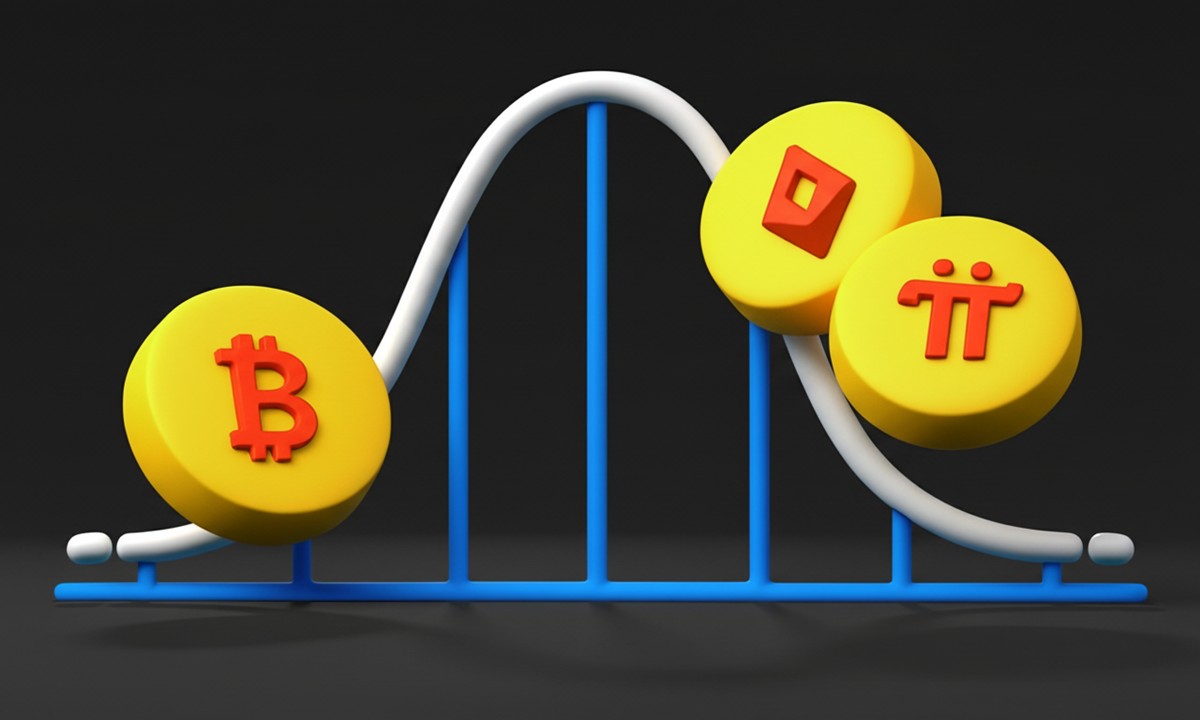
Crypto doesn’t move in a straight line. Like stocks and commodities, it swings between boom and bust as liquidity, sentiment, and news change. If you only stare at 5-minute candles during a crypto market cycle analysis, it feels random. When you zoom out, you see repeating stages on some crypto exchanges’ graphs.
The crypto market moves in predictable cycles, and understanding them is key to maximizing your profits and minimizing your losses. In this guide, we’ll break down the crypto market cycle and show you how to use it to your advantage.
[ez-toc]
Most analysts describe four broad phases: accumulation, markup, distribution, and markdown.
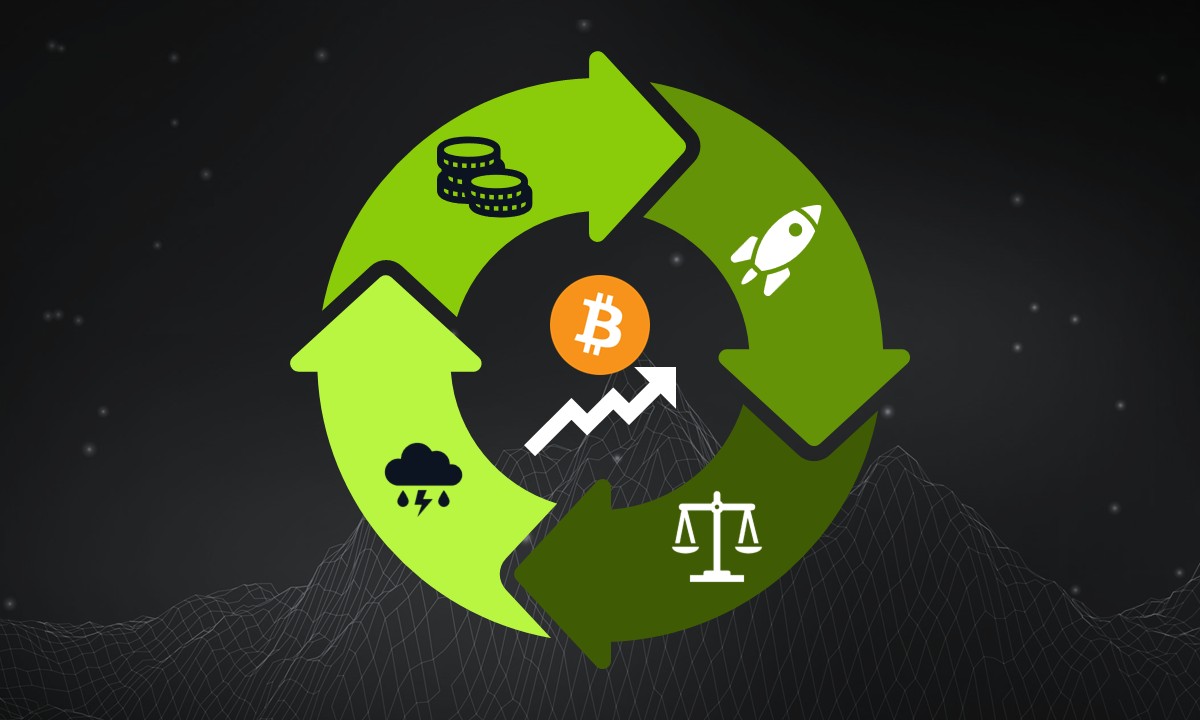
A circular diagram with green arrows shows the Bitcoin symbol in the center, surrounded by icons of coins, a rocket, scales, and a cloud with rain, representing different stages or aspects of the cryptocurrency cycle.
Accumulation comes after a big crash or long bear market. Prices move sideways near the lows, volume is muted, and sentiment is exhausted. This is when long-term investors and funds quietly build positions at what they see as discount levels.
Your job here is simple: buy slowly, avoid high leverage, and focus on assets you’re comfortable holding for years. Think dollar-cost averaging, not all-in bets.
Once demand outweighs supply, price breaks out of the range. You get higher highs and higher lows, rising volume, and more positive coverage. Bitcoin usually leads, then strong altcoins follow.
In markup, you want to ride trends while staying disciplined. Let winners run, but plan partial profit targets and use stop-losses. Some well-known trading strategies can help you learn how swing and day traders structure entries, exits, and risk on Bitunix.
After a long markup, the market starts to feel overheated. Price chops near the top with big swings in both directions. Meme coins and low-quality projects pump. Smart money sells into strength while late buyers keep jumping in.
Here you tilt toward defense: scale out of overstretched positions, reduce leverage, and rebalance into safer holdings. You don’t need to “call the top”; you just stop assuming every dip will bounce to a new all-time high.
Eventually, sellers take over. Prices form lower highs and lower lows; liquidations spike; headlines talk about “crypto winter” again. On-chain data often shows heavy realized losses as traders capitulate.
In markdown, your main goal is to protect capital. Some traders hedge or short; others step aside and wait. Either way, you avoid revenge trades and start planning where you’d be happy to buy again once things calm down.
Bitcoin halvings cut the block reward in half roughly every four years. That reduces new supply and changes miner economics. Investopedia summarizes it clearly: “Bitcoin halving is an event that reduces the reward for mining new blocks by 50%, which impacts the supply and potentially the price of Bitcoin.”
Historically, major bull runs have followed halving events, although the exact timing and size of the move have differed each cycle.
Crypto now trades alongside other risk assets. S&P Global notes that while crypto has unique drivers, pricing is influenced by “market confidence, adoption, technology, and liquidity conditions.”
Interest rates, inflation, and global risk appetite all feed into those liquidity conditions, helping to shape when markups or markdowns gain momentum.
New waves of tech—DeFi, NFTs, layer-2s, real-world assets—bring fresh users and narratives. That extra attention can extend bull runs or spark strong local uptrends even in a choppy environment. The key is to focus on projects that actually attract users, not just buzzwords.
Regulation shapes access and trust. A BIS-linked review stresses that effective crypto rules require “data and clear frameworks,” balancing innovation with risk control.
In practice, clear rules usually help long-term adoption, while sudden bans or unclear regimes often trigger short-term markdowns.
On-chain metrics look at blockchain activity instead of only price: active addresses, transaction volume, and flows between wallets and exchanges.
A core tool is the MVRV ratio, defined by Glassnode as the “ratio of an asset’s Market Capitalization versus its Realized Capitalization,” used to identify when the price is far above or below “fair value” based on the aggregate cost basis. High MVRV often lines up with overheated tops; very low levels often appear near major bottoms.
For cycle work, you focus on higher-timeframe charts:
You can dig deeper into candles using 34 K-line patterns, which break down single-candle reversal signals in detail.
Sentiment tells you what people feel and say. You can watch:
You can analyze bullish vs bearish sentiment and crypto market sentiment tools to develop practical ways to combine these signals with charts.
Here you play the long game:
Many traders build their rule set from different resources while letting small positions quietly grow. Idle coins you’re comfortable locking can also work in Earn, depending on your risk tolerance.
Markup is where portfolios grow fast—and where greed sneaks in:
Ideas from different trading strategies can help you adapt position sizing and timeframes to current volatility instead of relying on old habits.
In the distribution phase, you shift from chasing upside to quietly protecting gains. Price chops near the top, weaker coins pump, and smart money sells into strength. You trim winners, cut leverage, tighten stops, and rotate into safer assets, checking whether your portfolio still matches what you’d build from scratch today.
In markdown, the priority is survival, not hero trades. Prices trend lower, sentiment is bleak, and impulsive “comeback” bets destroy accounts. You keep positions small, favor cash or stablecoins, and only hedge or short with clear rules. You mark long-term support zones and treat this stage as preparation for the next accumulation phase.
The Spot market is where you buy and sell cryptocurrencies directly without leverage, making it the core layer for long-term investing. You own the actual assets, can move them on-chain or to other platforms, and avoid liquidation risk, which makes Spot ideal for building and rebalancing a safer base portfolio.
The Futures market lets you trade crypto with leverage, going long or short without owning the underlying asset. It’s useful for hedging spot positions, expressing directional views in distribution or markdown phases, and trading with smaller capital—provided you manage margin, liquidation levels, and position size with strict risk rules.
Ready to master the crypto market cycle? Trade on Bitunix with advanced tools and low fees.
Bitunix combines deep Spot and Futures liquidity with yield products, so you can choose between active trading and more passive strategies in one place. You can trade in your browser or grab the mobile app from the app download section and manage positions on the go.
If you want to stop guessing and start trading with a clear plan, open an account on Bitunix and test these strategies with small, real trades. Sign up, explore Spot and Futures, and see for yourself how the right tools change the way you move through each market cycle.
The market usually rotates through accumulation, markup, distribution, and markdown. Each phase has its own pattern of price, volume, and psychology. When you match your tactics to the phase—building calmly in accumulation, managing trends in markup, de-risking in distribution, and protecting capital in markdown—you trade with a plan instead of reacting to every headline.
You won’t predict every twist, and that’s fine. What matters is staying consistent, managing risk, and using reliable tools so you’re still here for the next bull run.
Trade smarter, not harder. Understand the crypto market cycle and start trading on Bitunix today!
How long does a crypto market cycle last?
There’s no fixed length, but many analysts see a rough three-to-four-year rhythm around Bitcoin halvings, with major bull and bear legs clustering in that window.
What is the best way to track the crypto market cycle?
Use higher-timeframe charts, a couple of on-chain metrics like MVRV, and simple sentiment tools. You don’t need fancy models; you need consistency.
Is it possible to predict the top and bottom of the market?
Not exactly. Your aim is to spot late-cycle signs—extreme greed, stretched valuations, heavy unrealized profits or losses—and adjust by scaling out or cautiously scaling in.
How does the crypto market cycle differ from the stock market cycle?
The structure is similar, but crypto cycles tend to be faster and sharper because the market trades 24/7 and still has more retail and speculative flow.
What are the most reliable indicators for analyzing the crypto market cycle?
Many traders combine moving averages, support/resistance, MVRV and related on-chain tools, and sentiment measures like funding rates and social activity.
What is the role of institutional investors in the crypto market cycle?
Institutions add liquidity and link crypto more tightly to macro trends; their ETF flows and risk positioning can strengthen both markups and markdowns.
How can I manage my emotions during a volatile market?
Write rules in advance, size positions modestly, and use material on discipline and psychology to remind yourself that following the plan matters more than chasing every move.
What are some common mistakes to avoid when trading the crypto market cycle?
Going all-in late in markup, ignoring risk during distribution, using reckless leverage in markdown, and abandoning a long-term plan after a few bad trades.
How will the crypto market cycle evolve in the future?
As regulation and institutional adoption grow, cycles may become less extreme, but new technology waves and liquidity shocks mean booms and busts are likely to continue.
Where can I find more information about crypto market cycle analysis?
Broad education from sources like Investopedia, Glassnode docs, and major research houses pairs well with Bitunix guides on sentiment, K-lines, and trading rules—then you apply those ideas in your own trades, one small position at a time.
Accumulation Phase: Period after a sharp crash or long bear market when prices move sideways at low levels and long-term investors quietly build positions.
Altcoin: Any cryptocurrency that is not Bitcoin, often following BTC’s lead during markup and distribution phases.
Bear Market: Extended period of falling prices and negative sentiment, usually leading into the accumulation phase once selling pressure fades.
Bitcoin Halving: Event roughly every four years that cuts Bitcoin’s block reward by 50%, slowing new supply and often acting as a structural driver for new market cycles.
Bull Market / Bull Run: Prolonged period of rising prices and strong optimism, typically associated with the markup phase of the cycle.
Crypto Market Cycle: Repeating pattern of four main stages—accumulation, markup, distribution, and markdown—driven by supply, demand, sentiment, and macro conditions.
Crypto Winter: Informal term for a deep or prolonged bear market in crypto, often characterized by markdown, low volumes, and pessimistic headlines.
Day Trading: Short-term trading style where positions are opened and closed within the same day to capture intraday price moves.
Dollar-Cost Averaging (DCA): Strategy of investing fixed amounts at regular intervals regardless of price, commonly used during accumulation to reduce timing risk.
Distribution Phase: Late-cycle stage where price chops near the top, speculative assets pump, and experienced traders gradually sell into strength.
Earn: Yield-oriented products on Bitunix that allow users to lock or deposit idle coins to earn interest, depending on risk tolerance.
Futures Market: Market for derivative contracts where traders can go long or short with leverage without owning the underlying asset, useful for hedging or directional bets.
Funding Rate: Periodic payment between long and short traders in perpetual futures that helps keep contract prices close to the spot price and signals market bias.
Hedge: Position taken to offset risk in another holding, such as using futures shorts to protect a spot portfolio during markdown.
Leverage: Borrowed capital used to increase position size relative to account equity, amplifying both gains and losses.
Liquidity Conditions: Overall availability and cost of capital in markets, influenced by interest rates, risk appetite, and macro policy, which affects how strongly cycles move.
Markdown Phase: Stage where sellers dominate, prices trend lower, volatility remains high, and many traders capitulate, often after distribution.
Markup Phase: Stage where demand exceeds supply, prices break out, higher highs and higher lows form, and optimism returns to the market.
MVRV Ratio: On-chain metric comparing a coin’s market cap to its realized cap, used to gauge whether the market is significantly over- or undervalued.
On-Chain Analysis: Study of blockchain data—like active addresses, transaction volumes, and exchange flows—to understand investor behavior and sentiment.
Realized Capitalization: Valuation method that values each coin at the price it last moved on-chain, forming the denominator in the MVRV ratio.
Revenge Trade: Emotional trade taken to “win back” recent losses quickly, often during markdown, which tends to increase losses instead.
Spot Market: Market where cryptocurrencies are bought and sold for immediate delivery and ownership, without leverage, forming the base of long-term portfolios.
Stablecoin: Cryptocurrency designed to maintain a stable value, often pegged to fiat (like USD), commonly used as dry powder in defensive phases.
Stop-Loss: Pre-set order to close a position if price moves against you to a certain level, limiting potential losses.
Swing Trading: Trading style that holds positions for days to weeks to capture medium-term moves within the broader market cycle.
Technical Analysis (TA): Use of price, volume, and chart patterns—such as moving averages and candlesticks—to identify trends and potential reversal points.
Yield Product: Financial product that pays interest or rewards on deposited assets, such as staking or Earn-style offerings on an exchange.
Bitunix is a global cryptocurrency derivatives exchange trusted by over 3 million users across more than 100 countries. At Bitunix, we are committed to providing a transparent, compliant, and secure trading environment for every user. Our platform features a fast registration process and a user-friendly verification system supported by mandatory KYC to ensure safety and compliance. With global standards of protection through Proof of Reserves (POR) and the Bitunix Care Fund, we prioritize user trust and fund security. The K-Line Ultra chart system delivers a seamless trading experience for both beginners and advanced traders, while leverage of up to 125x and deep liquidity make Bitunix one of the most dynamic platforms in the market.
Bitunix Global Accounts
X | Telegram Announcements | Telegram Global | CoinMarketCap | Instagram | Facebook | LinkedIn | Reddit | Medium