How AAPLUSDT Trading Works on Bitunix
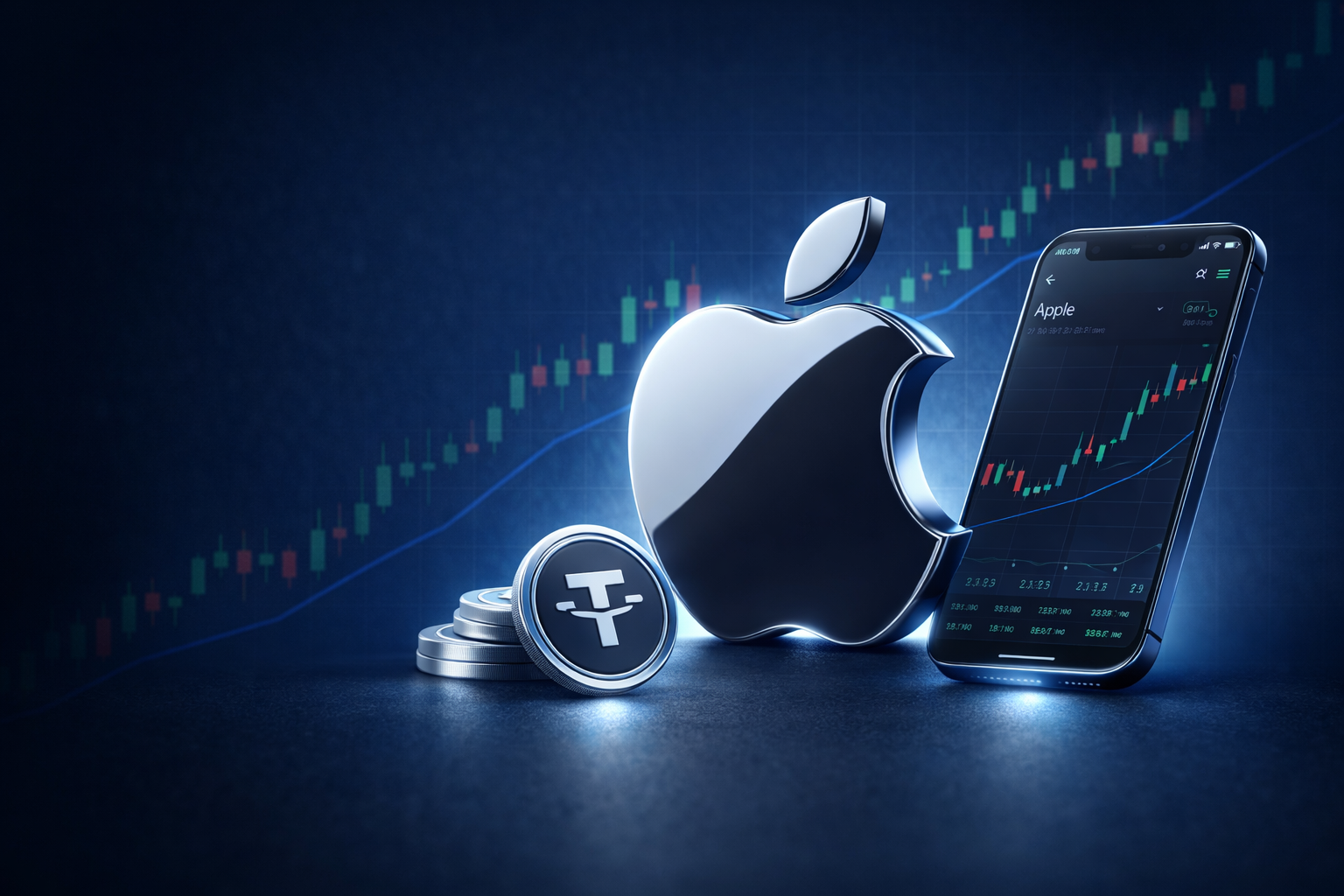
Learn how to trade Apple stock on Bitunix with USDT, understand how AAPLUSDT works, and explore volatility, leverage, and risk management for beginners.


It is not a thing to be surprised that cryptocurrency trading has revolutionized the financial world, offering new opportunities for traders and investors alike. Two of the most popular trading methods in the crypto market are spot and futures trading. Both have their unique characteristics, benefits, and risks involved. And for you to be profitable in this space? You have to understand these key differences in order to navigate the volatile world of cryptocurrency.
This article will dive into the intricacies of spot and futures trading, highlighting their main distinctions and how traders can leverage them for their financial advantage.
As discussed in our previous article, spot trading involves buying and selling cryptocurrencies for immediate delivery without respite or delay. This means that transactions are settled “on the spot,” with the buyer receiving the cryptocurrency instantly, and the seller receiving the agreed-upon amount in fiat or another cryptocurrency. The price at which these transactions occur is known as the spot price or market price.
In spot trading, transactions are straightforward. A trader places an order on a cryptocurrency exchange like Bitunix, specifying the amount and price of the cryptocurrency they wish to buy or sell. Once a matching order is found, the trade is executed and the assets are transferred between the buyer and the seller. Spot trading does not require any technical expertise, it is mainly suitable for newbie traders.
Spot trading offers simplicity which makes it easy to understand and execute, making it ideal for beginners. What also makes spot trading unique is the immediate ownership traders gain over their cryptocurrency holdings, allowing them to transfer, spend, stake, or hold it as they wish. Without the leverage and margin requirements of futures trading, spot trading literally involves little to no risk.
As we all know there is the good and bad side to literally everything in life so it is in cryptocurrency trading. Below are some of the risks involved in spot trading.
Suppose you want to buy 1 Bitcoin ($BTC) at the current market price of $68,000. You place a buy order on a cryptocurrency exchange like Bitunix, and once a matching sell order is found, the trade is executed. You pay $68,000, and you immediately receive 1 $BTC in your spot exchange wallet.
From the name itself “Futures” implies later date or extended period. Futures trading involves buying and selling contracts that represent the value of a cryptocurrency at a predetermined future date and price. Unlike spot trading, the actual cryptocurrency is not exchanged at the time the contract is bought or sold. Instead, traders speculate on the future price movements of the cryptocurrency.
This form of trading works best for experienced traders who have the knowledge and are conversant with spot trading already. Before venturing into futures trading, make sure you are proficient with spot trading.
In futures trading, a trader enters into a contract to buy or sell a cryptocurrency at a future date. These contracts can be settled either physically (by delivering the actual cryptocurrency) or in cash (by settling the profit or loss in fiat currency). Futures contracts can be traded on margin, meaning traders can leverage their positions to amplify potential gains (or losses).
Leverage can amplify a trader’s profit and can also amplify a trader’s loss. Bitunix offers 125x leverage which a trader can use to capitalize on gains.
For instance, you believe that the price of Bitcoin will rise in the next three months. You enter into a futures contract to buy 1 $BTC at $68,000 in three months. If the price of Bitcoin rises to $70,000 at the end of the contract, you can buy the Bitcoin at the agreed price of $68,000, realizing a profit of $2,000. Conversely, if the price falls to $66,000, you would incur a loss of $2,000.
| Aspect | Spot | Futures |
| Ownership | Yes | No |
| Leverage | None | High (125x) |
| Expiry | Immediate | Future date |
| Type | Strategy | Tool |
| Spot | Diversify | Hardware wallet |
| Futures | Use SL | Monitor funding |
Spot trading is generally subject to fewer regulatory restrictions compared to futures trading. Rules vary by jurisdiction. For example, the US has strict oversight, while El Salvador allows more relaxed frameworks.
Futures trading is heavily regulated in markets like the United States, where the Commodity Futures Trading Commission (CFTC) oversees trading to protect investors. Requirements include reporting, margin compliance, and market integrity rules.
Risk Management for Spot:
Risk Management for Futures:
Spot and futures trading each offer unique opportunities and challenges for cryptocurrency traders. Spot trading provides simplicity and immediate ownership of assets, making it suitable for long-term investors and beginners. Futures trading offers leverage and the ability to profit from both rising and falling markets, making it attractive to more experienced traders.
Understanding the key differences between spot and futures trading is crucial for making informed trading decisions. By leveraging the benefits and managing the risks associated with each method, traders can navigate the volatile world of cryptocurrency more effectively.
Whether you are a novice investor or an experienced trader, staying informed about the dynamics of spot and futures trading will enhance your ability to capitalize on opportunities. Always conduct thorough research, build a robust trading strategy, and use effective risk management techniques to succeed in this fast-moving market.
Spot gives immediate ownership at current price, while futures are contracts for future delivery with leverage.
No, futures speculate on price without ownership. Spot transfers actual assets.
Spot for long-term simplicity and asset control. Futures for leveraging volatility or hedging.
Futures for shorting, high leverage, or non-expiry contracts like perpetuals.
Futures due to leverage and funding. Spot limits losses to invested capital.
Take opposite positions (e.g., long spot, short futures) to balance exposure.
Yes, for perpetuals (every 8 hours). Spot has no funding but standard fees.
Bitunix is one of the world’s fastest growing professional derivatives exchanges, trusted by over 3 million users across more than one hundred countries. Ranked among the top exchanges on major data aggregators, Bitunix processes billions in daily volume and offers a comprehensive suite of products including perpetual futures with high leverage, spot markets, and copy trading. Users can trade bitcoin and other major cryptocurrencies on the platform, taking advantage of advanced trading features. Known for its Ultra K line trading experience and responsive support, Bitunix provides a secure, transparent, and rewarding environment for both professional and everyday traders. Bitunix Academy adds structured lessons so you can build skills while you trade.
Bitunix Global Accounts
X | Telegram Announcements | Telegram Global | CoinMarketCap | Instagram | Facebook | LinkedIn | Reddit | Medium
Disclaimer: Trading digital assets involves risk and may result in the loss of capital. Always do your own research. Terms, conditions, and regional restrictions may apply.