How AAPLUSDT Trading Works on Bitunix
Learn how to trade Apple stock on Bitunix with USDT, understand how AAPLUSDT works, and explore volatility, leverage, and risk management for beginners.

After two difficult years in which ETH largely underperformed Bitcoin and the ETH/BTC ratio hit multi-year lows, the question is whether a turn is finally at hand. With U.S. spot ether ETFs now trading and Layer-2 throughput rising, there is a credible setup for recovery in the next cycle.
Ethereum has become the foundation on which DeFi, NFTs, tokenized real-world assets, and data infrastructure operate every day. Layer-2 scalability improvements are cutting costs and increasing network capacity.
At the same time, the shift to Proof-of-Stake and the fee-burn mechanism (EIP-1559) make supply dynamics structurally scarcer during periods of heavy activity. The result is a network asset with broad utility, stronger economic security, and a steady pipeline of upgrades designed to function as a secure and scalable settlement layer for the financial web.
This article provides an ETH price prediction for 2026–2030, combining tokenomics with potentially negative net issuance, L2 ecosystem traction, and institutional demand. It outlines scenario ranges (low, base, and high), the triggers that could unlock new highs, and the risks that may delay the cycle.
Ethereum is an open, programmable blockchain that introduced smart contracts, enabling financial applications, NFT markets, on-chain games, identity systems, and more. It is the default infrastructure for developers building digital services without intermediaries.
With The Merge, on 15 September 2022, the network shifted from Proof-of-Work to Proof-of-Stake, drastically reducing energy consumption and improving the economic efficiency of its consensus by aligning validators through ETH staking.
Since EIP-1559, part of the transaction fees is burned, reducing supply. When network activity surpasses issuance to stakers, net supply can turn negative, a thesis often referred to as ultrasound money, reinforcing a scarcity narrative tied directly to real protocol usage.
Launched through an ICO in 2014/2015, ETH went from pennies to new all-time highs that surpassed the 2021 peak on August 24, 2025, when the price reached about $4,945 and the market cap approached $600 billion. Since then, the price has moved with global liquidity cycles and on-chain adoption, keeping its position as the number-two asset by market value.
Three milestones have shaped ETH’s trajectory so far:
As broader context, the DeFi boom of 2020 (DeFi Summer) established ETH as the backbone of programmable finance, a key driver of on-chain demand over the latter half of the decade.
Our ETH price prediction 2026-2030 reflects ETF traction, Layer-2 scale after Dencun, net supply dynamics, and historical market cycles.
The launch of spot Ethereum ETFs in the US in Jul 2024 opened the door to recurring institutional flows. Day one traded $1.07B and through 2025, CoinShares weekly reports have shown sizable ETH inflows, including after market pullbacks, for example, +$338M in the week of Oct 13.
These vehicles expand the base of buy-the-dip participants, professionalize price discovery, and reduce operational friction for treasuries and asset managers. In up cycles, ETH tends to lead altcoin beta because it is the most relevant settlement layer. DeFi, NFTs, RWAs, and rollups anchor activity and fees on the network, while the EIP 1559 burn helps keep net supply in check when usage accelerates.
If ETFs sustain net inflows and the L2 ecosystem keeps cutting transaction costs, the ETH/USDT price is likely to capture this mix of institutional demand and on-chain utility. Assuming continued ETF inflows, strong on-chain activity, and a macro backdrop without severe shocks, we work with a $4,000-$5,000 range for 2026.
The maturation of L2s, for example, Arbitrum, Optimism, and Polygon PoS or zk, is the vector that can bring millions of users into daily applications. After Dencun, rollup fees fell sharply, on the order of 100x in some cases, unlocking use cases that were previously unviable and lifting the ecosystem’s TVS. This indicator has trended higher through 2025.
Public metrics show robust volumes and millions of daily transactions on Arbitrum, while Optimism has set ambitious goals for interoperability and value transfer across the Superchain. In bull markets, rising activity tends to increase the EIP 1559 burn.
With Proof of Stake issuance and burn proportional to usage, ETH net supply can turn negative for extended windows, reinforcing the scarcity thesis tied to utility. Data from ultrasound.money shows this post Merge dynamic. This backdrop compounds the L2 flywheel effect. Lower fees → more users → more activity → more burn. In short:
Throughout the period, users can do crypto futures trading for directional hedging and risk management, especially when ETH/USDT volatility expands around events such as ETFs and upgrades.
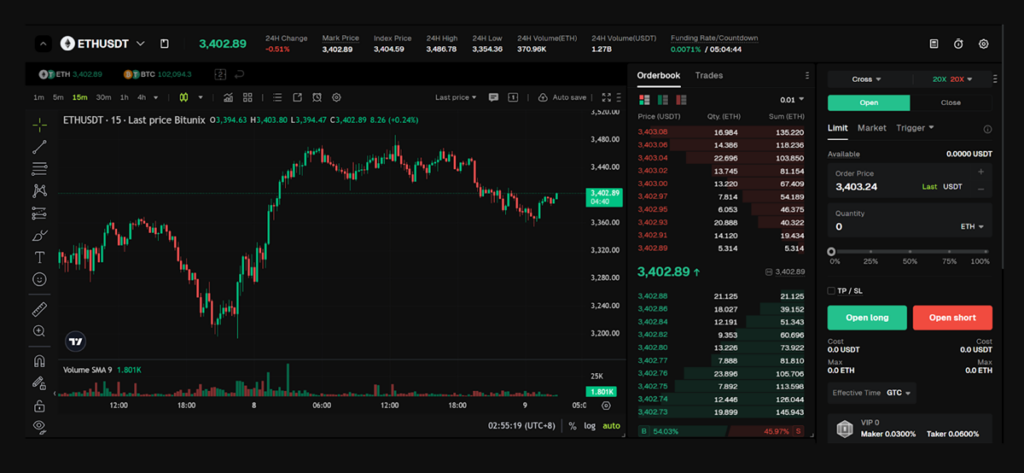
The bull case assumes Ethereum is established as a neutral settlement layer for a tokenized economy that includes institutional DeFi, RWAs, data markets, and programmable payments anchored to low-cost L2s. Infrastructure improves with in-kind creations and redemptions in ETFs, reducing frictions and tracking error, and broadening the base of structural buyers such as funds, treasuries, and savings plans.
That tends to smooth drawdowns and support a long-term uptrend. The possibility that ETH’s market cap could surpass BTC (the flippening) remains a recurring theme. To move beyond hypotheticals, ETH would need TVS and L2 activity to grow faster than L1, sustained ETF inflows, and an ongoing narrative of constrained net issuance (burn > issuance) over long windows.
Dashboards often show this when fees spike. It is plausible in a prolonged euphoria cycle, but not guaranteed. BTC still has brand strength, liquidity, and the store-of-value edge. So the forecast is:
As with any cryptocurrency, ETH is volatile, and several variables exert outsized influence.
Net ETF inflows are the main tap for traditional capital. Operational approvals, such as in-kind processes, tend to improve efficiency and liquidity, lower arbitrage costs, and attract more conservative allocators. Monitoring weekly fund flows is essential.
L2s such as Arbitrum, Optimism, and Polygon already process transaction volumes that surpass L1 in many periods. As wallets, on-ramps, and account abstraction mature, entry barriers fall and the ecosystem’s TVS grows. This is a direct vector for ETH usage and burn.
With Proof-of-Stake and EIP-1559, gross issuance is partially offset by fee burn. In periods of intense demand, net supply can turn negative, strengthening the scarcity thesis tied to real network use.
ETH’s classification remains under scrutiny. The CFTC has described ether as a commodity in past communications, while the SEC oversees ETF approvals and market rules. Developments such as ETF options and in-kind processes signal a more functional framework, but changes in interpretation remain a sector-wide macro risk.
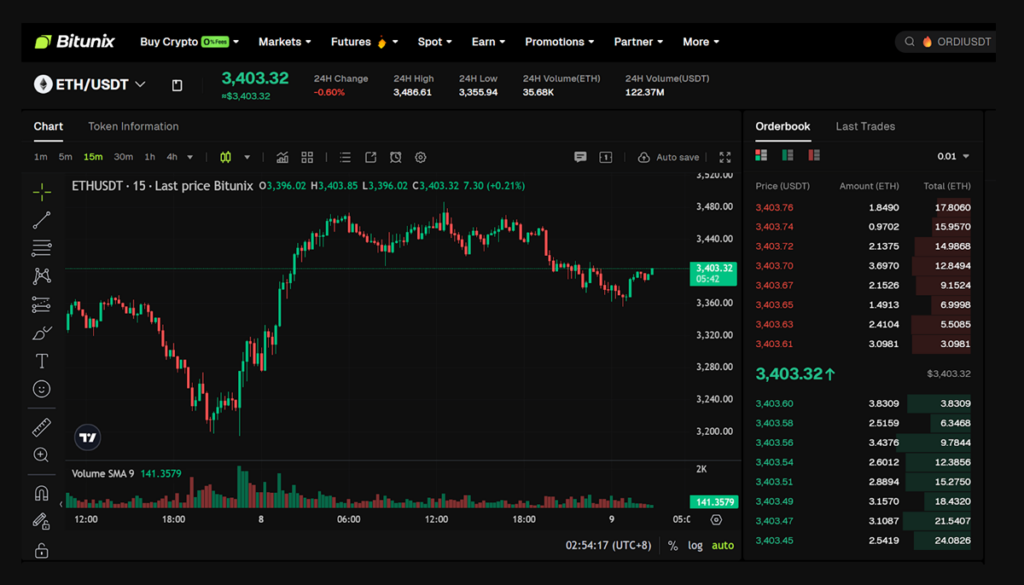
Buying and holding ETH on Bitunix is straightforward. Create your account, deposit crypto or use compatible on-ramps, then open the ETH/USDT page in One Chart. For anyone starting on mobile, the crypto exchange app makes it easy to set price alerts, place limit and market orders, and track execution history.
KYC is required only for fiat operations, keeping user safety a priority. For directional exposure with protection and leverage, ETH perpetuals on Bitunix offer deep liquidity, multiple margin modes, and risk control through stop and take-profit tools.
It is an efficient way to trade ETH/USDT volatility, for example, during upgrade events or ETF flow surges, and to hedge spot positions. If you need stablecoins to pair your orders, use buy USDT and fund your account in a few clicks.
Invest in the backbone of Web3. Trade ETH on Bitunix, a secure and powerful platform for your crypto journey. Sign up now.
Open larger positions with controlled risk. The fast registration process gets you into the market in minutes, and the user-friendly verification system speeds up essentials when you need fiat access.
Bitunix operates under global compliance, and an exchange that truly cares is reflected in the one chart platform for beginners and advanced traders, which brings pro tools and simple UX together.
Add the best liquidity in the market for ETH perpetuals, and you get stable execution even during high volatility. Try it now. Create your account and test leverage with proper risk management.
ETH’s investment case is powered by three reinforcing engines. First, institutional demand through ETFs. Second, a Layer 2 ecosystem that scales the network and reduces costs. Third, tokenomics with a fee burn that can push net issuance negative during heavy usage.
Together, they shape an asset that acts as both infrastructure and collateral for Web3, with global liquidity and compounding network effects. Still, liquidity competition from other L1s and L2s, regulatory risks in key markets, and crypto’s cyclical nature must be factored in.
Even so, Ethereum’s leadership as a settlement layer for DeFi, NFTs, and RWAs remains unmatched, and its integration with regulated instruments expands the base of long-term structural buyers.
For traders seeking direct exposure, the path is clear. Buy Ethereum on spot and, when appropriate, use crypto futures for hedging or volatility strategies, always with disciplined risk management. Prefer a user-driven fiat on-ramp? Bitunix’s P2P crypto exchange lets you move into stablecoins flexibly before trading ETH.
The future of finance is being built on Ethereum. Be part of it by trading ETH on Bitunix today.
The content published on the Bitunix Exchange Blog is provided for informational purposes only and does not constitute financial, investment, or trading advice. Cryptocurrency markets are highly volatile and can fluctuate rapidly. Always do your own research and consider your individual financial situation before making any investment decisions. Bitunix does not guarantee the accuracy or completeness of any predictions or analysis shared on this blog and is not liable for any losses incurred as a result of relying on this information.
It is possible in extended euphoria scenarios, supported by steady ETF inflows, L2s onboarding users at scale, and net supply kept tight through the burn mechanism (EIP-1559). The $20k level is plausible in a strong 2028-2030 bull case. Hitting $50k would require record institutional flows, heavy on-chain activity, and a supportive macro backdrop.
They represent different theses. BTC is viewed as a store of value, while ETH acts as a programmable settlement layer. During alt-heavy cycles, ETH usually shows higher beta, which means more volatility and potentially more upside. The choice depends on your risk tolerance and your time horizon.
Spot ETFs reduce friction for funds and corporate treasuries, creating more predictable inflows. When supply tightens, this can push the ETH/USDT pair higher. In periods of net outflows, the effect moves the other way.
It is the mechanism that permanently burns part of the network fees. At times of high activity, the burn can exceed PoS issuance, making supply deflationary for certain periods. This supports a scarcity narrative tied directly to real network usage.
The opposite tends to be true. L2s lower costs, increase throughput, and anchor value back to the L1 through security and settlement. More L2 transactions mean more demand for settlement and, potentially, more ETH being burned.
Yes. Proof-of-Stake reduced the network’s energy consumption by more than 99 percent compared to Proof-of-Work. This strengthens its environmental profile and makes it more acceptable for institutions.
DeFi protocols (DEXs, lending, derivatives), NFT marketplaces, and an expanding set of RWA platforms. Rankings shift with each cycle, though DEXs and lending protocols usually concentrate most of the TVL and user activity.
High volatility, regulatory uncertainty, competition for liquidity from other L1s and L2s, and the possibility of technical or operational failures.
You can delegate your stake through pools or liquid staking providers, each carrying its own provider-level risk. Yields vary based on network activity and the number of validators. Avoid concentrating all your stake in a single service.
For simplicity and liquidity, buying spot and staying within the same ecosystem when you need hedging or strategy tools is the easiest route. On Bitunix, you can buy Ethereum and pair it with USDT with fast execution and an integrated One Chart view. KYC is only required for fiat transactions.
Bitunix is a global cryptocurrency derivatives exchange trusted by over 3 million users across more than 100 countries. The platform is committed to providing a transparent, compliant, and secure trading environment for every user. Bitunix offers a fast registration process and a user-friendly verification system supported by mandatory KYC to ensure safety and compliance. With global standards of protection through Proof of Reserves (POR) and the Bitunix Care Fund, Bitunix prioritizes user trust and fund security. The K-Line Ultra chart system delivers a seamless trading experience for both beginners and advanced traders, while leverage of up to 200x and deep liquidity make Bitunix one of the most dynamic platforms in the market.
Bitunix Global Accounts
X | Telegram Announcements | Telegram Global | CoinMarketCap | Instagram | Facebook | LinkedIn | Reddit | Medium