How AAPLUSDT Trading Works on Bitunix
Learn how to trade Apple stock on Bitunix with USDT, understand how AAPLUSDT works, and explore volatility, leverage, and risk management for beginners.

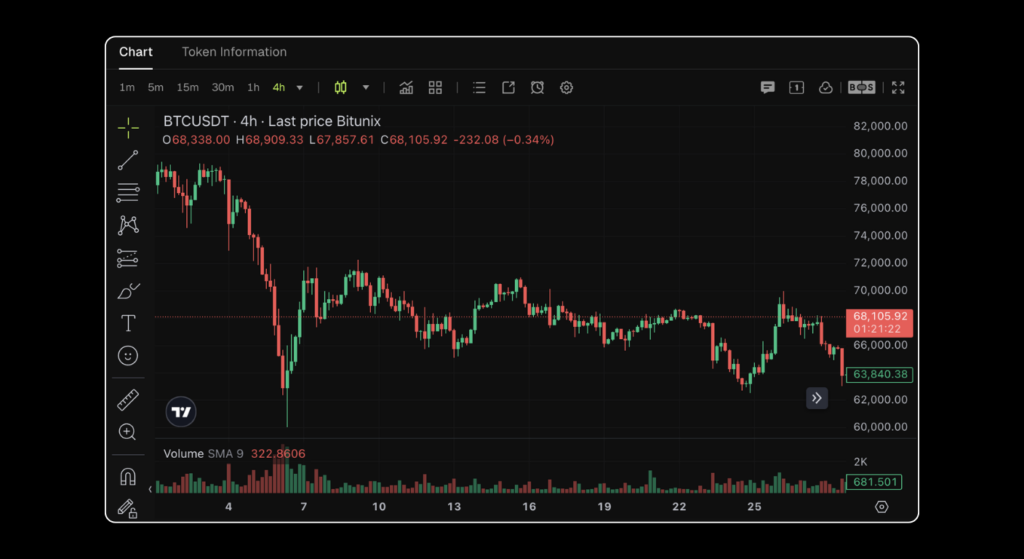
In early February 2026, BTC extended its pullback and continued sliding lower, eventually touching the key $60,000 support level on February 6. As buying interest emerged around that level, price action then shifted into a classic range-bound consolidation pattern, with resistance capped in the $69,000 to $70,000 zone and support moving up to the $63,000 to $65,000 range. However, amid escalating geopolitical tensions in the Middle East, safe-haven sentiment in the crypto market fluctuated sharply, significantly amplifying BTC’s volatility within this range and intensifying the tug-of-war between bulls and bears.
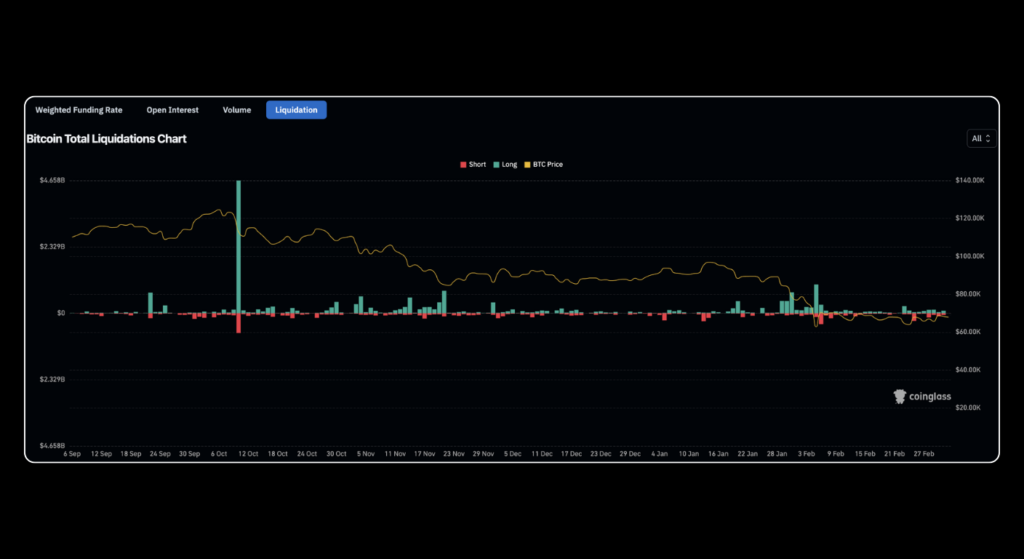
On February 6, 2026, BTC pulled back to the key psychological support level of $60,000, triggering significant market panic. Notably, the intensity of leveraged liquidations accompanying this drop was far below historical extremes. According to Coinglass data, total BTC liquidations across the market on February 5 and 6 came in at only $1.14 billion and $680 million, respectively. Compared with the massive $5.3 billion liquidation event on October 11, 2025, this indicates that the current market’s leverage structure and resilience are materially different. This further confirms that in crypto markets, the size of a price decline alone does not determine the scale of forced liquidation. Rather, violent trend reversals and liquidity depletion caused by extreme panic are often the real catalysts behind large-scale cascading liquidations.
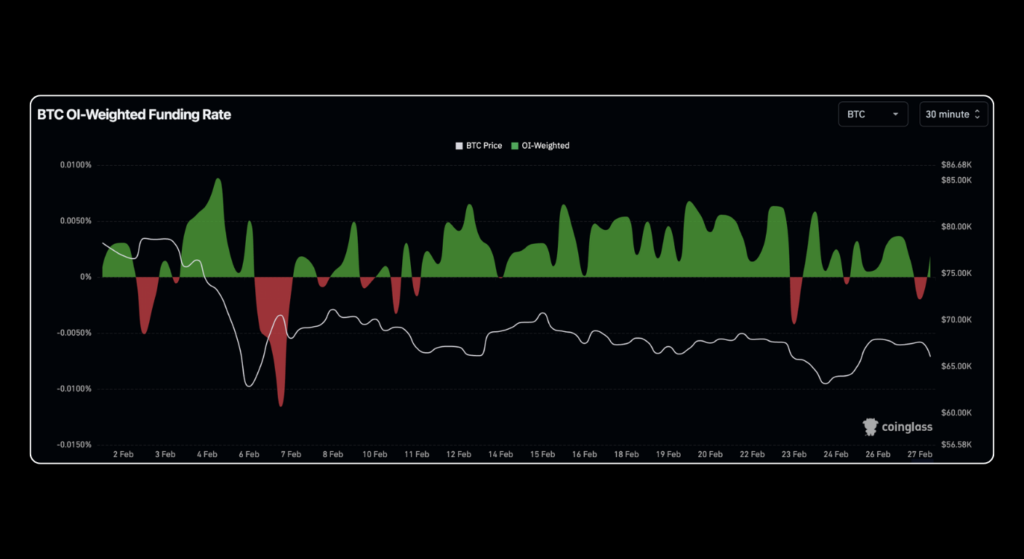
From a derivatives market perspective, BTC perpetual funding rates fell to -0.0116% on February 6, the lowest level since August 2023. This notably negative funding environment reflected an extreme discount and deeply bearish sentiment, with short positions paying longs a substantial holding cost. It showed that investor sentiment had entered an extremely bearish and polarized zone. After the February 6 capitulation move was completed, panic in the futures market was effectively released, and funding rates gradually reverted from extreme levels toward a narrow range near the neutral line. This suggests the market had entered a more stable phase of sentiment repair and supply-demand rebalancing, with overly bearish leveraged expectations easing in a meaningful way and overall market behavior returning to a more rational consolidation phase.
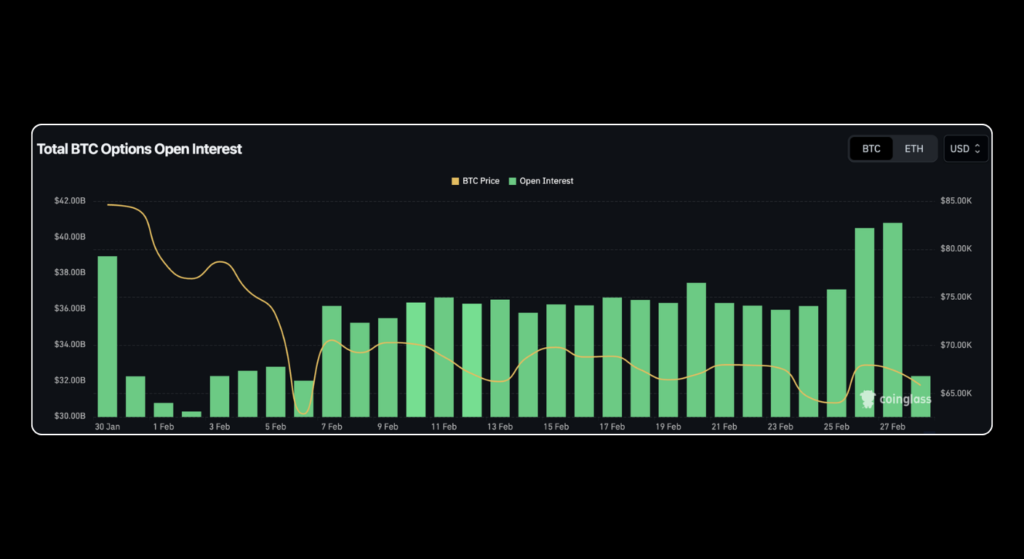
The core of the options market lies in pricing and trading volatility. Given that BTC plunged from $89,000 to a low of $60,000 over just 10 trading days from late January to early February, posting a maximum drawdown of 32%, the sharp short-term volatility significantly increased demand for hedging and volatility trading. Against this backdrop, total open interest across the BTC options market rose notably in February compared with January, with both participation and capital allocation expanding in tandem. By the end of February, aggregate open interest across the options market had once again climbed above $40 billion, showing continued capital inflows into derivatives amid a high-volatility environment.
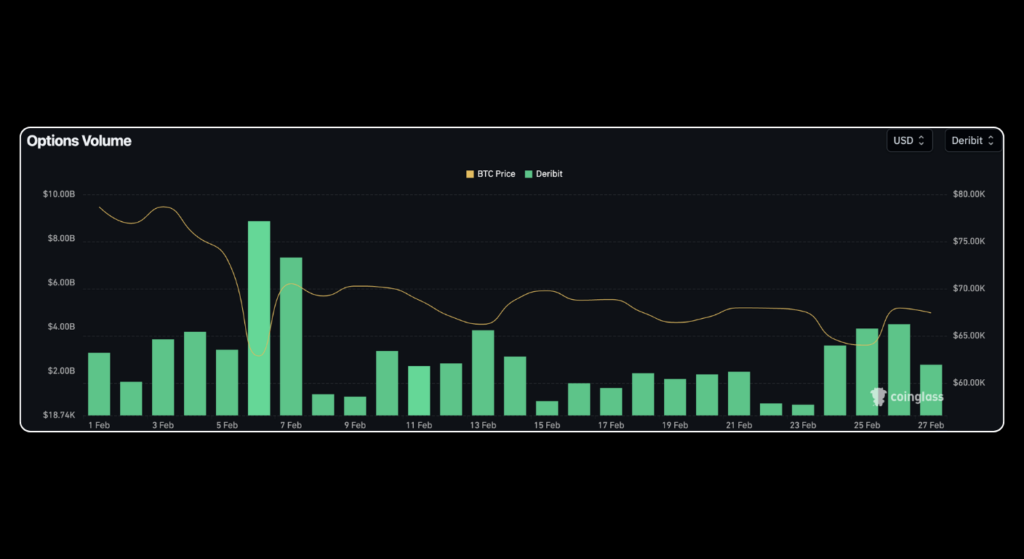
From the perspective of derivatives hedging behavior, BTC options volume on Deribit increased significantly month over month in February, reflecting a structural rise in hedging demand during the extreme downside move. As BTC pulled back sharply, some spot holders appeared to actively purchase put options to lock in downside protection and execute delta hedging strategies to preserve net asset value. Data shows that on February 6, daily options volume on Deribit surged to $8.79 billion, marking the highest level in nearly two months.
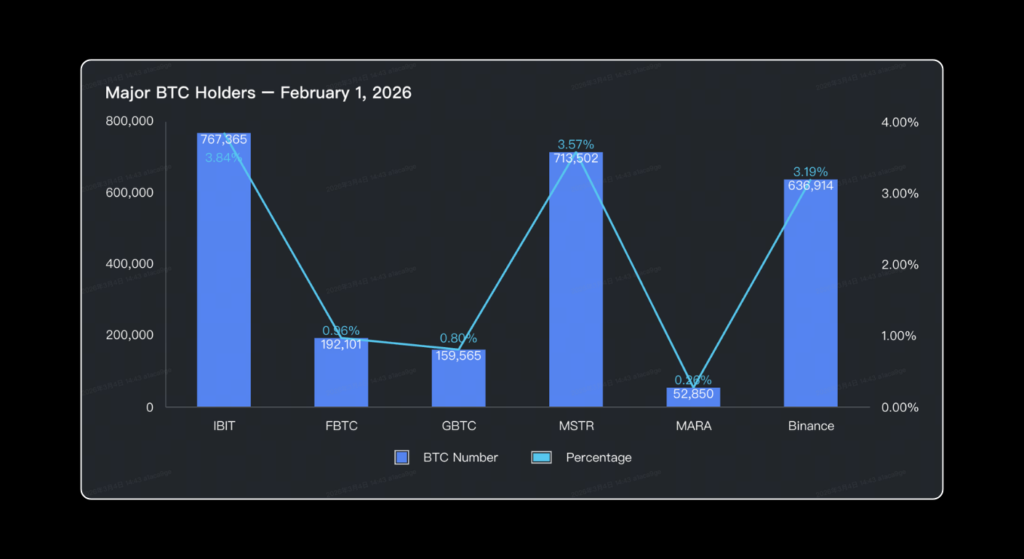
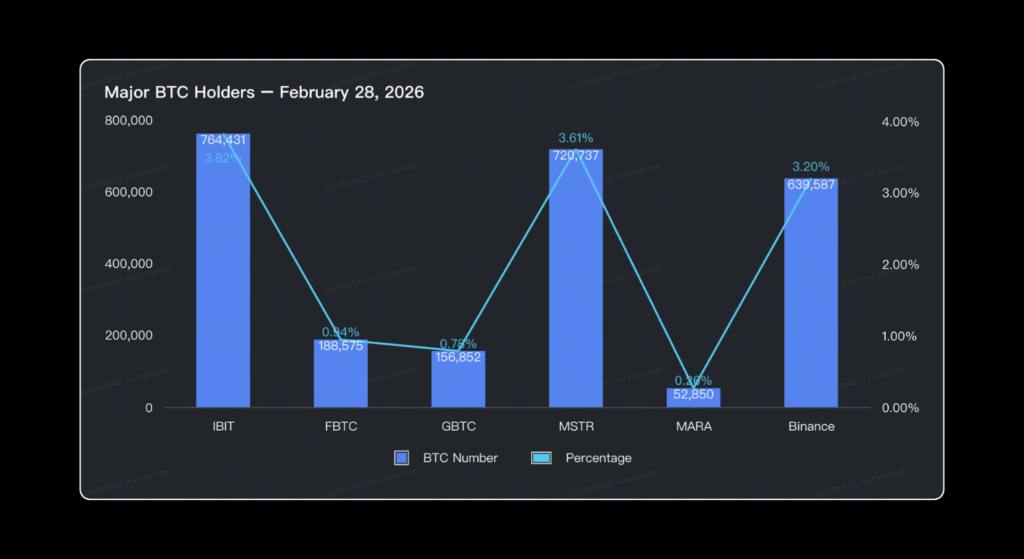
During February 2026, spot BTC ETFs as a whole continued to post net outflows, and pressure from the capital side increased noticeably. Leading products including IBIT, FBTC, and GBTC collectively reduced holdings by about 9,100 BTC during the month, indicating that some traditional capital chose to cut exposure during the price correction. At the same time, the listed company with the largest BTC holdings, MicroStrategy, moved against the trend by adding 7,235 BTC during the selloff, increasing its ownership share from 3.57% to 3.61%. This reflects the stability of corporate long-term allocation strategies even in volatile conditions.
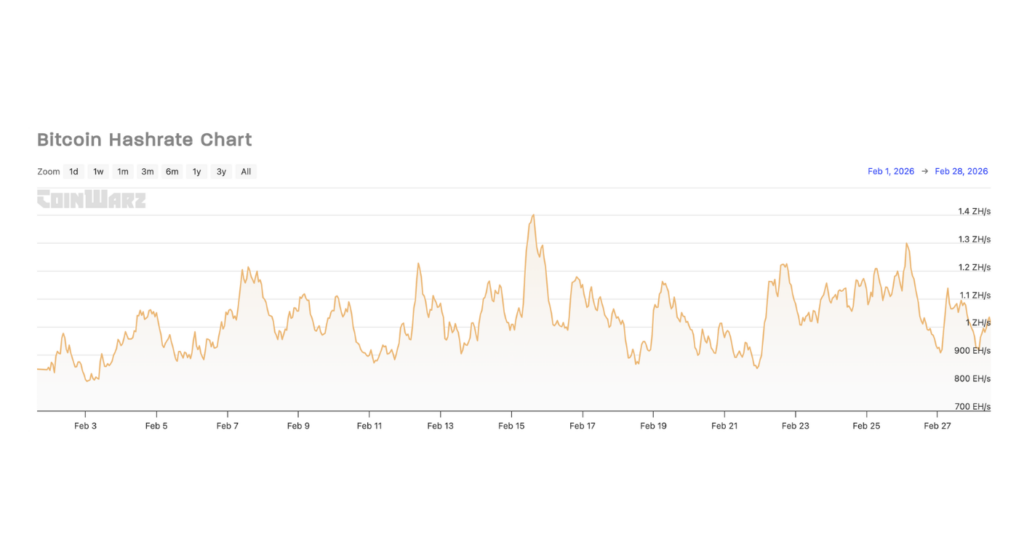
BTC network hashrate fell to 663 EH/s on January 25, marking the lowest level since July 2025. Entering February, hashrate began to bottom out and recover, with the daily average network hashrate returning to above 1 ZH/s during the month. This suggests marginal improvement in miner profitability and operational stability. However, due to geopolitical risks in the Middle East, uncertainty remains around energy supply and operating conditions for mining farms in some regions, meaning short-term hashrate performance may continue to fluctuate. On another note, the network is expected to mine the 20 millionth BTC around mid-March, a milestone with major symbolic importance.
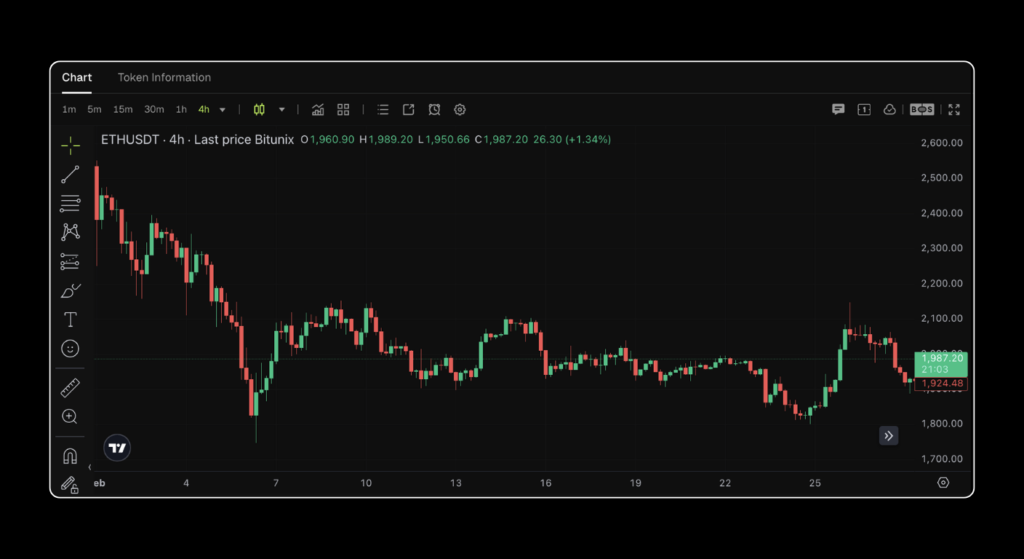
ETH broadly moved in sync with BTC throughout February. During the sharp crypto market correction on February 6, ETH briefly fell to a local low of $1,750. Price then entered a repeated consolidation range between $1,800 and $2,000, testing the upper boundary several times but failing to achieve a decisive breakout. This indicates persistent selling pressure overhead and relatively weak short-term momentum.
From the structure of liquidation data, ETH’s peak liquidation volume showed a clear timing mismatch with BTC. Since the start of 2026, ETH’s largest single-day liquidation occurred on January 31, when total liquidations exceeded $1 billion. By contrast, during the sharp market selloff on February 6, ETH liquidations totaled only $240 million. This gap highlights that once the market had more clearly entered a downtrend, some investors had already taken defensive deleveraging measures in advance, significantly reducing futures leverage exposure. It reflects a preliminary reset in market risk appetite before the extreme volatility event occurred.

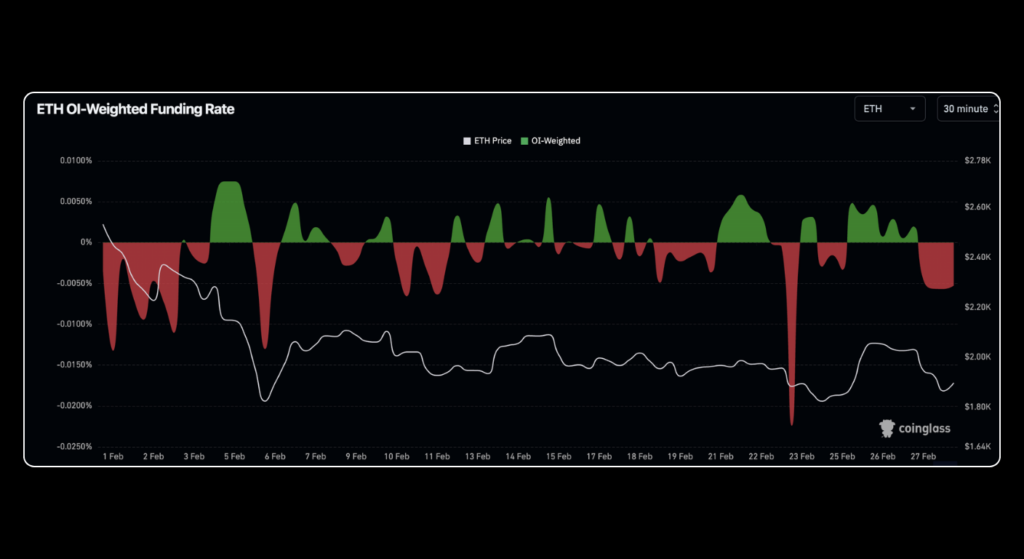
From the funding rate angle, bearish sentiment toward ETH was clearly stronger than toward BTC. For most of February, ETH futures traded at a notable discount, with short positions continuously paying longs, reflecting structurally bearish expectations for Ethereum. By comparison, after BTC’s February 6 plunge, its funding structure recovered quickly, and for most of the period funding returned to the more normal state of longs paying shorts. This indicates that investor confidence and bullish resilience in BTC remained stronger than in ETH.
ETH options open interest edged down from $6.5 billion at the start of the month to $6.2 billion by month-end, showing relatively strong structural stability. Despite sharp market volatility, the modest decline in open interest suggests institutional capital did not flee in panic and that medium- to long-term positioning in ETH remained generally intact.
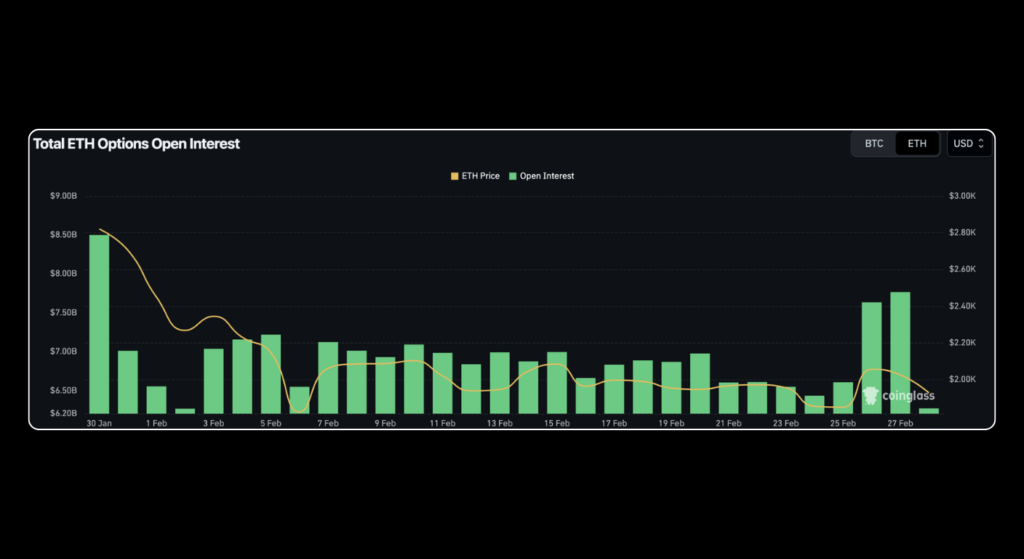
ETH options activity also remained fairly steady overall, while showing a pronounced surge in hedging demand during the February 6 downside event. On that day, ETH options volume jumped to $880 million, the highest level in nearly two months.

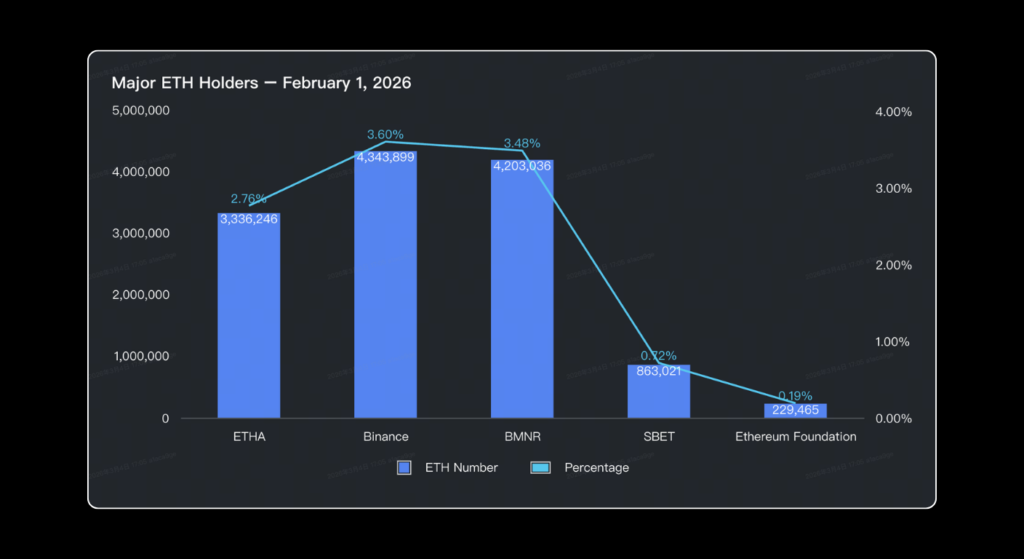
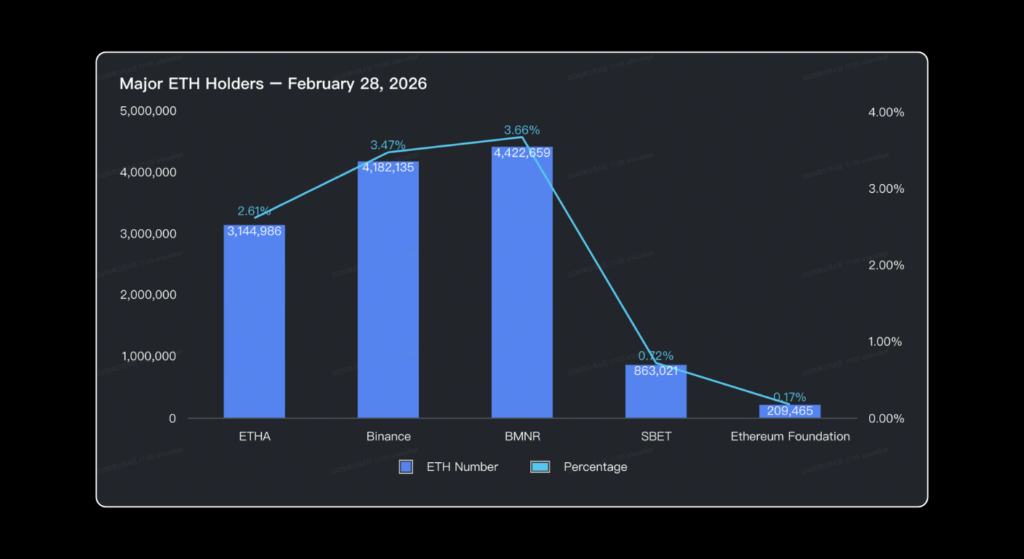
In February, the title of largest ETH-holding institution changed hands once again. Ethereum treasury company BMNR adopted an aggressive accumulation strategy during the decline, adding more than 200,000 ETH in a single month and bringing its total holdings to 4.4 million ETH, officially surpassing Binance to become the largest institutional holder of ETH globally. At the same time, spot ETH ETF channels overall saw outflows, with BlackRock’s ETHA recording cumulative outflows of 190,000 ETH in February. Its holding share was diluted from 2.76% to 2.61%, reflecting a clear strategic divergence among institutional capital at these price levels.
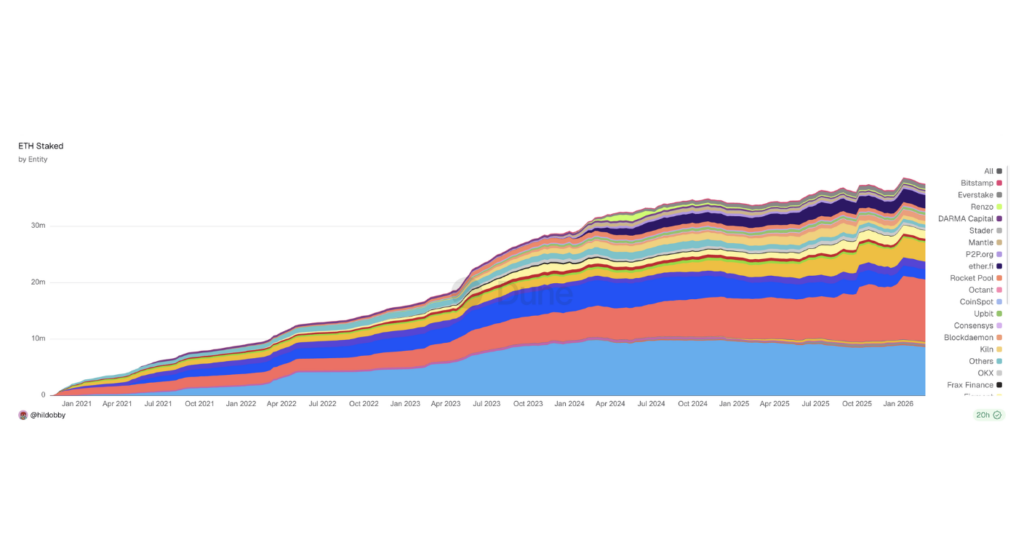
By the end of February, the total ETH staked had fallen to 37.63 million ETH, down by more than 650,000 ETH from the beginning of the month. Meanwhile, on February 24, the Ethereum Foundation announced the launch of a treasury staking program, with an initial 2,016 ETH already deposited and total staking expected to reach around 70,000 ETH. The move is intended to implement the treasury management policy announced by the Foundation last year, using staking yield to flow back into the treasury and strengthen the organization’s financial sustainability.
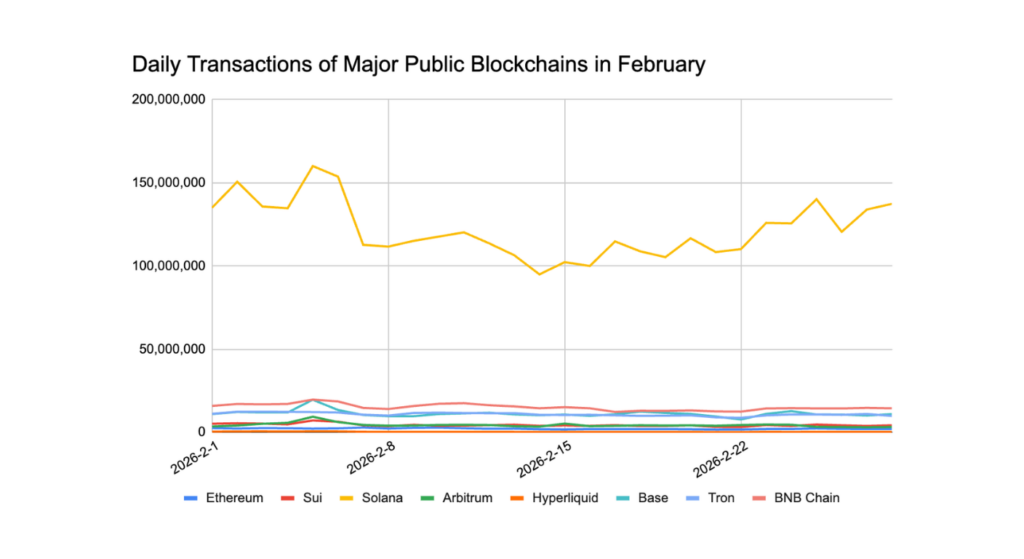
Affected by extreme market conditions, transaction activity across multiple public blockchains increased noticeably in February. Solana’s daily average transaction count reached 121 million in February, up more than 20% month over month from January. In addition, BNB Chain, Base, and TRON each recorded daily average transaction counts above 10 million during the month. In terms of gas fees, Hyperliquid once again ranked first among public chains with average daily fee revenue of about $1.83 million in February, largely unchanged from January. Meanwhile, TRON’s average daily transaction fee revenue reached $860,000, overtaking Solana and moving into second place among public chains by transaction fee generation.

In the DEX spot market, Uniswap remained strong in February, retaining the top position with an average daily trading volume of about $2.8 billion, roughly flat compared with January. By contrast, PancakeSwap posted average daily volume of $940 million in February, widening the gap versus Uniswap. In the Perp DEX segment, Hyperliquid dominated with average daily volume of $7.3 billion. Lighter, Aster, and edgeX also each exceeded $2.5 billion in average daily trading volume during the month. Driven by the extreme market move in early February, total Perp DEX trading volume surged to $18.2 billion on February 6, the highest level since October 2025.


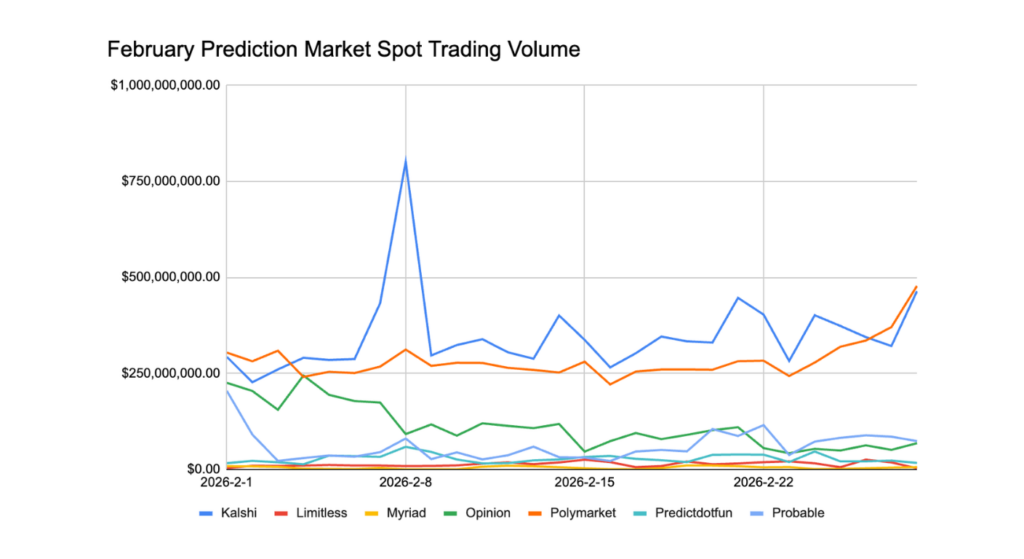
In the prediction market sector, trading activity continued to intensify in February, with Middle East geopolitical themes becoming the focal point for traders. Kalshi and Polymarket posted average daily trading volumes of $349 million and $283 million, respectively, in February. Polymarket in particular hit a single-day trading record of $425 million on February 28, surpassing the $371 million recorded on the day of the 2024 election and setting a new all-time high. By contrast, Opinion underperformed in February, with weekly trading volume continuing to shrink month over month and daily average volume falling to $110 million, suggesting it may be gradually losing ground in the race for category leadership. As for platforms such as Myriad, Limitless, and Probable, each recorded average daily trading volume below $100 million, indicating that their overall market scale remains relatively limited.
Artemis compiled and analyzed gas fee sources across major public blockchains such as Ethereum, Solana, BNB Chain, and TRON for February. The data shows that stablecoin issuer Tether generated approximately $21.946 million in gas fees on TRON from token minting activity during the month, down $2.14 million from January. This decline may be related to the deep correction in the crypto market during February and the temporary cooling of overall investor enthusiasm. In addition, decentralized prediction market platform Polymarket paid roughly $2.868 million in gas fees during February, indicating that activity in the prediction market segment remained at a relatively elevated level.
| Rank | Contract Address | Category | Blockchain | Gas Fees Paid in February |
| 1 | Tether | Stablecoin | TRON | $21,946,532 |
| 2 | Polymarket | Prediction Market | Polygon | $2,868,974 |
| 3 | Pump.fun | AMM / memecoin launch platform | Solana | $2,002,382 |
| 4 | Jared From Subway | MEV bot | Ethereum | $1,891,302 |
| 5 | Tether | Stablecoin | Ethereum | $903,911 |
| 6 | Circle | Stablecoin | Ethereum | $431,684 |
| 7 | Meteora | DEX | Solana | $388,729 |
| 8 | Jupiter | DeFi aggregator | Solana | $361,176 |
| 9 | PancakeSwap | DEX | BNB Chain | $348,663 |
| 10 | MetaMask | Web3 wallet | Ethereum | $338,505 |
On February 27, Ethereum founder Vitalik Buterin revealed a dual-track roadmap for Ethereum scaling on X. In the near term, the Glamsterdam upgrade will be the central focus. It aims to enable parallel verification by introducing block-level access lists, while also improving slot validation efficiency and gas repricing through ePBS so that operating costs more accurately align with actual execution time. The multi-dimensional gas framework will be rolled out in stages, with the first priority being the separation of “state creation” costs from “execution and calldata” costs, along with the introduction of an EVM “reservoir” dimension mechanism so dedicated gas dimensions can be consumed first to optimize resource scheduling. Over the longer term, scaling efforts will focus on breakthroughs in data processing and verification technology. Through ongoing PeerDAS iterations, blob data handling capacity is expected to reach 8 MB per second, while ZK-EVM deployment will proceed in phases. The plan calls for validator clients supporting ZK-EVM to launch in 2026, broader node coverage and stronger formal verification in 2027, and ultimately a shift to a mandatory “three out of five” proof system, potentially even involving deep architectural changes such as adoption of RISC-V virtual machine structures.
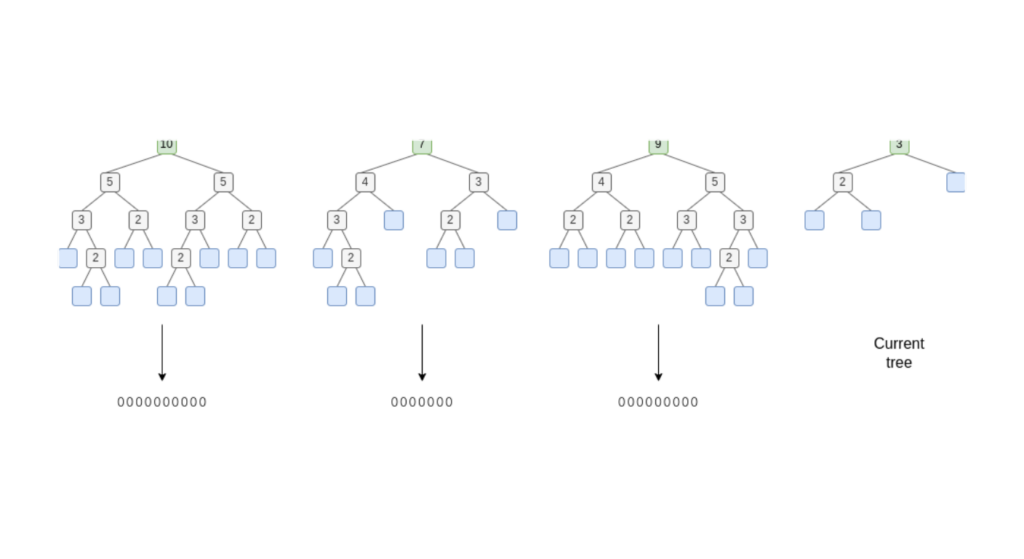
On February 19, Base officially announced that it would no longer rely on Optimism’s OP Stack and Superchain architecture, and would instead adopt a self-operated “unified tech stack.” Base is consolidating core components such as the sequencer, previously spread across multiple teams and codebases, into a single repository called “base/base.” The goal is to reduce maintenance and coordination costs, deeply optimize performance for its own needs, and lessen dependence on external technologies from providers such as Flashbots and Paradigm. On the governance side, Base will also adjust the structure of its security council, replacing existing Optimism-related seats with newly added independent signers. Although the technical architecture is moving toward autonomy, Base has pledged to maintain open-source protocols, public standards, and upgrade compatibility. For what is currently the largest network in the Superchain ecosystem, this undoubtedly marks a major strategic turning point.

On February 27, USDC and Circle’s Cross-Chain Transfer Protocol, or CCTP, officially launched on Layer 2 network Morph. Issued natively by a regulated Circle affiliate, USDC will serve as the network’s benchmark settlement asset for USD-denominated activity, providing a consistent and stable settlement foundation for a variety of payment applications. Through a burn-and-mint mechanism, CCTP enables 1:1 supply consistency and standardized transfers of USDC across blockchains, while offering developers both standard and fast transfer modes. Morph stated that this integration will strongly support a wide range of use cases, including crypto cards, cross-border remittances, payment gateways, and DeFi trading. Combined with its $150 million payments accelerator program, the move is intended to advance Morph’s strategic positioning as a payments settlement layer.

On February 13, Ondo Finance announced the launch of a tokenized U.S. equities application backed by official Chainlink price oracles, formally converting institutionally priced assets such as QQQon and TSLAon into high-quality on-chain collateral. By combining TradFi liquidity with precise oracle data, these tokenized U.S. stocks can now support on-chain lending and structured products. The first use case has already gone live on Euler Finance vaults, with Sentora handling risk management and Chainlink providing security support. This not only marks the first time tokenized equities have been used as collateral in Ethereum DeFi, but also represents a major breakthrough in the diversification of on-chain financial assets.

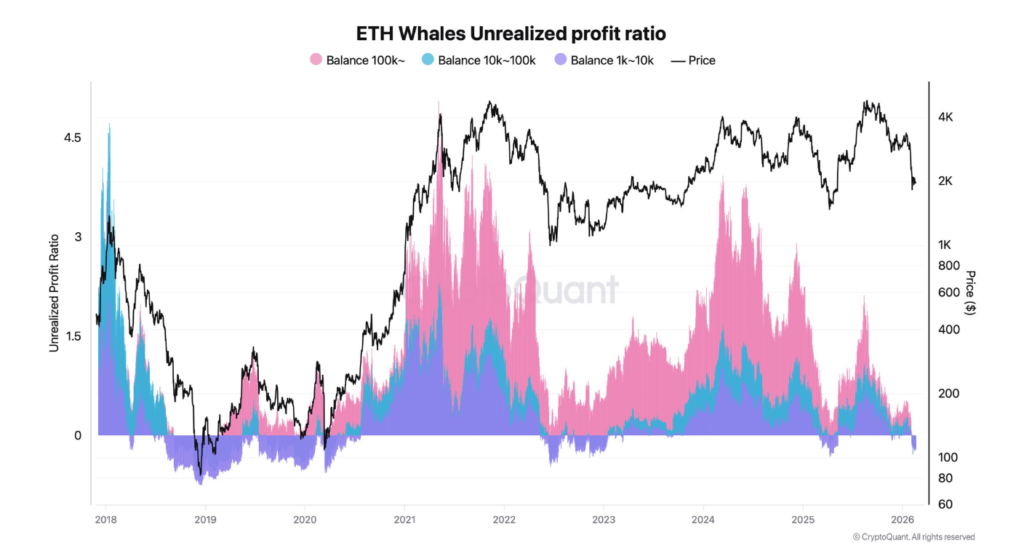
On February 20, analyst Darkfost reported that unrealized profit margins for all tiers of ETH whales had turned negative, indicating that large holders were broadly sitting on floating losses. Specifically, whales holding 1,000 to 10,000 ETH had a profit ratio of -0.21, whales holding 10,000 to 100,000 ETH were at -0.18, and top-tier whales holding more than 100,000 ETH recorded -0.08. Although ETH had not yet fallen to its April 2025 low, these profit ratios had already turned negative in advance. This implies that if prices decline further, these whales may face heavy liquidation pressure and could even be forced into large-scale selling. However, from the perspective of market cycles, the period when large holders come under the greatest pressure often aligns closely with the formation of a medium-term market bottom.
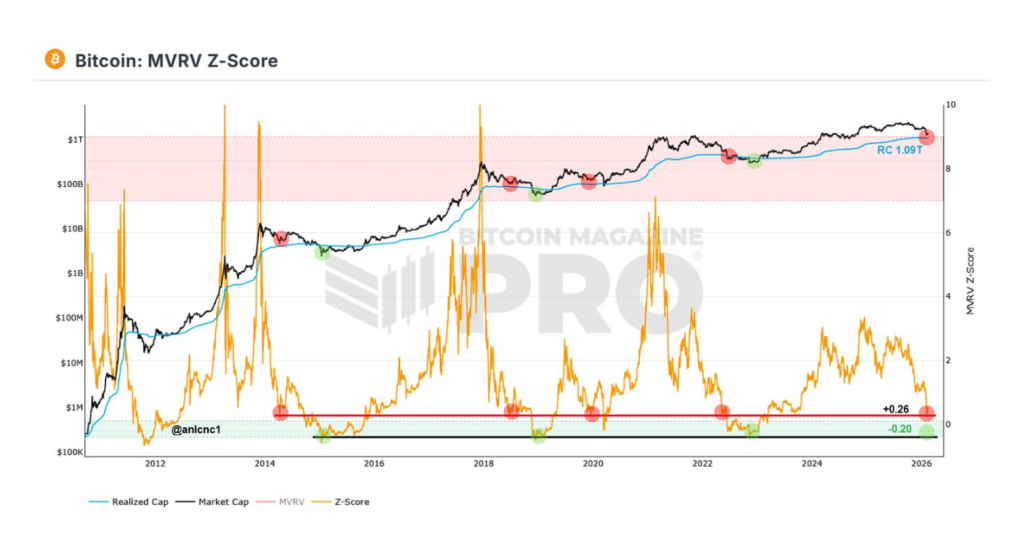
On February 17, crypto researcher anıl pointed out that based on historical data, the MVRV Z-Score is a key reference point for identifying Bitcoin bottoms. When the metric falls below 0, especially below the -0.20 “green zone,” it has typically marked Bitcoin’s historical lows. However, in the current cycle, the lowest reading reached was only +0.26, indicating that the classic undervalued region has not yet been tested. Since in every major prior cycle the Z-Score eventually entered negative territory, the researcher believes that only if the metric falls back below zero would Bitcoin truly enter its most attractive medium- to long-term risk-reward zone. This suggests that as of February 17, Bitcoin may not yet have reached the ideal dip-buying level.
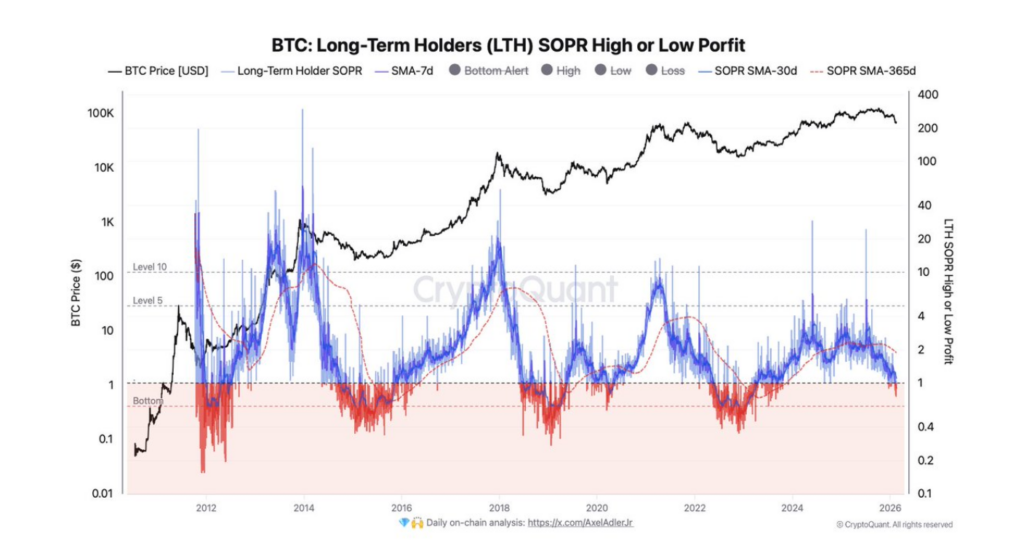
On February 17, according to analyst Darkfost, long-term Bitcoin holders were beginning to show early signs of psychological stress. Their SOPR, or Spent Output Profit Ratio, had dropped sharply from an annual average of 1.87 to 0.88, breaking below the key 1.0 threshold. This marks the first instance of collective loss-taking by long-term holders since the end of the 2023 bear market, reflecting the mounting pressure even among the most conviction-driven holders as the market continues to correct. Although the monthly average SOPR still stood at 1.09, suggesting that selling behavior had not yet fully entered a capitulation phase in the broader cycle, the weakening sentiment signal should not be ignored. If the market fails to stabilize in the short term, this trend of selling at a loss could worsen further and trigger broader chain reactions across the market.
U.S. Representatives Scott Fitzgerald, Ben Cline, and Zoe Lofgren recently jointly introduced the Blockchain Regulatory Certainty Act of 2026. Its core purpose is to clarify the scope of Section 1960 of the U.S. Code, which covers the offense of operating an unlicensed money transmission business. The bill explicitly states that criminal liability should apply only to entities that actually control customer funds and transmit them on users’ behalf, and should not extend to non-custodial software developers who merely write or publish code. The move provides a legal safeguard against regulatory overreach highlighted by controversial cases in recent years such as Tornado Cash and Samourai Wallet. It aims to address the long-standing conflict between the crypto industry and regulators by ensuring that developers are not exposed to criminal liability simply because others misuse the open-source software they create.
On February 24, according to the Financial Times, the “Board of Peace” led by U.S. President Trump is considering issuing a dollar-pegged stablecoin aimed at establishing basic financial transaction infrastructure for Gaza, where the humanitarian crisis remains severe. With many local banks and ATMs destroyed and cash circulation extremely difficult, the plan is being led by Israeli tech entrepreneur Liran Tancman in cooperation with entities including the “Gaza Administrative State Committee,” with the goal of easing daily hardship through digital payments. The proposal goes beyond simply issuing a stablecoin. It also envisions building a “secure digital infrastructure” that would support electronic payments, online education, healthcare systems, and financial services, while emphasizing users’ control over their own data.
The UK Financial Conduct Authority officially announced that it had selected four companies to enter its dedicated regulatory sandbox, with the goal of testing innovative stablecoin applications in real market conditions under robust safeguards. The selected firms are Revolut, Monee Financial Technologies, ReStabilise, and VVTX. The pilot will begin in the first quarter of 2026 and will focus on stablecoin issuance, retail payments, wholesale settlement, and crypto asset trading. Matthew Long, the FCA’s Director of Payments and Digital Assets, emphasized that the initiative is designed to ensure stablecoins are trustworthy and stable within the financial system. Data and feedback from the sandbox will directly inform the UK’s final stablecoin regulatory framework later in 2026.
In Hong Kong’s 2026 Budget, Financial Secretary Paul Chan announced that the government would formally submit draft digital asset policy legislation within the year to establish a licensing framework for digital asset trading and custody service providers. The item drawing the most market attention is the licensing regime for fiat-backed stablecoin issuers, which has now entered the implementation phase, with the first batch of licenses expected to be issued officially in March. Chan emphasized that the government and financial regulators will actively support licensed issuers in exploring more real-world use cases under a controllable risk framework. In addition, the Securities and Futures Commission will further improve liquidity in Hong Kong’s digital asset market while maintaining strong investor protections, provide a broader range of products and services for professional investors, and establish an “accelerator” to promote technological innovation and industry upgrading.
In February 2026, the crypto industry recorded 8 security incidents, with total losses of $12.04 million, a significant decline from January. One of the month’s most notable incidents involved IoTeX, which suffered a $4.4 million loss. The root cause was the leakage of the owner private key for the Ethereum-side validator of the ioTube cross-chain bridge, allowing the attacker to gain administrative control and illegally withdraw assets from the token vault. Most of the stolen funds have already been swapped into approximately 2,183 ETH and bridged to the Bitcoin network through THORChain. The IoTeX team has since implemented security hardening and blacklist interception measures via the v2.3.4 mainnet upgrade.
| Date | Project | Loss Amount | Incident Summary |
| February 2 | CrossCurve | $3 million | Cross-chain liquidity protocol CrossCurve confirmed that its bridge protocol was under attack. The cause was an exploited vulnerability in one of its smart contracts. Analysis showed that anyone could call the expressExecute function using a forged cross-chain message, bypass the intended gateway verification, and trigger unauthorized token unlocks on the PortalV2 contract. |
| February 18 | Moonwell | $1.78 million | A coding flaw in code co-written with AI Claude caused oracle pricing errors. The bug significantly undervalued cbETH, resulting in the liquidation of 1,096 cbETH and creating a large amount of bad debt. |
| February 21 | IoTeX | $4.4 million | IoT-focused blockchain IoTeX suffered a professional hacker attack after the owner private key for the Ethereum-side validator of the ioTube cross-chain bridge was leaked, allowing the attacker to gain administrative permissions and illegally withdraw token vault assets. |
| February 25 | Holdstation | $460,000 | Holdstation confirmed on X that its DeFAI Smart Wallet product experienced a security incident. The team’s latest update said losses totaled about 462,000 USDT. The team is investigating the root cause, strengthening multi-layer security measures, and has already begun formulating a compensation plan. |
| February 26 | FOOMCASH | $2.26 million | Privacy gaming platform FOOMCASH was attacked on Base and Ethereum. The exploit stemmed from a misconfigured verification key, which allowed the attacker to forge zkSNARK proofs and extract a large amount of $FOOM from the affected contracts. |
From the change in data, both the number of security incidents and the scale of losses in February were clearly lower than the previous month, suggesting that blockchain projects are gradually seeing results from greater investment in risk controls and security management. Although private key management, cross-chain architecture, and oracle mechanisms still carry potential risks, most teams demonstrated more mature incident response capabilities and faster technical remediation after attacks occurred. As the industry’s infrastructure continues to improve and security standards keep advancing, the overall resilience and risk resistance of the crypto ecosystem are steadily strengthening.
| Date | Event | Description |
| March 6 | U.S. February Nonfarm Payrolls (NFP) | Labor market strength is a key gauge the Federal Reserve uses to assess recession risk. If employment data is strong, markets may further scale back rate-cut expectations. |
| March 11 | U.S. February CPI Inflation Data | The pace of disinflation will shape the Fed’s policy path. With the crypto market currently in a sensitive period marked by whale unrealized losses, any upside inflation surprise could trigger a leveraged washout. |
| March 17 | Federal Reserve FOMC Meeting | This is the most important policy event of the first quarter of 2026. In addition to the rate decision, the post-meeting Dot Plot will reveal the projected path for rate cuts throughout the year. |
| March 24 | Digital Asset Summit | Hosted by Blockworks. This New York summit is focused on institutional adoption and is expected to bring together Wall Street funds and banks to discuss the future of tokenized U.S. equities and institutional DeFi. |
| March 30 | Ethereum Community Conference | An important Ethereum developer gathering in Europe. The conference will focus on Ethereum’s scaling roadmap and account abstraction, making it a key window into the direction of the Ethereum technical ecosystem. |
| By March 31 | Hong Kong issues first batch of fiat-backed stablecoin licenses | According to the Financial Secretary’s budget statement, regulators are expected to issue the first licenses in March. This will mark a milestone in Hong Kong’s move from “trading compliance” to “payments compliance.” |
Looking across March, global financial markets are entering a critical phase shaped by both policy inflection points and geopolitical pressure. Investors should pay particular attention to the Federal Reserve’s FOMC meeting on March 17. The Dot Plot released at that time will reveal the path for rate cuts over the rest of the year, setting the tone not only for liquidity across global capital markets, but also for whether crypto assets can break free from the current overhang of whale unrealized losses. In addition, developments in Middle East geopolitics remain a variable that cannot be ignored, as that uncertainty is deeply influencing both global commodity prices and safe-haven sentiment in crypto.
In February 2026, the crypto market went through a sharp and chilling correction. BTC plunged 32% in just 10 trading days and retested the major $60,000 level. This blow not only ended the prior expectation of uninterrupted upside, but also pushed long-term holders to the psychological edge of floating losses and capitulation selling.
Although the low-leverage structure in the futures market and the stabilization of hashrate showed a degree of downside resilience, continued net outflows from spot BTC ETFs and sharp divergence in ETH institutional positioning reflected strong risk-off sentiment among major capital amid macro uncertainty and geopolitical pressure. Even so, the market still showed pockets of strength during extreme volatility, including surging prediction market volumes driven by global instability and progress in foundational compliance infrastructure such as Hong Kong’s stablecoin licensing regime.
Looking ahead to March, the market has formally entered a difficult range-bound recovery phase. Investors should remain highly alert to the possibility of a second shock from the Federal Reserve’s policy path and geopolitical risk. Whether the market can regain stability will depend on the pace of sentiment repair and liquidity rebalancing from here.
Bitunix is a global cryptocurrency derivatives exchange trusted by over 3 million users across more than 100 countries. The platform is committed to providing a transparent, compliant, and secure trading environment for every user. Bitunix offers a fast registration process and a user-friendly verification system supported by mandatory KYC to ensure safety and compliance. With global standards of protection through Proof of Reserves (POR) and the Bitunix Care Fund, Bitunix prioritizes user trust and fund security. The K-Line Ultra chart system delivers a seamless trading experience for both beginners and advanced traders, while leverage of up to 200x and deep liquidity make Bitunix one of the most dynamic platforms in the market.
Bitunix Global Accounts
X | Telegram Announcements | Telegram Global | CoinMarketCap | Instagram | Facebook | LinkedIn | Reddit | Medium
Disclaimer: Trading digital assets involves risk and may result in the loss of capital. Always do your own research. Terms, conditions, and regional restrictions may apply.