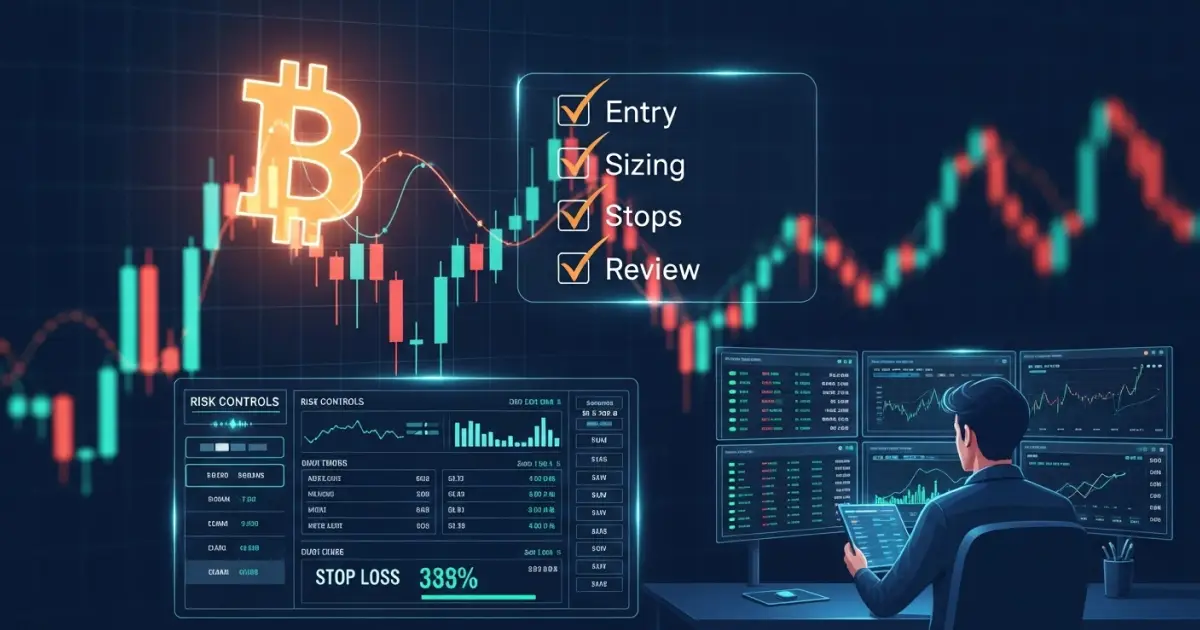

Using Leverage in Perpetual Futures Hedging | Page 17 | Bitunix

Understanding Leverage in Perpetual Futures Hedging Strategies

Leverage is one of the most powerful features of perpetual futures trading. It allows traders to control positions much larger than their initial margin, magnifying both potential gains and potential losses. In the context of hedging strategies, leverage can be used to protect portfolios more efficiently, freeing up capital for other investments. However, leverage in […]
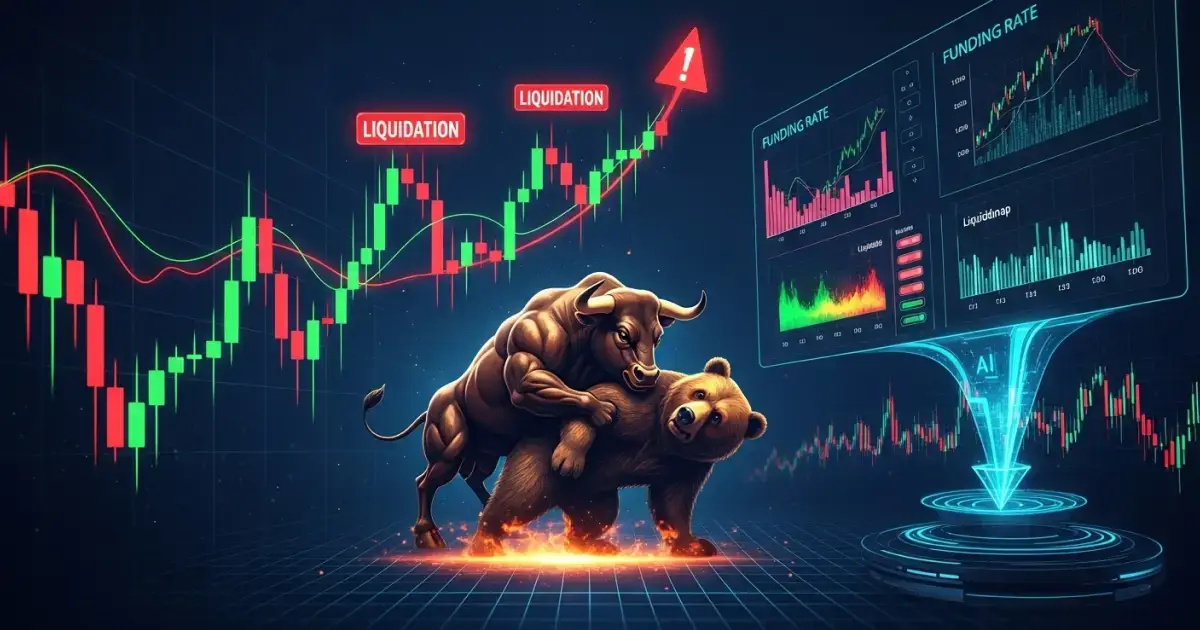
Long vs Short Hedging in Crypto with Perpetual Futures | Page 17 | Bitunix

Long vs Short Hedging: When to Use Each Perpetual Futures Strategy

Hedging is one of the most important applications of derivatives in both traditional and crypto markets. In cryptocurrency trading, the volatility of digital assets makes hedging an essential tool for managing risk. With perpetual futures, traders can hedge positions effectively by going long or short depending on market conditions. Understanding the difference between long and […]
Bitunix Guide to Perpetual Futures, Funding, and Settlement | Page 17 | Bitunix

How Do Perpetual Futures Work? Understanding Funding Rates and Settlement

Perpetual futures have become the most popular derivatives in cryptocurrency trading. Unlike traditional futures contracts that have fixed expiration dates, perpetual futures can be held indefinitely. This unique structure makes them more flexible, but it also introduces mechanisms that traders must understand to use them effectively. Two of the most important concepts in perpetual contracts […]
Perpetual Futures vs Traditional Futures in Crypto Trading | Page 17 | Bitunix

Understanding Perpetual vs Traditional Futures, Key Differences for Crypto Traders in 2025

Derivatives are some of the most important instruments in financial markets, allowing traders to hedge risk, speculate on price movements, and manage exposure. In cryptocurrency, one type of derivative has become particularly dominant: the perpetual futures contract. While traditional futures have existed for centuries, perpetual futures represent an innovation unique to crypto markets. Their design […]
Fibonacci Retracement in Crypto: Key Support and Resistance | Page 17 | Bitunix

Fibonacci Retracements in Crypto: Finding Support and Resistance

Support and resistance are two of the most important concepts in trading. They help traders identify potential price reversal levels and plan entries and exits with precision. One of the most widely used tools for mapping these levels is the Fibonacci retracement. Rooted in the Fibonacci sequence discovered by Italian mathematician Leonardo Fibonacci, this tool […]
Bollinger Bands in Crypto: How Traders Use Them in 2025 | Page 17 | Bitunix

Bollinger Bands Crypto Trading: Master Volatility-Based Strategies

Volatility is a defining feature of cryptocurrency markets. Unlike traditional assets, crypto often experiences sharp price swings within short timeframes. To navigate this volatility, traders use indicators that measure price ranges and identify potential breakout or reversal opportunities. One of the most popular tools is Bollinger Bands. Developed by John Bollinger in the 1980s, Bollinger […]
Golden Cross vs Death Cross: Crypto Trading Signals Explained | Page 17 | Bitunix

Golden Cross and Death Cross in Crypto: Moving Average Signals

Crypto trading rely on technical indicators to simplify decision-making in highly volatile markets. Among the most recognizable signals are the Golden Cross and the Death Cross. These moving average crossover patterns are widely used in both traditional finance and cryptocurrency trading to identify potential long-term trend reversals. In 2025, these signals remain powerful tools for […]
MACD Indicator in Crypto: Trading Strategies Explained | Page 17 | Bitunix

MACD Trading Strategy for Crypto: Complete Guide with Examples

Crypto trading requires tools that help traders cut through volatility and identify reliable signals. One of the most trusted and widely used indicators is the Moving Average Convergence Divergence (MACD). Developed by Gerald Appel in the late 1970s, MACD is a trend-following momentum indicator that highlights changes in strength, direction, and duration of price movements. […]

Latest Articles

Crypto Weekly Market Overview( 02.09 – 09.09) | Bitunix | Page 17 | Bitunix

Crypto Weekly Market Overview( 02 September – 09 September)

Published on September 10, 2024 • 120 views
Understanding the Difference Between Price Cost and Value of Crypto | Bitunix Blog | Page 17 | Bitunix

Understanding the Difference Between Price Cost and Value of Crypto

Published on September 5, 2024 • 117 views
Short Selling: Ultimate Guide For Beginners | Bitunix Blog | Page 17 | Bitunix

Short Selling: Ultimate Guide For Beginners

Published on September 2, 2024 • 295 views
What is the difference between USDT-M and COIN-M futures? | Bitunix | Page 17 | Bitunix

What is the difference between USDT-M and COIN-M futures?

Published on August 27, 2024 • 583 views
How to Use Liquidation Price For Better Trading | Bitunix | Page 17 | Bitunix

How to Use Liquidation Price For Better Trading Strategy?

Published on August 26, 2024 • 902 views
SuperRare (RARE) token – What Is It? | Bitunix Blog | Page 17 | Bitunix

SuperRare (RARE) token – What Is It?

Published on August 20, 2024 • 181 views
GM.AI: The Solana AI Crypto on The Block | Bitunix Blog | Page 17 | Bitunix

GM.AI: The Solana AI Crypto on The Block

Published on August 15, 2024 • 167 views
What are the Different Order Types in Crypto? | Bitunix Blog | Page 17 | Bitunix

What are the Different Order Types in Crypto?

Published on August 12, 2024 • 928 views
Market Orders, Limit Orders, and Stop Orders | Bitunix | Page 17 | Bitunix

Understanding Market Orders, Limit Orders, and Stop Orders

Published on July 18, 2024 • 561 views
Margin Trading: How to Trade Crypto with Leverage | Bitunix Blog | Page 17 | Bitunix

Margin Trading: How to Trade Crypto with Leverage

Published on July 16, 2024 • 659 views
Understanding Crypto Funding Rate: Full Guide | Bitunix Blog | Page 17 | Bitunix

Understanding Crypto Funding Rate: Full Guide

Published on July 15, 2024 • 1,380 views
What Are the Mark Price and Last Price? | Bitunix Blog | Page 17 | Bitunix

What Are the Mark Price and Last Price?

Published on July 11, 2024 • 360 views

Ready To Place Your
Next Trade?

Choose a market, set your order, and manage risk in one place.

Start Trading
FAQ

Frequently Asked Questions

Find quick answers to common questions about Bitunix accounts, fees, deposits, withdrawals, and contract trading.

How to calculate the handling fee?

Handling fees can be found here: View handling fee details.

How to increase my daily withdrawal limit?

If you need a higher daily withdrawal limit, after obtaining KYC2 Advanced ID Verification, submit a ticket providing the following information: your Bitunix UID, the name of the currency you want to increase the withdrawal limit of, and your desired limit.

Does Bitunix have official Telegram groups and official Twitter accounts?

Bitunix official Telegram group: Join Telegram

Bitunix official Twitter account: Visit X / Twitter

Feel free to start a live chat with our customer service agents, submit a ticket, or email us whenever you have questions.

It says the phone number was already taken when I tried to link my phone number to my account. Why?

One phone number can only be linked to one account or used as username. If the phone number is not linked to your own Bitunix account, link another phone number that also belongs to you. If the phone number is linked to your own Bitunix account, you need to unlink it from that account first.

How to deposit funds?

Go to "Wallet" - "Deposit" on the Bitunix website. Follow the instructions and provide the required information. Then transfer the funds to the deposit address.

How to withdraw funds?

Go to "Wallet" - "Withdraw" on the Bitunix website. Follow the instructions and provide the required information. Digital assets can only be withdrawn to wallets. Make sure the recipient address is correct before transferring assets.

Funds are not arriving after deposit. Why?

Please check the blockchain records first to make sure that the funds were successfully sent. Then check whether the deposit address is correct. If both are correct but the funds are still not arriving, contact support and provide your UID, deposited currency, amount, time, and TXID.

Funds are not arriving after withdrawal. Why?

Copy the TXID of the withdrawal in "Recent Withdrawals". Check whether the funds were sent successfully in blockchain records using the TXID. If the funds were successfully sent but still have not arrived, contact the recipient platform or wallet. If there is no blockchain record, contact Bitunix customer service.

Is the leverage ratio in contract trading directly related to the final profit?

The PNL of the contract is calculated by the number of positions. The leverage ratio determines the number of positions opened. The higher the leverage ratio, the lower the cost. The more positions opened, the easier it is for forced liquidation to be triggered.

How to calculate the reward ratio of contract trading?

Reward ratio of contract trading = Unrealized PNL (USD) / Margin * 100%.

What will happen to a position in contract cross margin mode when the other position has been forced to liquidate?

In cross margin mode, if one position is liquidated while the other position is still profitable, the unrealized PNL of the profitable position can be used as margin. As a result, the margin of the other position will be reduced, and the liquidation price will also change.

© 2022 - 2026 Bitunix.com. All rights reserved