Strait of Hormuz Tensions: How They Could Impact Oil, XAUT, and BTC
See how rising Strait of Hormuz tensions can move oil, influence gold-backed assets like XAUT, and shape short-term Bitcoin market sentiment.
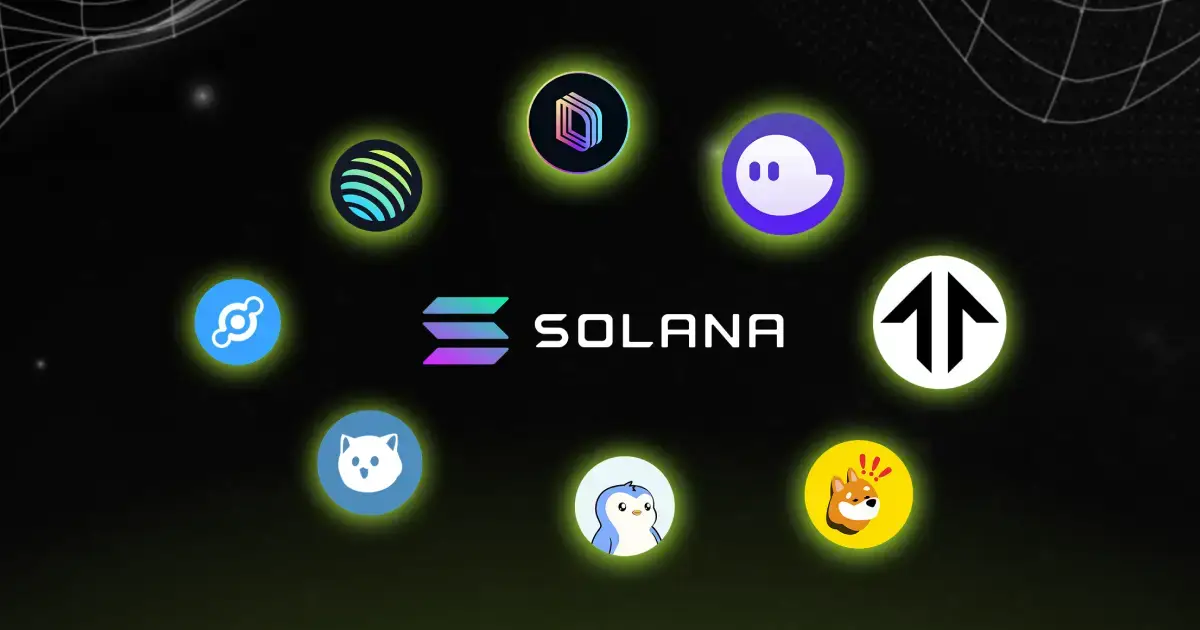
In 2025, the Solana ecosystem continues to redefine speed, scalability, and user experience across the crypto landscape. From decentralized finance (DeFi) and non-fungible tokens (NFTs) to mobile integration and meme coin revolutions, Solana is no longer just “Ethereum’s competitor” — it’s a Web3 playground in its own right.
At present, the Solana ecosystem stands out for its rapid innovation and diverse range of projects, making it a focal point for investors and developers in 2025.
Whether you’re looking for the best Solana DeFi platforms, newly launched Solana DApps, or want to speculate on Solana meme coins, this article explores everything you need to know about the top Solana projects in 2025.
[ez-toc]
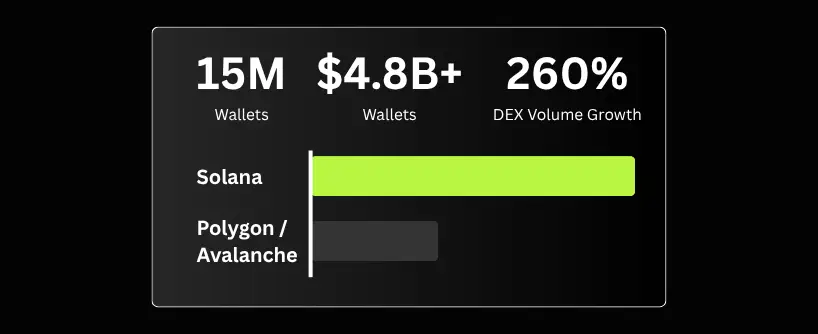
Thanks to ultra-fast block times (~400ms) and average transaction fees below $0.01, Solana has become the blockchain of choice for developers building scalable applications. As of Q2 2025:
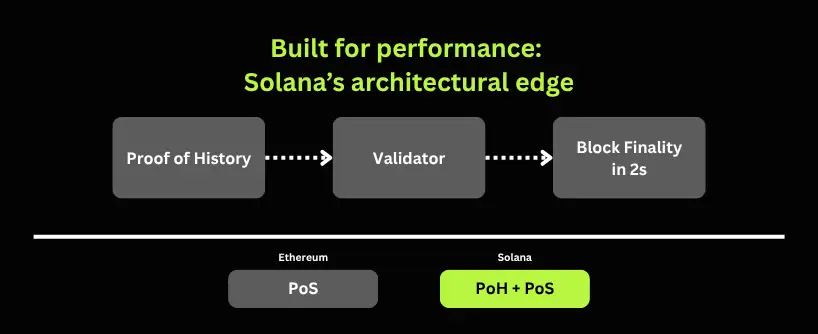
Solana’s architecture is engineered for speed and reliability, allowing users to experience near-instant transaction finality and ultra-low transaction fees. This high-speed processing is crucial for supporting a wide range of decentralized finance (DeFi) platforms, decentralized exchanges (DEXs), and NFT marketplaces that rely on the Solana blockchain to facilitate seamless trading and access to digital assets. The network’s ability to handle thousands of transactions simultaneously ensures that even during periods of high demand, users can rely on Solana for efficient and secure transaction processing.
A key component of the Solana ecosystem is its diverse array of tokens, including the native SOL token and a growing list of Solana ecosystem coins. These Solana ecosystem tokens play a vital role in powering decentralized applications, participating in governance, and facilitating transactions across the network. The market capitalization of these tokens is a reflection of their value and influence within the broader cryptocurrency market, with the top Solana ecosystem coins often leading in trading volume and investor interest.
The Solana Foundation, a non-profit organization, oversees the ongoing development and security of the Solana network. By supporting developers and maintaining the decentralized platform, the Solana Foundation ensures that the ecosystem remains open, secure, and scalable for users worldwide.
Solana’s blockchain platform is also home to innovative projects like the Render Network, which leverages the network’s capabilities to connect users with idle GPUs, enabling efficient rendering and resource sharing. Features such as limit orders and dollar cost averaging are integrated into many Solana-based platforms, providing traders and investors with advanced tools to manage their digital assets and navigate market volatility.
With its focus on scalability, security, and efficiency, the Solana blockchain continues to attract a vibrant community of developers, investors, and users. Whether you’re interested in decentralized finance, trading, or building the next breakthrough dApp, the Solana ecosystem offers the tools and infrastructure needed to succeed in the fast-evolving world of blockchain technology.
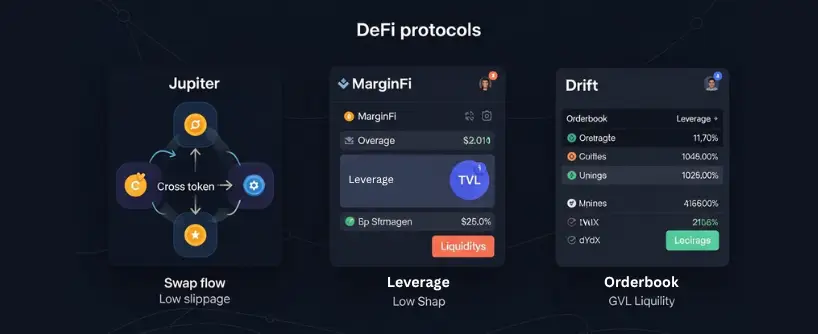
DeFi remains the backbone of the Solana ecosystem. Below are the most impactful Solana DeFi platforms in 2025:
Jupiter plays a critical role in unifying fragmented liquidity across Solana. Its functionality includes advanced routing, slippage optimization, MEV protection, and support for a wide range of tokens, making it a comprehensive DEX aggregator. Traders love it for its slippage optimization, MEV protection, and broad token access.
In Q1 2025, MarginFi crossed $900 million dollars worth in TVL — making it one of the most trusted Solana DeFi protocols for leveraged trading and credit-based strategies.
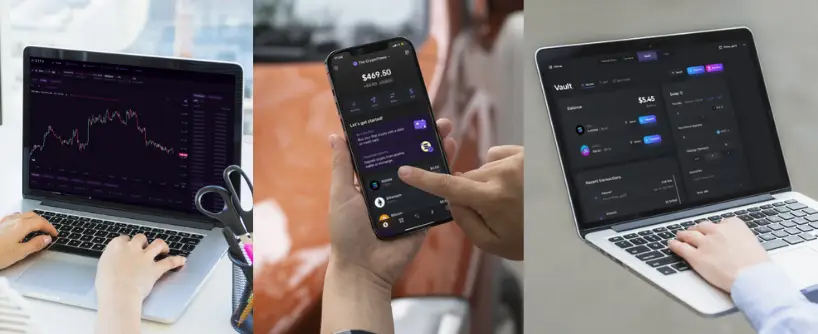
Solana’s low latency makes it ideal for interactive, high-volume dApps that need instant execution. Many of these decentralized applications rely on real-time data to deliver efficient and secure services to users. Let’s look at standout Solana dApps by category:
Still the gateway to Solana. Phantom remains the most used wallet across Solana DeFi and NFT apps. It now includes:
Squads is helping builders safely manage funds, share governance, and automate development pipelines — all from one DApp.
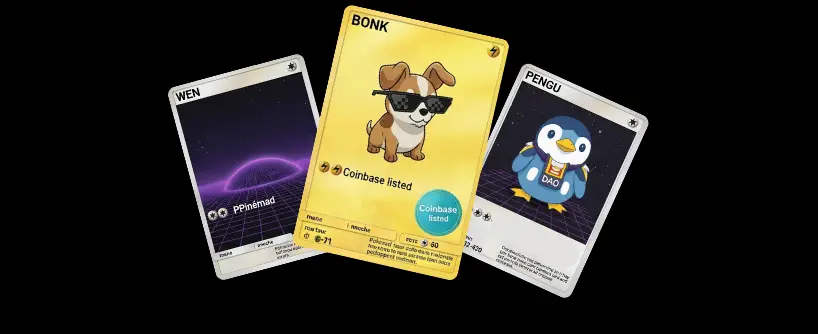
While Solana’s infrastructure powers serious DeFi protocols, it’s also ground zero for meme coin culture. Many meme coins are now counted among the top Solana ecosystem tokens, highlighting their prominence and influence within the network. These Solana tokens combine hype with high trading activity.
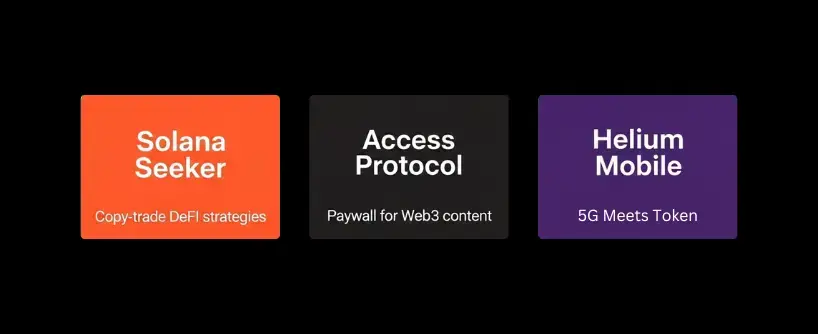
The Solana ecosystem is expanding with new innovations: These new projects are shaping the future of the Solana ecosystem, offering exciting prospects for growth and technological advancement.
Solana is no longer the underdog. With rapid growth in Solana DeFi, vibrant meme coin markets, and cutting-edge Solana DApps, the network is proving its capability as a next-gen smart contract platform.
Alameda Research played a significant historical role in the development and growth of the Solana ecosystem, especially through its support of high-speed, decentralized financial platforms.
Whether you’re a trader seeking fast execution, a builder launching the next viral DApp, or an investor looking for the next BONK or Jupiter, the Solana ecosystem in 2025 is where the action is.
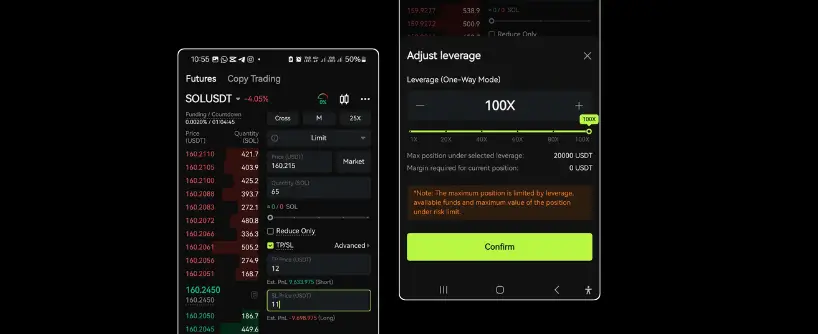
Bitunix makes it easy to get started — with SOL, BONK, PENGU, and more available for trading right now.
Q1. What is the Solana ecosystem known for?
A: Speed, low fees, and active development across DeFi, NFTs, and mobile applications.
Q2. Which are the top Solana DeFi projects?
A: Jupiter, MarginFi, and Drift dominate DeFi use cases with high TVL and user activity.
Q3. Can I trade Solana meme coins on Bitunix?
A: Yes. Bitunix supports BONK, PENGU, and other tokens with advanced features like SL/TP and leverage.
Q4. What makes Solana better than Ethereum for some users?
A: Solana processes 65,000+ transactions per second with sub-cent fees, making it ideal for fast, cheap applications.
Q5. How do I start trading Solana tokens on Bitunix?
A: Create an account on Bitunix, deposit USDT, and access SOL and Solana-based trading pairs.
Q6. What is The Graph protocol’s role in the Solana ecosystem?
A: The Graph protocol provides decentralized indexing for blockchain data on Solana. It organizes data into APIs called subgraphs, making it easy for decentralized applications to access and query information. The protocol also helps verify and ensure the accuracy of indexed data, supporting reliable dApp development.