How to Use SEPA on Bitunix to Buy Crypto
Learn how to use One-Click Buy on Bitunix with SEPA to buy crypto through a simple, beginner-friendly payment flow.

Have you ever wondered why two traders can look at the same crypto chart and make completely opposite decisions? One sells in panic, while the other calmly holds or even buys more. The answer lies not in technical indicators or market analysis, but in something far more powerful: crypto trading psychology. In the cryptocurrency market, where extreme volatility is the norm, mastering your mind is often the difference between financial gains and devastating losses.
Let’s delve into the psychology of crypto trading and examine how fear, greed, and emotional trading influence decision-making. Whether you’re a day trader or a long-term investor, understanding trading psychology is essential for developing discipline, avoiding common pitfalls, and creating a successful trading strategy.
So let’s unravel the human side of crypto trading and learn how to turn psychology into your strongest edge.
[ez-toc]
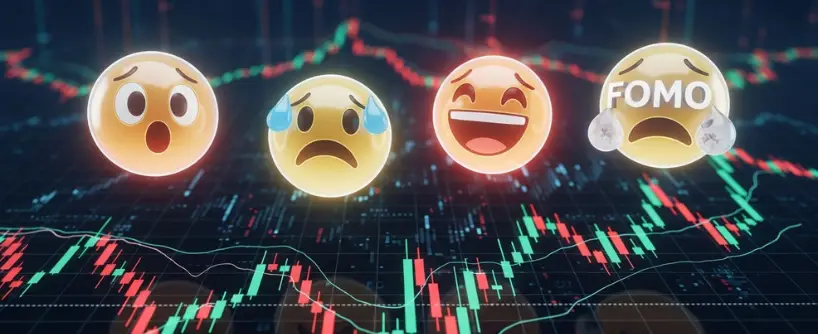
Cryptocurrency trading is unlike any other part of the financial markets. Prices can skyrocket by double digits in a single day and crash just as quickly. This extreme volatility triggers strong emotional reactions, fear of missing out (FOMO), panic selling, or impulsive trading when chasing potential gains. While market sentiment and market makers shape price fluctuations, trader psychology often determines how individuals respond to these movements.
Unlike traditional markets, the crypto market operates 24/7, amplifying stress and increasing the risk of emotional trading. Traders who fail to manage their mindset may fall victim to herd mentality, making poor trading decisions when influenced by social media platforms, news headlines, or the behavior of other market participants.

Human psychology evolved over millions of years to handle immediate, physical threats, not abstract financial risks that change by the second. When you see your portfolio drop 30% in a day, your brain triggers the same fight-or-flight response our ancestors felt when facing wild predators. This evolutionary mismatch explains why even experienced traders struggle with emotional reactions to market uncertainty.
Research in prospect theory indicates that, on average, losses feel about twice as impactful as equivalent gains. This loss aversion creates a psychological bias that drives many of the most destructive trading behaviors in the crypto market.
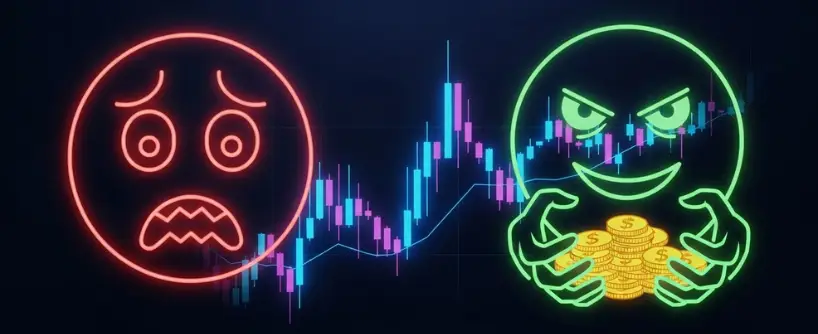
At the heart of crypto trading psychology are two powerful emotions: fear and greed. These emotional drivers often override rational thinking, causing traders to make decisions that go against their own strategy.
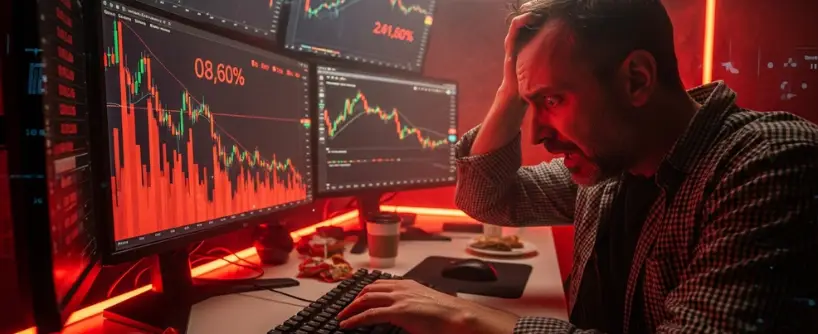
Fear manifests in two devastating ways for a trader:
A study on trader behavior confirms that these fear-based reactions are a primary cause of underperformance, causing traders to act against their own trading strategy.
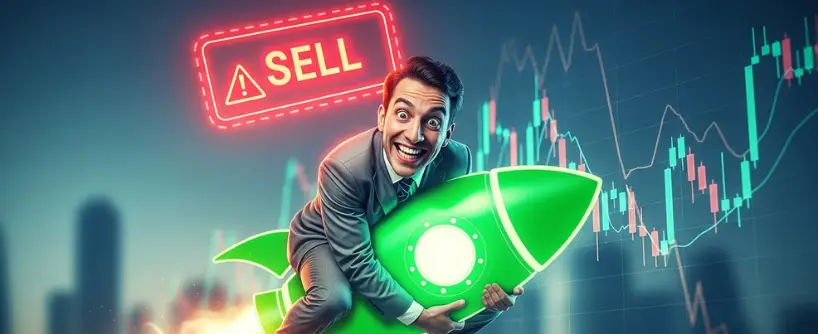
If fear makes you run, greed makes you blind. It convinces you that a pump will never end.
Both fear and greed create an emotional impact that clouds judgement. A trader’s mindset dominated by these emotions increases the likelihood of missed opportunities, further declines, and potential losses.

The cryptocurrency market is full of psychological traps. Here are some of the most common pitfalls:
These pitfalls highlight how trader psychology plays a crucial role in shaping market trends and individual financial outcomes.
To achieve successful trading, traders must develop psychological traits that strengthen discipline and minimize emotional impact. Some of the key traits include:
Day traders especially need these skills, as constant price fluctuations and high volatility demand quick yet rational decision-making.
Developing the right trader mindset requires practice and structure. Here are actionable steps:
These steps help traders reduce increased stress, stay disciplined, and approach the cryptocurrency market with a clear decision-making process.
It’s not just individual psychology; market sentiment also plays a significant role in cryptocurrency trading. Prices often react strongly to news headlines, regulatory updates, or influential traders’ opinions. Social media platforms amplify herd behavior, as traders follow trends without conducting their own research.
Market makers and institutional investors can also influence price through trading activities, causing further uncertainty. When traders react emotionally instead of strategically, it creates ripple effects across the financial markets.
Understanding how market sentiment works allows traders to anticipate emotional reactions from others, identify potential entry or exit points, and avoid falling into common traps.
No discussion of trading psychology is complete without addressing risk management. Emotional trading often leads to poor risk management, such as over-leveraging positions, ignoring stop-loss orders, or holding onto losing trades due to emotional attachment.
A disciplined trader prioritizes risk over reward, focusing on minimizing potential losses rather than chasing profits. This balanced approach allows for consistent financial gains over time, even in high volatility markets.
In the end, crypto trading psychology is about mastering the decision making process. Successful traders understand that while market trends, technical analysis, and trading platforms matter, their own behavior and mindset play an even bigger role.
By recognizing the emotional impact of fear and greed, avoiding herd mentality, and building trading discipline, traders can overcome the inherent risks of the cryptocurrency market more effectively. With the right trader psychology, market uncertainty becomes less of a threat and more of an opportunity.
Remember that every successful trader was once where you are now – struggling with emotions, making costly mistakes, and learning hard lessons. The difference between those who succeed and those who fail isn’t intelligence or luck – it’s the willingness to acknowledge psychological weaknesses and systematically address them.
The psychology of crypto trading isn’t just an abstract concept; it’s the heartbeat of every decision you make in the market. Whether you’re facing panic selling during extreme volatility or tempted by potential gains during a bull run, your ability to control emotions will determine your path to profits.
So, ask yourself: Will you let emotional trading and herd behavior dictate your future? Or will you develop the trader mindset that turns volatility into opportunity? The choice, as always, lies in your psychology.
The charts will always fluctuate. The price will always move. Market sentiment will always swing. The only thing you can truly control is your decision-making.
Why is crypto trading psychology important in the crypto market?
Crypto trading psychology matters because the crypto market is driven not only by charts and news but also by traders’ emotional reactions. Managing your mindset helps avoid impulsive mistakes.
How do fear and greed affect cryptocurrency trading?
In cryptocurrency trading, fear and greed often push traders into panic selling or chasing hype. Recognizing these emotions allows for more disciplined decision-making.
What role do market makers play in trading psychology?
Market makers provide liquidity in the crypto market, but traders’ emotional impact – such as reacting to sudden moves – often determines whether they succeed or fail.
How does herd mentality influence crypto trading behavior?
Herd mentality makes traders follow the crowd without independent analysis. In a market known for extreme volatility, this often leads to buying tops or selling bottoms.
How can traders manage the emotional impact of cryptocurrency trading?
By understanding crypto trading psychology, setting clear strategies, and controlling emotional reactions, traders can reduce stress and navigate market swings more effectively.
Disclaimer: Trading digital assets involves risk and may result in the loss of capital. Always do your own research. Terms, conditions, and regional restrictions may apply.