Alphabet Inc. on Bitunix: How to Trade GOOGLUSDT
Learn what Alphabet is and how to trade GOOGLUSDT on Bitunix. Explore Google stock forecast themes, Alphabet AI stock narratives, earnings catalysts, and beginner trading basics.

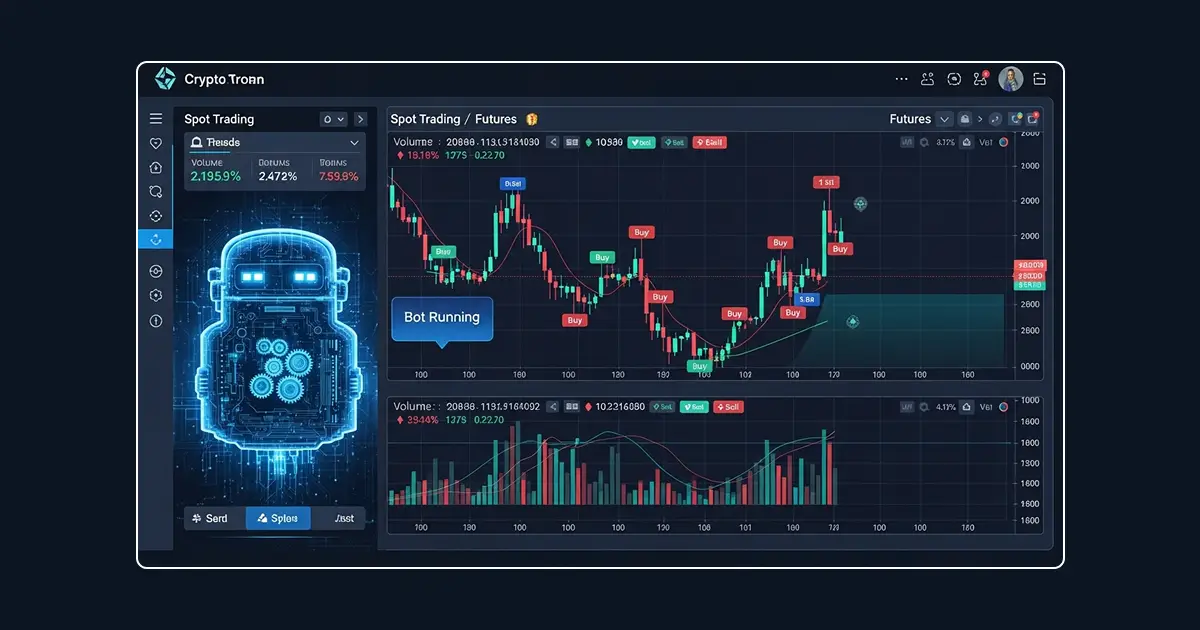
Crypto trading has evolved far beyond manual strategies and price watching. In 2025, trading bots for spot and futures markets are central to how retail and institutional traders compete. These bots execute trades based on algorithms, technical signals, and market data—often faster than any human can react. Whether you’re a seasoned investor or a new trader exploring automation, understanding these tools is crucial.
[ez-toc]
Crypto trading bots are automated programs that buy and sell digital assets based on predefined rules. They remove emotion from trading, enabling consistent, rules-based execution across volatile markets.
Depending on your goals, you can set bots for:
The core benefit of bots lies in their speed and discipline. They execute trades instantly and follow exact instructions—no hesitation, no fatigue, no deviation.
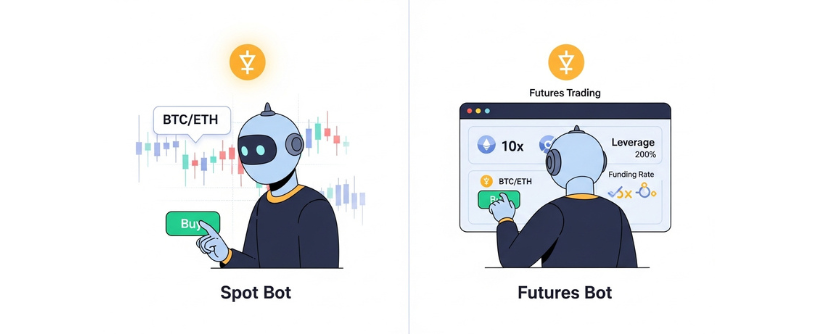
Spot trading involves the direct purchase of cryptocurrencies. These bots are typically used to:
Futures trading bots, by contrast, work in the derivatives market. These bots open and close leveraged contracts based on future price expectations.
Key differences:
| Feature | Spot Trading Bot | Futures Trading Bot |
| Market Type | Direct (non-leveraged) | Derivatives (leveraged) |
| Risk | Lower | Higher (due to leverage) |
| Strategies | DCA, grid, swing | Scalping, momentum, arbitrage |
| Capital Requirement | Full value | Margin-based |
| Target Audience | Beginners | Advanced traders |
Futures bots often integrate features like auto-deleveraging, funding rate monitoring, and liquidation price tracking. Spot bots, on the other hand, are more commonly used for trend-following and rebalancing.
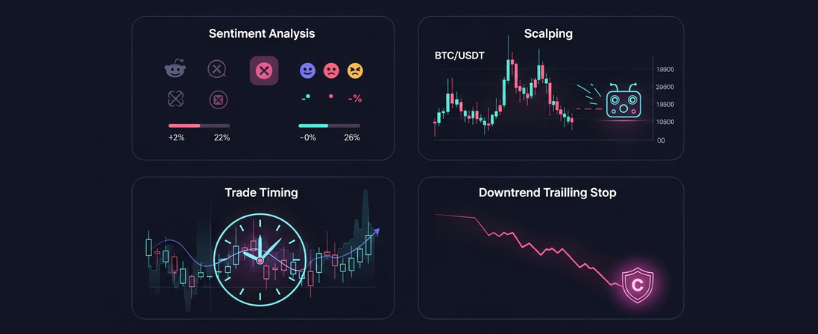
Today’s best futures trading bots are more powerful and flexible than ever. They often include:
Bitunix provide traders with low-latency infrastructure, making it ideal for futures bot execution where milliseconds matter.
A crypto exchange bot is only as good as the platform it runs on. Look for:
Bitunix integrates with major bot frameworks and supports real-time execution logs, making it suitable for traders building their own algorithmic solutions.
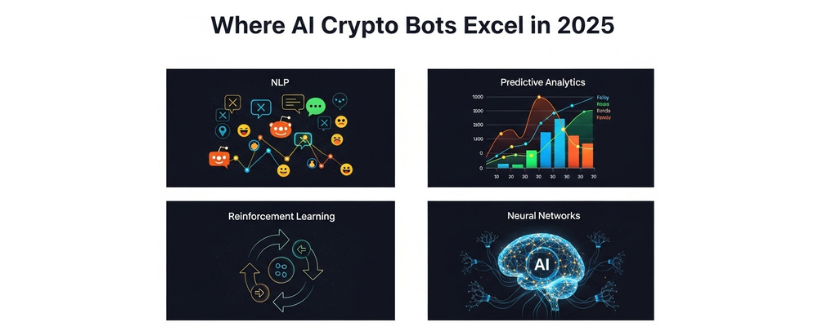
Traders are deploying increasingly complex strategies with exchange trading bots in 2025. Some of the most effective ones include:
This strategy places buy and sell orders at preset intervals to profit from market volatility.
Example use: A trader might use a grid trading bot on BTC/USDT in a ranging market, profiting from price oscillations between $58,000 and $62,000.
Arbitrage trading bots take advantage of price differences across exchanges or pairs.
Example use: Buy ETH at a lower price on Exchange A and simultaneously sell it at a higher price on Exchange B.
These bots follow the price action and enter when specific momentum indicators align (e.g., RSI, MACD crossovers).
For spot traders, rebalancing bots ensure that asset allocation matches a portfolio strategy (e.g., 50% BTC, 25% ETH, 25% stablecoins).
While automation helps eliminate emotion, it introduces other risks:
Always test bots on demo accounts or with small capital before scaling.
Step 1: Choose a reliable platform like Bitunix that supports both spot and futures markets.
Step 2: Decide if you’re trading spot (long-term holdings) or futures (short-term leveraged positions).
Step 3: Set up your bot with:
Step 4: Test using historical simulation or paper trading.
Step 5: Monitor performance daily and adjust rules based on results.
What is the best trading bot for crypto in 2025?
It depends on your strategy. For spot, grid bots and rebalancers work well. For futures, momentum and arbitrage bots are commonly used. Bitunix supports both types.
Is bot trading profitable in crypto?
Yes, if configured correctly with sound strategy and risk management. Profitability depends on volatility, fees, and execution speed.
How do I avoid liquidation in futures bot trading?
Use low leverage, define stop-losses, monitor funding rates, and test before deploying capital.
Can beginners use trading bots?
Yes. Platforms like Bitunix make it easy to connect to third-party bots or use simple rule-based automation for spot trades.
Disclaimer: Trading digital assets involves risk and may result in the loss of capital. Always do your own research. Terms, conditions, and regional restrictions may apply.