
How AAPLUSDT Trading Works on Bitunix
Learn how to trade Apple stock on Bitunix with USDT, understand how AAPLUSDT works, and explore volatility, leverage, and risk management for beginners.

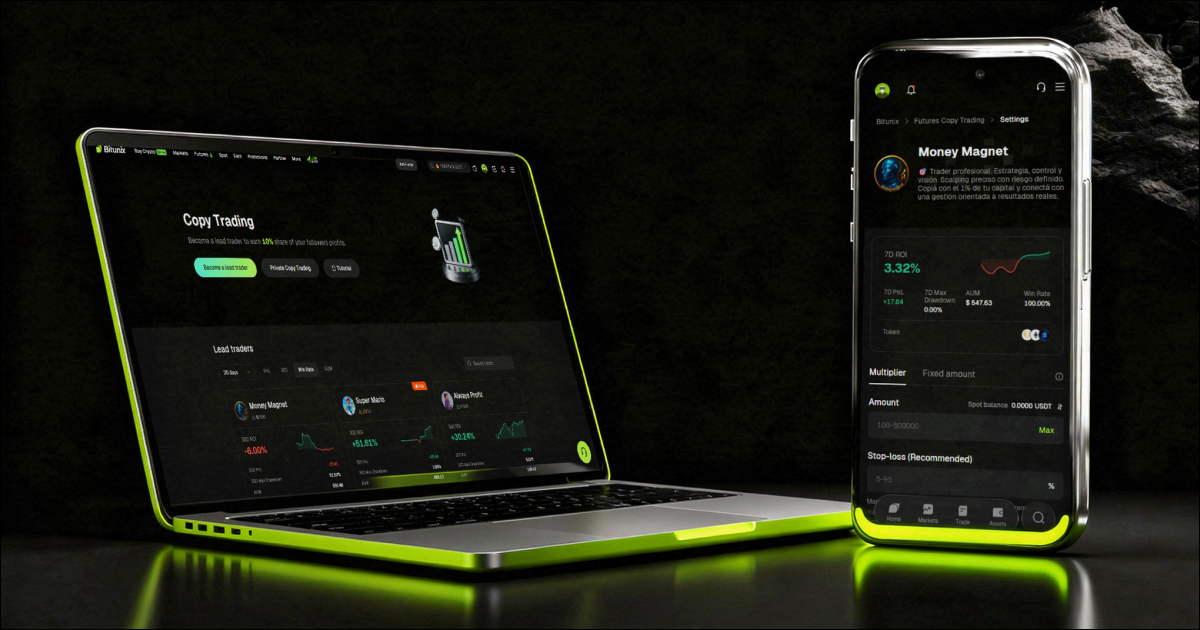
Crypto copy trading is popular for a simple reason: it turns trading from a constant decision loop into a structured process. Instead of staring at charts all day, you select a lead trader and allow the system to mirror their actions in your account, using rules you choose in advance.
That sounds easy, but the outcomes depend on the details. In this guide, you will learn what copy trading is in plain terms, how Bitunix copy trading works on the Bitunix exchange, and what you should understand about execution, risk, and performance tracking before committing meaningful capital.
[ez-toc]
Copy trading in crypto is a feature that allows a follower to mirror a lead trader’s positions automatically. When the lead trader opens, adds to, reduces, or closes a position, the system attempts to replicate that activity for the follower based on the follower’s copy configuration.
In other words, crypto copy trading is not “advice.” It is automated trade replication.
Lead trader
The strategy provider whose trades can be copied by others. Lead traders usually aim to build a track record, attract followers, and earn profit sharing when followers make money.
Follower
The user who copies the lead trader. Followers control their own allocation, copy sizing method, and limits. Even though execution is automated, the follower remains responsible for risk.
Signals tell you what someone might do. You still place the trade yourself.
Copy trading crypto aims to place the trade for you. That automation can be a benefit, but it also means you need clear rules, because trades may trigger when you are not actively watching the market.
In practice, copy trading systems often operate through derivatives, which is why many users experience copy trading as crypto futures copy trading.
Futures-based copying has two implications:
This is not a flaw. It is the reality of copying live trades in live markets.
On the Bitunix exchange, the copy workflow can be understood as a sequence of decisions and checks. You choose who to copy, define how you want copying to behave, then monitor whether the system and the trader perform as expected.
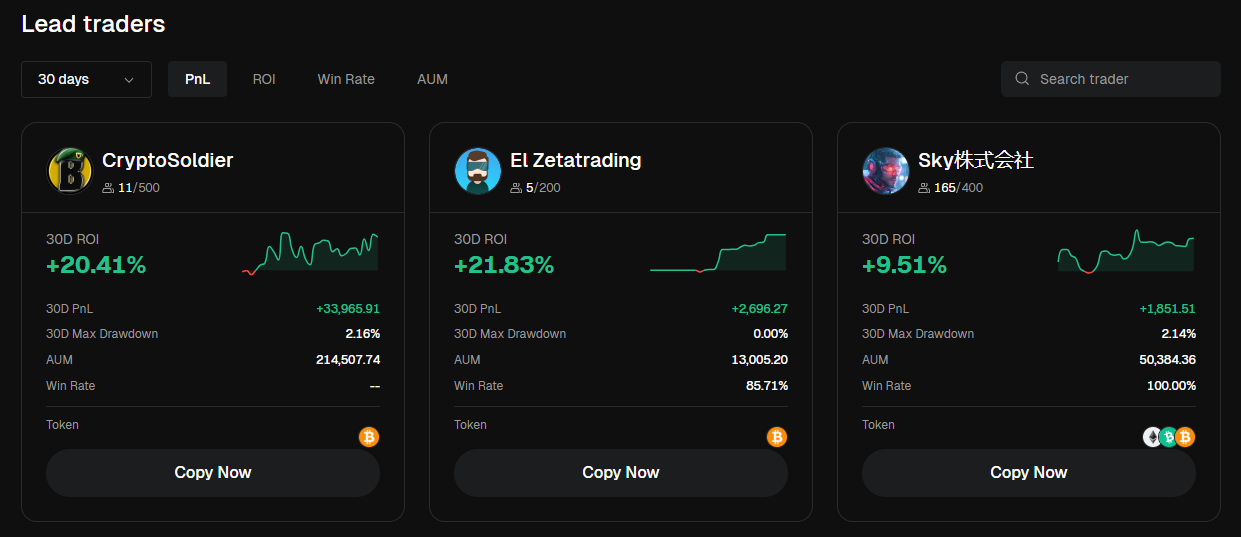
A Bitunix Crypto Copy Trading dashboard showing top three lead traders. Each has charts, stats, and a Copy Now button.
Start by selecting a trader whose style you can tolerate, not just someone with the highest short-term results.
A practical way to evaluate traders is to consider:
If you cannot describe the trader’s style in one sentence, you are likely not ready to follow them with real size.
Copy sizing is the engine of your risk. On Bitunix copy trading, followers typically choose between two common sizing approaches:
You define a fixed margin amount for each copied order. Each time the lead trader opens a new position, your account attempts to open a position using your fixed amount, subject to your available funds and any limits you set.
Why it often suits beginners:
Your positions scale based on a ratio relationship between your account and the lead trader’s margin usage. This can mirror the lead trader’s sizing intent more closely, but it can also scale up quickly if the lead trader increases size aggressively.
Why it can be useful:
Why it can be dangerous without limits:
Beginner rule: if you are unsure, fixed amount is usually the safer place to start.
This is where followers separate themselves from gamblers. Before you copy:
Your objective is not to copy more. Your objective is to copy well and survive normal drawdowns.
After you start copying, your job is not finished. You should monitor:
Copy trading is a living system. Traders can change behavior, and markets can shift regimes.
Many copy trading systems use a weekly settlement rhythm for profit sharing. Even if you check daily, your main performance review should be weekly, because it reduces emotional decisions and aligns with how many copy programs calculate outcomes.
A good weekly review asks:
Stopping is not a failure. It is a risk control.
If a lead trader starts taking larger risks than you are comfortable with, or if execution quality becomes consistently poor for the pairs they trade, the correct response is to pause and reassess.
A common beginner misunderstanding is assuming copy trading produces identical outcomes. In real markets, identical is not guaranteed.
There is always a small delay between the lead trader’s action and the follower’s replication. In a fast move, that delay can affect entry or exit price.
Even if the system copies instantly, liquidity conditions can change. This is why copy trading services typically include slippage protection, and why some copied orders may fail if price moves beyond acceptable bounds.
Followers have different balances, available margin, and allocation settings. Two followers can copy the same trader and still end up with different exposure profiles.
If you start copying a trader after they already hold a position, your copied experience may not perfectly reflect their full position history. This is why timing and position lifecycle matter in crypto futures copy trading.
Most follower problems fall into a few predictable categories.
If your available margin is too low at the moment the trade is copied, your order may not be placed.
Prevention:
If the market moves too quickly between the lead trader’s execution and your attempted execution, the copied order may fail.
Prevention:
Fixed ratio sizing without strict caps is a common cause of accidental overexposure.
Prevention:
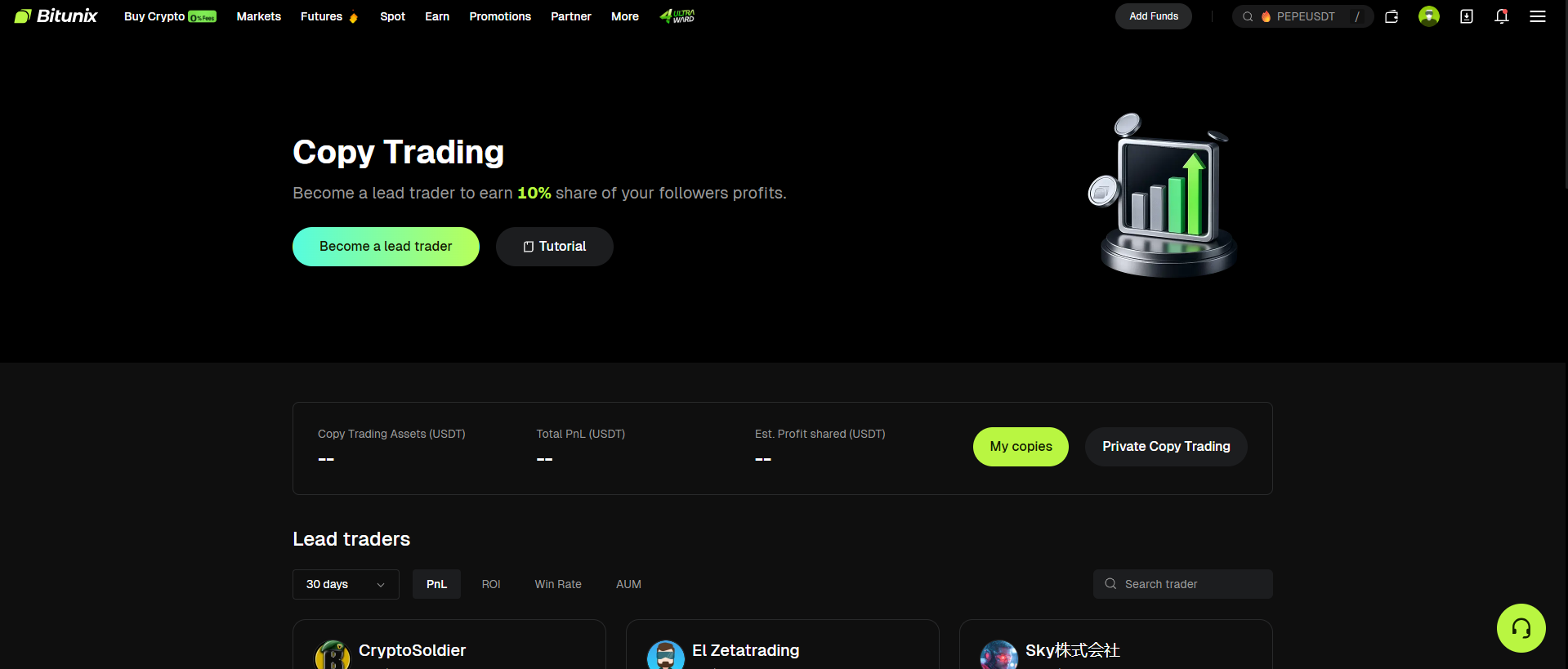
Bitunix webpage featuring Copy Trading. The page promotes earning a share of followers profits, with options to become a lead trader or start a tutorial.
If your goal is sustainable learning, use a simple operating framework.
Your first goal is not maximum return. It is execution confidence and process discipline.
Beginners often do better with fixed amount sizing because it creates consistent per-trade risk.
Following multiple traders can diversify, but only if you can review each one and understand why they are in your portfolio.
Example pause rules followers use:
If you are comparing platforms or trying to decide what the best crypto copy trading platform looks like for your needs, evaluate structure over marketing.
A strong platform should provide:
This checklist applies broadly, and it also helps you use Bitunix copy trading with a professional mindset.
If you were searching for what is copy trading in crypto, you now have a clear answer: it is automated trade mirroring that depends on your settings as much as the lead trader’s skill. On the Bitunix exchange, Bitunix copy trading follows a structured process: choose a trader, select a sizing method, set allocation and limits, monitor performance, and review routinely.
Used correctly, crypto copy trading can help you learn market behavior and participate with more structure. The safest path is to start small, choose predictable sizing, expect execution differences, and manage copying like a portfolio decision, not a gamble.
It is a feature that automatically mirrors a lead trader’s positions in a follower’s account using the follower’s allocation and risk settings.
It can be, if you start with conservative sizing, choose stable traders, and treat copy trading as a risk-managed process rather than a shortcut.
It is copy trading applied to futures contracts, where you copy derivative positions rather than buying the underlying cryptocurrency directly.
Differences can occur due to timing delays, slippage, liquidity changes, and differences in account balance and copy settings.
Focus on sizing and limits, not trader hype. Predictable exposure and consistent review matter more than chasing the top leaderboard.
Bitunix is a global cryptocurrency derivatives exchange trusted by over 3 million users across more than 100 countries. At Bitunix, we are committed to providing a transparent, compliant, and secure trading environment for every user. Our platform features a fast registration process and a user-friendly verification system supported by mandatory KYC to ensure safety and compliance. With global standards of protection through Proof of Reserves (POR) and the Bitunix Care Fund, we prioritize user trust and fund security. The K-Line Ultra chart system delivers a seamless trading experience for both beginners and advanced traders, while leverage of up to 200x and deep liquidity make Bitunix one of the most dynamic platforms in the market.
Bitunix Global Accounts
X | Telegram Announcements | Telegram Global | CoinMarketCap | Instagram | Facebook | LinkedIn | Reddit | Medium