Alphabet Inc. on Bitunix: How to Trade GOOGLUSDT
Learn what Alphabet is and how to trade GOOGLUSDT on Bitunix. Explore Google stock forecast themes, Alphabet AI stock narratives, earnings catalysts, and beginner trading basics.

The Bera (BERA) Token is the native cryptocurrency of Berachain, a high-performance blockchain ecosystem built on a unique consensus mechanism called Proof-of-Liquidity (PoL). Designed to improve scalability, security, and decentralization, BERA plays a crucial role in governance, staking, and liquidity provision within the Berachain network.
In this guide, we’ll dive deep into Bera Token’s fundamentals, tokenomics, technology, market performance, and how to trade in BERA futures contracts on Bitunix.
Berachain’s Proof of Liquidity (PoL) mechanism introduces a sophisticated economic framework that revolutionizes Layer 1 blockchain economics through the implementation of an efficient market system interconnecting validators, users, and decentralized applications.
Within this architecture, network validators commit substantial BERA token stakes, ranging from 250,000 to 10,000,000 tokens, to maintain network security and receive BGT token rewards as compensation.
The distinguishing feature of this system lies in validators’ ability to strategically allocate their BGT rewards to application-specific reward vaults, generating protocol-level incentives in return. This innovative approach establishes a dynamic economic model where network rewards correlate directly with market demand for both economic security and chain liquidity requirements.
Through this carefully structured mechanism, Berachain achieves an optimal balance between network security, validator incentivization, and application growth, creating a sustainable economic ecosystem that adapts to real-time market conditions and operational requirements.
[maxbutton name=”Trade $BERA”]
The dual-token architecture of Berachain employs BERA as the primary utility token, facilitating transaction fee payments and securing validator operations through staking mechanisms. Complementing this, BGT functions as the protocol’s governance token, offering participation rights and becoming accessible through strategic staking positions or liquidity provision activities.
To enhance protocol-specific liquidity and user engagement, applications can leverage dedicated reward vaults, creating targeted incentive structures that align with their operational objectives.
This framework enables validators to maximize their yield potential through precise BGT emission allocations, fostering a symbiotic relationship between network security and protocol utility.
The distinguishing feature of this system lies in validators’ ability to strategically allocate their BGT rewards to application-specific reward vaults, generating protocol-level incentives in return.
This innovative approach establishes a dynamic economic model where network rewards correlate directly with market demand for both economic security and chain liquidity requirements.
Through this carefully structured mechanism, Berachain achieves an optimal balance between network security, validator incentivization, and application growth, creating a sustainable economic ecosystem that adapts to real-time market conditions and operational requirements.
The dual-token architecture of Berachain employs BERA as the primary utility token, facilitating transaction fee payments and securing validator operations through staking mechanisms. Complementing this, BGT functions as the protocol’s governance token, offering participation rights and becoming accessible through strategic staking positions or liquidity provision activities.
To enhance protocol-specific liquidity and user engagement, applications can leverage dedicated reward vaults, creating targeted incentive structures that align with their operational objectives. This framework enables validators to maximize their yield potential through precise BGT emission allocations, fostering a symbiotic relationship between network security and protocol utility.
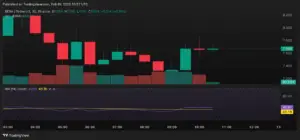
Source: TradingView
BERA token recently went live on major crypto exchanges. The platform airdropped BERA to community members on February 6, 2025. At the time of writing, BERA is trading at $7.67. The current RSI of BERA stands at 45.58 indicating the token could potentially rise if the buying pressure and circulating supply remains in the green.
[maxbutton name=”Trade $BERA”]
Berachain was founded by a group of individuals known for their early involvement in the decentralized finance (DeFi) sector. The founding team comprises Dev Bear, Man Bera, Smokey The Bera, and Papa Bear. Each founder brings a wealth of experience from their time investing in and participating in DeFi activities, with their journey in this innovative financial landscape beginning as early as 2015.
Their collective expertise and insights into the DeFi space have been instrumental in shaping Berachain’s development, focusing on addressing the needs and challenges within the DeFi ecosystem.
Bera Token (BERA) plays a crucial role within the Berachain ecosystem, serving as a governance, utility, and incentive mechanism. Holders of BERA can participate in governance by voting on network upgrades and protocol changes, ensuring decentralized decision-making.
Additionally, the token is integral to Berachain’s staking and liquidity model, where users stake BERA to secure the network and earn rewards. It also functions as the primary medium for transaction fees, covering gas costs for operations on the blockchain. Beyond these core functions, BERA supports the growth of the ecosystem by powering decentralized applications (dApps) and financial services, fostering a dynamic and sustainable DeFi environment.
Berachain’s economic incentives are designed to promote network participation and long-term value appreciation. Through its Proof-of-Liquidity (PoL) staking mechanism, users can earn rewards by providing liquidity rather than simply locking up tokens, ensuring a more sustainable and engaged ecosystem.
Additionally, a burning mechanism is in place, where transaction fees and certain governance actions may lead to token burns, gradually reducing the overall supply and potentially increasing scarcity. To further drive adoption and innovation, Berachain also offers ecosystem grants and rewards, incentivizing developers and early adopters to contribute to the network’s growth and development.
Berachain is an EVM-compatible blockchain, enabling developers to deploy Ethereum-based smart contracts seamlessly while leveraging the network’s unique consensus model. Unlike traditional Proof-of-Stake (PoS), Berachain operates on a Proof-of-Liquidity (PoL) mechanism, which requires participants to provide liquidity rather than simply locking tokens, fostering a more engaged and capital-efficient ecosystem.
On the security front, Berachain is expected to undergo third-party smart contract audits to ensure the integrity and reliability of its infrastructure. Additionally, the PoL model enhances network resilience by incentivizing active liquidity providers, reducing centralization risks, and promoting a more decentralized and secure blockchain environment. The long-term vision is to build a scalable and liquid blockchain for DeFi, GameFi, and NFT projects.
Berachain (BERA) has made quite an entrance into the crypto market, launching its mainnet on February 6, 2025, with an initial listing price of $18.82. The token has since experienced significant volatility, currently trading around $7.65.
Looking ahead, price predictions for BERA vary widely among analysts, reflecting the uncertain nature of new blockchain projects. While some conservative estimates place BERA in the $5-10 range for the near term, more optimistic analysts suggest it could potentially reach $20-28 by the end of 2025, driven by the platform’s strong fundamentals and growing ecosystem of over 270 projects already building on the network.
However, as with all cryptocurrency investments, these predictions should be taken with caution, as the market remains highly volatile and subject to various factors including adoption rates, market conditions, and overall crypto sentiment.
[maxbutton name=”Trade $BERA”]
Before you get into the nitty gritty of placing a futures trade on BERA/USDT, make sure that you have completed your KYC to enjoy all the benefits that Bitunix offers to KYC verified users. Once you have completed your KYC, you can head over to the markets tab on the main navigation menu and click marketplace.
Additional Reading: How to Complete Your KYC on Bitunix?
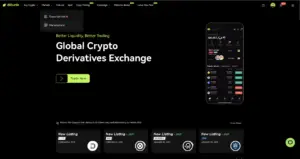
Now, click on futures trading and look up for BERA/USDT.
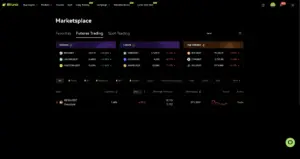
Next, click on the Trade tab on the BERA/USDT panel which will open the trading window for the token pair.
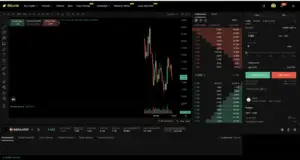
Now, you can place futures trade on BERA/USDT.
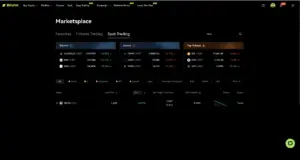
You can buy and sell Bera tokens on Bitunix crypto and derivatives exchange. If you are a registered user, you may simply head to the main navigation menu and click on the markets tab and select Marketplace from the drop down menu.
Next, look up for BERA/USDT and choose spot or futures trading to start trading in BERA tokens.
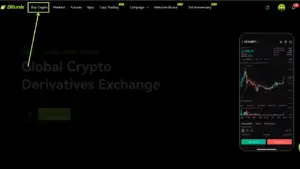
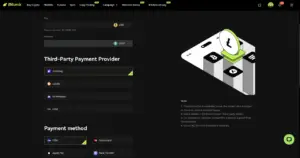
If you don’t have any crypto, you can buy crypto via third party providers on Bitunix. To buy crypto, follow the below steps
A: Berachain is a high-performance Layer 1 blockchain that’s fully compatible with the Ethereum Virtual Machine (EVM). It stands out for its innovative Proof-of-Liquidity consensus mechanism and its focus on defragmenting liquidity in the DeFi ecosystem. The platform is designed to be developer-friendly while maintaining high performance and security standards.
: Berachain operates on a unique tri-token model:
Proof-of-Liquidity is Berachain’s novel consensus mechanism that extends beyond traditional Proof-of-Stake. It’s designed to align economic incentives between validators, applications, and users.
The mechanism uniquely separates the gas token from governance rewards, creating a more efficient and sustainable economic model for the network.
Berachain launched its mainnet on February 6, 2025, following what was dubbed “the world’s longest testnet”. The launch was accompanied by a significant token airdrop to early supporters and ecosystem participants.
Berachain distinguishes itself through its EVM-identical execution layer (not just compatibility), its innovative Proof-of-Liquidity consensus mechanism, and its focus on solving liquidity fragmentation. The platform’s modular design allows for customization while maintaining interoperability with the broader ecosystem.