Published on March 11, 2026 by AG - Content Manager • 17 min read
As one of the oldest and most resilient cryptocurrencies in the market, Litecoin (LTC) has weathered multiple cycles and survived. But Litecoin, often nicknamed Bitcoin’s silver for its lighter, payments-focused design, now has to compete with smart contracts, L2s, and memecoins.
From the beginning, LTC has been recognized as a lighter version of BTC, focused on fast transfers and low fees, which turned it into a benchmark for on-chain payments and listings across exchanges worldwide. At the same time, its payment narrative now competes for attention with new infrastructures and stablecoins that capture a large share of transactional volume.
This article presents a Litecoin price prediction 2026–2030, built on the predictability of its halving cycle (which reduces issuance and has historically reshaped supply and demand) and LTC’s role as a reliable payment network for everyday transactions. We also factor in the competitive pressures from newer technologies.
What Is Litecoin (LTC)?
Litecoin is a peer-to-peer cryptocurrency created as a lite version of Bitcoin, designed to enable faster and cheaper digital payments, and its deep liquidity makes it a staple asset in spot trading crypto pairs on major exchanges. Instead of reinventing the wheel, LTC builds on Bitcoin’s architecture while making adjustments that prioritize speed and day-to-day usability.
Key differences compared to Bitcoin: Litecoin’s block time is 2.5 minutes (versus 10 minutes for BTC), its maximum supply is 84 million coins (vs. 21 million for Bitcoin), and it uses the Scrypt hashing algorithm (instead of SHA-256). In practice, these technical choices tend to reduce latency and lower transaction costs, supporting its use as a payment method.
Over the years, LTC has grown into a stable ecosystem of wallets, payment gateways, and listings on major exchanges. It is true that today’s market tends to favor smart contracts and complex applications. Even so, the combination of simplicity, throughput, and deep liquidity keeps LTC relevant, especially for investors looking for exposure to a veteran asset with a predictable supply schedule.
LTC Price History & The Halving Cycle
Litecoin’s price generally follows its own rhythm, but with a strong structural correlation to Bitcoin. In each cycle, the most notable moves tend to cluster around halving events, when the block reward is cut in half. As with BTC, Litecoin’s halving reduces the flow of new coins entering the market, compressing marginal supply and, in environments of steady or rising demand, acting as a price catalyst.
The pattern seen in previous cycles highlights two key points:
Timing asymmetry – the market often prices in expectations both before and after the halving; sharp volatility spikes around the event are not unusual.
Macro and liquidity conditions – the impact of the halving does not happen in a vacuum. Global liquidity, risk appetite, BTC dominance, and the rotation between narratives (L1s/L2s, AI, DePIN, memecoins) all shape how strong the move can be. Liquidity also migrates between spot and derivatives. During high-volatility phases, margin trading crypto tends to amplify both rallies and drawdowns.
Litecoin Price Prediction 2026: Riding The Bull Market Wave
As a veteran, highly liquid crypto asset, LTC tends to track Bitcoin’s directional moves. In 2025, the correlation between Litecoin and BTC is high (around 88-90%), which means that in broad bull market environments, LTC usually mirrors the upside, although with a lower beta than memecoins or high-growth L1s.
LTC is trading around $100. In a scenario of healthy risk appetite and solid liquidity, this projection considers an extension of the current trend if BTC maintains its dominance and continues to attract flows into large caps.
Historically, Litecoin’s halving dynamics (the latest on August 2, 2023, with the next projected for 2027) reduce issuance and can act as a catalyst when demand remains stable or increases. In several cycles, the market has anticipated moves around the post-halving window, with elevated volatility as scarcity narratives gain traction.
For 2026 (about 2 years and a half after the 2023 halving), the combination of lower supply and cycle liquidity is likely to support average prices above 2024 levels, even if punctuated by tactical pullbacks. This underpins a projected high near $180, assuming BTC holds higher ranges and macro conditions remain neutral to positive.
Litecoin Price Prediction 2026-2027: The Payments And Adoption Test
Litecoin’s main use case is still fast, low-cost payments. Its integration with major processors like BitPay, which enables acceptance by thousands of merchants, and exposure in the PayPal ecosystem (crypto buying and transfers, with LTC among the supported assets) keeps the coin visible in online retail and checkout solutions.
This helps sustain network liquidity and a utility-driven narrative, even in a market dominated by dApps and L2s. The biggest obstacle for LTC payments to scale in 2026-2027 is the rise of stablecoins. Data from 2024-2025 shows USDT and USDC leading global on-chain volume by a wide margin, processing trillions of dollars and holding a dominant market share.
That makes them naturally attractive for commerce, as they reduce price volatility. This competition tends to cannibalize part of the crypto payments space where coins like LTC used to appear more frequently.
With the next Litecoin halving projected for 2027, the 2026-2027 period may see speculative front-running (early repricing) followed by profit-taking. Behavior will depend above all on the BTC cycle and global liquidity. Even so, reduced supply is likely to support higher annual averages in 2027 ($160) than in 2026 ($125), preserving LTC’s positive asymmetry.
Litecoin Price Prediction 2028–2030: A Legacy Asset In A Modern World
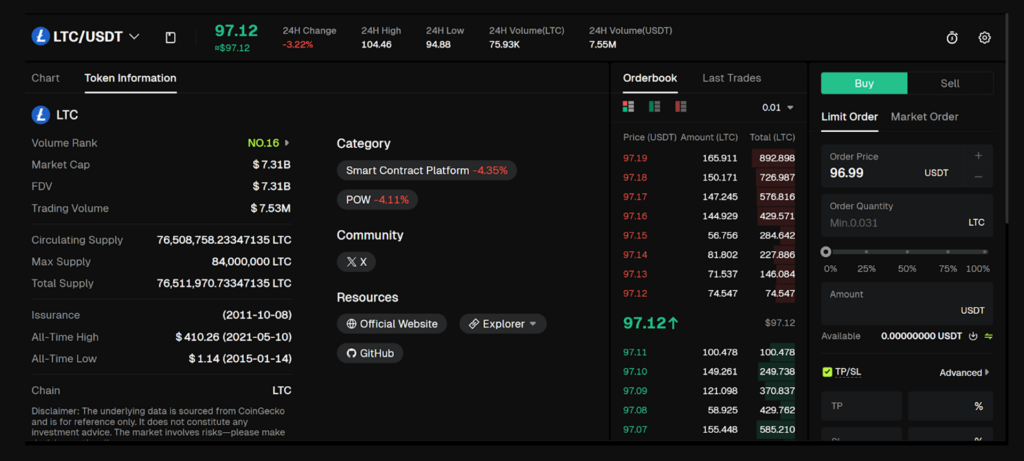
LTCUSDT daily chart on Bitunix tracking Litecoins structure across halving cycles Source Bitunix
If Litecoin continues to reinforce its digital silver thesis as a decentralized, stable, and low-cost transfer network, it is likely to retain a place in the portfolios of investors who want exposure to a veteran payment asset with predictable issuance and a brand that has been recognized for more than a decade.
Institutional profiles often describe it as a lean Layer-1, optimized for moderate TPS and low fees, secured by PoW (Scrypt) and supported by a mature ecosystem. These characteristics help keep it a relatively safe haven among altcoins when the market rotates into quality and track record.
The reward reduction projected for 2027 (from 6.25 LTC to 3.125 LTC per block) again tightens marginal supply and typically adds an upside bias as long as demand does not fall. The window from front-running into the post-event phase tends to amplify volatility and, if the BTC cycle enters a high-liquidity phase toward the end of the decade, LTC’s beta could help push average prices in 2028-2030 above the previous three-year period.
2028: $110-$320 (average $180) – mid-cycle, post-halving year, heavily dependent on the global liquidity regime. Upside is higher if the payments narrative gains traction versus high fees on competing networks.
2029: $140-$400 (average $220) – assumes steady adoption and high correlation with BTC; if the market rotates capital into legacy quality during risk-off periods, LTC is likely to capture relative flows.
2030: $170-$500 (average $260) – if the combination of constrained supply, long-standing brand, and payment utility holds, the asset may sustain stronger multiples; regulatory shocks or loss of ground to stablecoins and centralized payment rails would compress the range.
Key Factors Influencing LTC’s Price
High LTC-BTC correlation remains the main driver. When BTC accelerates, LTC tends to follow, although with a lower beta during speculative phases led by memecoins and L2s. The structure of the 2024–2025 cycle has been more sensitive to global liquidity than to the halving alone, and this extends to the large, classic L1s.
The supply shock every four years is still a key trigger. In 2023, it cut issuance to 6.25 LTC per block. The next halving, estimated for 2027, will reduce it to 3.125 LTC per block. The pre- and post-event window typically intensifies volatility and repricing.
In addition, integrations with payment processors and online retail keep LTC top of mind for crypto checkout. BitPay highlights use cases and merchants, and PayPal lets users sell BTC/ETH/LTC/BCH/PYUSD at checkout to pay for purchases, which normalizes usage for retail users.
Its status as an older project with an uninterrupted operating history and PoW security also attracts capital during flight-to-quality phases within altcoins. That said, it does not eliminate competition from stablecoins (USDT/USDC) in commerce, where zero volatility remains a major advantage.
How To Trade Litecoin (LTC) On Bitunix
There are several ways to trade LTC on Bitunix.
Buy And Hold Made Simple
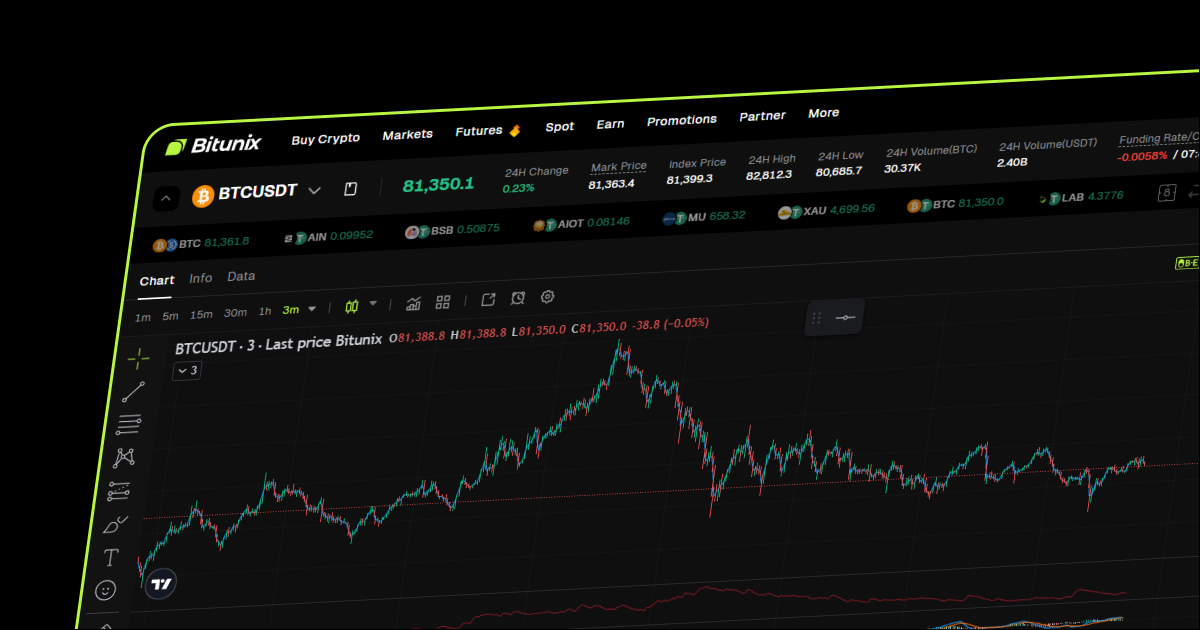
For direct exposure, use spot trading on the Bitunix crypto exchange: search for LTCUSDT and place a market or limit order. The One Chart interface (with TradingView) lets you run technical analysis and execute trades on the same screen. It is especially convenient for tracking BTC/USDT and other key pairs while you decide how to buy crypto quickly.
Take Advantage Of Moves With Leverage
Trade LTC perpetual futures on Bitunix’s crypto futures trading platform, with leverage of up to 125x on selected pairs and deep liquidity. Manage risk with isolated or cross margin, set stop-loss and take-profit orders, and keep an eye on funding rates.
Trade one of the original and most trusted names in crypto. Get exposure to Litecoin (LTC) on Bitunix with deep liquidity and a secure platform. Sign up today.
Why Trade LTC On Bitunix?
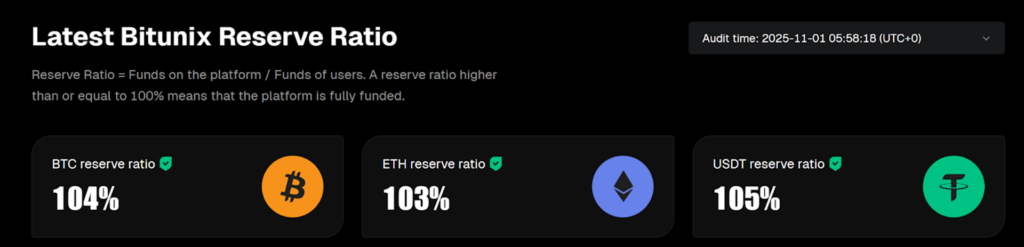
Bitunix Proof of Reserves real time verifiable 11 backing for user assets Source Bitunix
Trust is a key currency when you are dealing with a legacy asset like Litecoin. Bitunix combines verifiable security with consistent execution for traders who want to trade LTC with peace of mind. The exchange runs live proof of reserves and a Protection Fund, adding an extra layer of confidence for users who prioritize transparent custody and mitigation of operational risks.
For active traders who enter and exit positions frequently, deep liquidity and stable order books help reduce slippage, which is especially important during volatile market conditions.
Day to day, One Chart solves what used to require multiple screens. You can monitor LTC vs BTC, Bitcoin dominance, benchmark pairs like BTC/USDT and ETH/USDT, and LTC/USDT itself, all on a single panel with TradingView integrated.
This makes it easier to read correlations and execution routes. For example, you can spot when LTC’s beta starts to accelerate versus BTC, or when flows rotate from spot into perpetuals. For traders focused on efficiency, market and limit orders, stop-loss and take-profit, and isolated/cross margin modes are all just one click away.
Conclusion: Does Digital Silver Still Have A Place?
This Litecoin price prediction is built on its high correlation with Bitcoin, a predictable halving cycle, and a long-standing role as a fast, low-cost payments network. The scenarios point to progressively higher ranges with positive post-halving asymmetry, but are always sensitive to global liquidity, market sentiment, and where BTC sits in its own cycle.
It is true that Litecoin does not offer the smart contract ecosystem of modern L1s and L2s. That limits its narrative during phases of euphoria around dApps. Even so, it still benefits from a strong brand, Proof-of-Work (Scrypt) decentralization, and a continuous operating history, traits that tend to attract capital when investors look for quality among altcoins.
If payment adoption remains meaningful and supply continues to be compressed by halvings, LTC keeps its place as digital silver: simple, steady, and widely recognized. In a market full of hype, Litecoin stands for reliability. Trade LTC with confidence on Bitunix today.
FAQ
Can Litecoin (LTC) reach $1,000?
It is possible in an extreme bull market scenario, with BTC at fresh record highs, risk multiples favoring legacy assets, and strong post-halving supply compression. But it would require extraordinary liquidity and a very supportive macro backdrop.
Is Litecoin a good investment compared to Bitcoin?
BTC tends to lead cycles and capture most of the flight to quality. LTC can amplify some of Bitcoin’s moves in specific phases, but it does not replace the core BTC thesis. Many traders see LTC as a tactical allocation among long-standing large-cap alts.
When is the next Litecoin halving and how will it affect the price?
The next halving is expected in 2027. Historically, lower issuance supports higher average prices around the event, but the actual reaction depends on the BTC cycle and global liquidity conditions.
What is the main use case for Litecoin?
Fast, low-cost on-chain payments, with a block time of about 2.5 minutes and generally lower fees than BTC.
Is Litecoin truly decentralized?
Yes. LTC has run on Proof of Work (Scrypt) since 2011, on a public, permissionless network secured by independent miners.
How does Litecoin’s speed compare to other cryptocurrencies?
It is faster than BTC (2.5 minutes vs. 10 minutes per block) but slower than many modern, high-throughput networks. In return, it offers simplicity, long runtime, and a mature infrastructure stack.
Why is Litecoin called the “silver to Bitcoin’s gold”?
Because it was launched as a lite version of Bitcoin, with lower latency and a higher total supply, positioning itself more as a payment currency while BTC cemented its store-of-value narrative.
What are the risks of investing in Litecoin?
Price volatility, adverse market cycles, competition from stablecoins in payments, and potential regulatory changes.
Does Litecoin have any major partnerships?
Adoption by payment processors and retail platforms expands its use cases (for example, integrations with gateways like BitPay and support within broader crypto payment environments). The impact on price varies with the market cycle.
Where is the best place to buy and trade LTC?
On Bitunix, you get a crypto exchange with deep liquidity, a One Chart interface for analysis and execution in a single panel, proof-of-reserves tracking, a Protection Fund, and both spot and perpetual contracts to support different trading strategies.
Glossary
Adoption (payments): Real-world use of a cryptocurrency to pay for goods or services via processors, wallets, or merchant integrations.
Average price (forecast tables): The central scenario in a price range, not a guarantee, typically the midpoint or the model’s base case.
Beta (crypto): Measures how much an asset tends to move relative to a benchmark (e.g., BTC). A lower beta means smaller swings vs. the benchmark.
Bitcoin dominance: The percentage of total crypto market cap represented by BTC; often used as a risk-on/risk-off barometer.
Block reward: New coins issued to miners when they append a block to the chain.
Block time: The average time the network takes to produce a new block (e.g., ~2.5 minutes in LTC, ~10 minutes in BTC).
Cross margin / Isolated margin: In derivatives, cross uses all margin in the account to back positions; isolated limits risk to the margin assigned to a specific position.
Decentralization: Control spread across many participants (miners/validators), with no single entity able to change rules or censor transactions unilaterally.
DePIN (Decentralized Physical Infrastructure Networks): Projects that tie real-world hardware or services to on-chain incentives.
ETF (spot): Exchange-traded fund that holds the underlying asset (e.g., BTC) and issues shares that track its price.
Fair value (FASB ASU 2023-08): US accounting update allowing certain crypto assets to be measured at fair value through earnings instead of impairment-only.
Fees (network vs. trading): Network fees are paid to miners/validators; trading fees are charged by exchanges for order execution.
Flight to quality: When investors rotate into assets seen as safer (e.g., BTC, large-cap legacy coins like LTC) during uncertainty.
Front-running (cycle): Market pricing in an anticipated event (like a halving) before it happens.
Funding rate (perpetuals): Periodic payment between long and short positions that keeps perpetual futures aligned with spot prices.
Gateway (payment): Service (e.g., BitPay) enabling merchants to accept crypto with checkout, settlement, and compliance tools.
Halving (Litecoin): Pre-programmed event that cuts the LTC block reward by 50%, reducing new coin issuance and creating a predictable supply shock.
Hashing algorithm (Scrypt/SHA-256): Cryptographic function used in mining. LTC uses Scrypt; BTC uses SHA-256.
KYC (fiat on/off-ramp): “Know Your Customer” verification. In the Bitunix narrative, required for fiat operations, not necessarily for crypto-to-crypto.
Layer-1 (L1): A base blockchain (e.g., Bitcoin, Litecoin). Layer-2 (L2): Scalability layers built on top of L1s to increase throughput or reduce fees.
Latency (payments): The time from transaction broadcast to confirmation; lower latency improves checkout experience.
Leverage (derivatives): Borrowed exposure that amplifies gains and losses (e.g., 5x, 20x). Requires rigorous risk controls.
Liquidity (market): The ease of entering/exiting positions without moving the price materially; deeper order books reduce slippage.
Max supply: The maximum number of coins that will ever exist (84M for LTC; 21M for BTC).
Memecoins: Tokens driven largely by community and narrative rather than fundamental utility; often high-beta, high-volatility.
Order types (market/limit/stop): Market executes now at best price; limit sets a price threshold; stop converts to market/limit on trigger.
Perpetual futures (perps): Futures with no expiration; funding rates keep them tethered to spot.
PoR (Proof of Reserves): Exchange-side attestations or live proofs that customer assets are held 1:1, improving transparency.
PoW (Proof of Work): Consensus where miners expend computing power to secure the network and earn block rewards (LTC: Scrypt; BTC: SHA-256).
Potential high / Potential low (forecast tables): The optimistic and conservative bounds of a projected range, not promises.
Protection Fund (exchange): Reserve capital set aside by an exchange to help cover extreme events or user losses per stated policy.
Repricing (post-event): The market adjusting valuations after a catalyst (e.g., halving, ETF flows, rate cuts).
Risk appetite (macro): Investor willingness to hold risk assets; improves with easier financial conditions and weakens with tightening.
Scrypt: LTC’s mining algorithm, memory-hard by design, originally intended to be more ASIC-resistant than SHA-256.
Slippage: The difference between the expected and executed price due to order book depth and trade size.
Spot market: Immediate purchase/sale of the asset (e.g., LTC/USDT), with on-the-spot settlement.
Stablecoin (USDT/USDC): Token pegged to a fiat currency (usually USD) to minimize volatility, widely used in trading and payments.
Stock-to-flow (S2F): Ratio comparing existing supply to new issuance; a higher S2F implies greater scarcity.
Throughput (TPS): Transactions per second a network can handle; a practical measure of capacity.
TradingView (integration): Charting and analysis toolkit integrated into many exchanges’ UIs for technical analysis and order execution.
Volatility: The magnitude of price swings over time; higher volatility increases both opportunity and risk.
On-ramp / Off-ramp: Services that convert fiat↔crypto. Often require KYC/AML for compliance.
USDT/USDC pairs (e.g., LTC/USDT): Trading pairs quoting the asset in stablecoins; the most common base in retail and pro markets.
US CPI / QT (macro): US inflation gauge (CPI) and Quantitative Tightening, central-bank balance-sheet reduction, both major drivers of risk-asset multiples.
About Bitunix
Bitunix is a global cryptocurrency derivatives exchange trusted by over 3 million users across more than 100 countries. The platform is committed to providing a transparent, compliant, and secure trading environment for every user. Bitunix offers a fast registration process and a user-friendly verification system supported by mandatory KYC to ensure safety and compliance. With global standards of protection through Proof of Reserves (POR) and the Bitunix Care Fund, Bitunix prioritizes user trust and fund security. The K-Line Ultra chart system delivers a seamless trading experience for both beginners and advanced traders, while leverage of up to 200x and deep liquidity make Bitunix one of the most dynamic platforms in the market.
Disclaimer: Trading digital assets involves risk and may result in the loss of capital. Always do your own research. Terms, conditions, and regional restrictions may apply.
Table Of Contents
Ready To Place Your Next Trade?
Choose a market, set your order, and manage risk in one place.
AG | Content Manager | Bitunix
May 18, 2026 No Comments
Explore how top traders balance crypto volatility and TradFi macro trends in 2026. Join the Bitunix Showdown Tournament and compete for 630,000 USDT in prizes.
AG | Content Manager | Bitunix
May 12, 2026 No Comments
Compare Bitunix, BingX and BloFin for fiat-to-crypto buying in 2026, including local currency options, payment methods, fees, safety and trading access.
AG | Content Manager | Bitunix
May 12, 2026 No Comments
Compare Coinbase and Kraken in 2026, including US availability, restricted regions, fees, security tools, mobile access, trading services and user eligibility.
AG | Content Manager | Bitunix
May 12, 2026 No Comments
Compare Bitunix, KuCoin and BingX across security, fees, futures trading, mobile access, trading tools and user experience to choose the best crypto exchange in 2026.