Published on May 4, 2026 by AG - Content Manager • 20 min read
Summary
Geopolitical de-escalation drives a strong crypto market rebound; BTC breaks above $79,000 and establishes interim support
Mainstream asset rally fails to mask weak on-chain activity; market exhibits a clear “price-up, volume-down” divergence
Prediction market sector sustains growth momentum; Kalshi leads on the back of sports event activity
Ripple’s enterprise crypto treasury management system launches native digital asset support
Clarity Act enters committee review; stablecoin yield provisions may be clarified
12 European banks collaborate to develop a MiCA-compliant euro stablecoin
1. April Bitcoin Price Review and Market Analysis
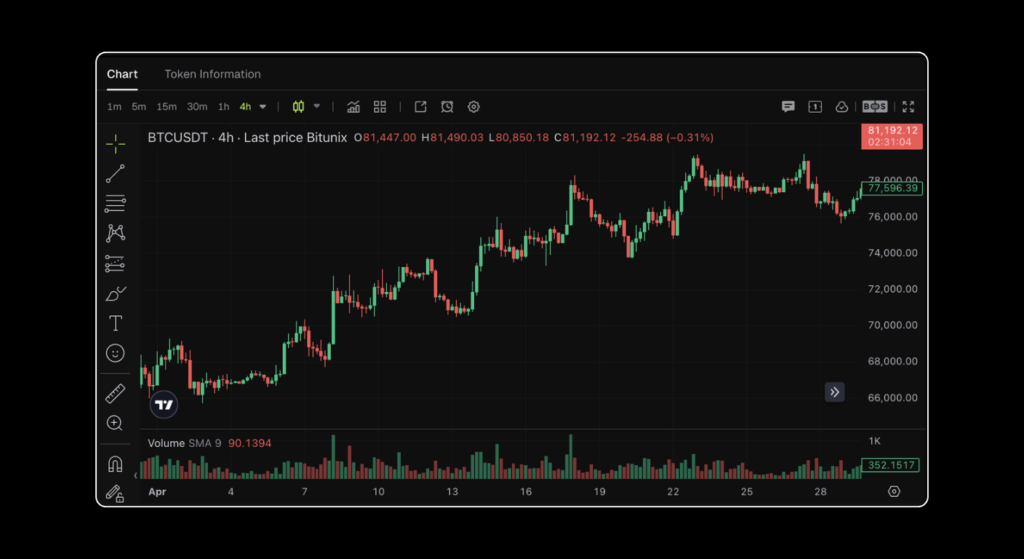
In April 2026, as geopolitical tensions between the United States and Iran gradually eased, risk sentiment across global capital markets recovered noticeably, and the crypto market staged a meaningful rebound. At the start of the month, BTC was still trading below $70,000, but as buying pressure steadily intensified, BTC posted multiple strong bullish candles with single-day gains exceeding 2%, successfully breaking above the key interim resistance level of $76,000. On April 22, BTC pushed further above the $79,000 level, and market sentiment warmed significantly. Following this, Bitcoin entered a high-level consolidation phase, repeatedly retesting the key support zone near $76,000, indicating that this level had gradually solidified into an interim base structure.
1.1 April Bitcoin Futures Trading — Shorts Still Dominant
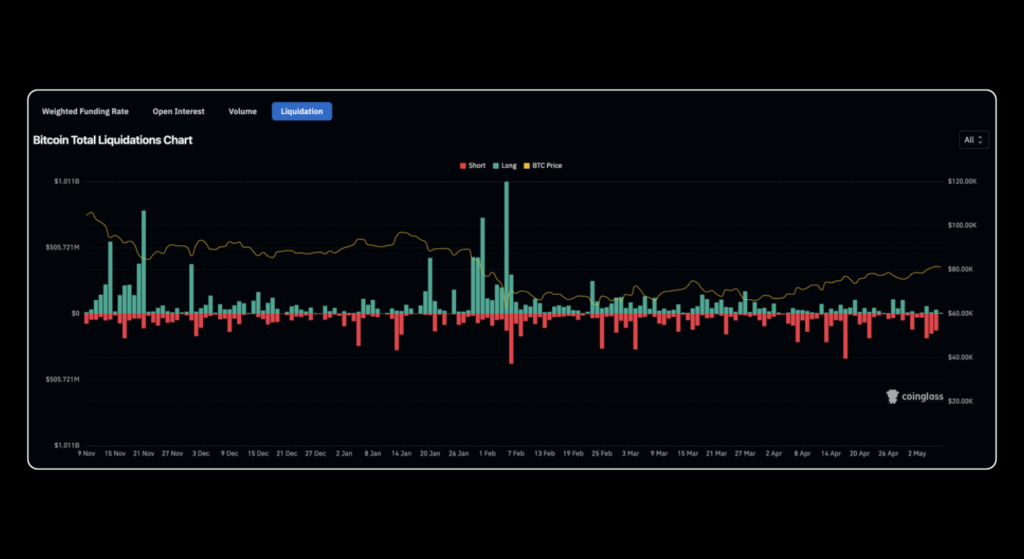
Despite BTC’s strong April rebound, most traders had not fully shed their prior bearish bias, and short positions continued to dominate the futures market. As a result, the liquidation structure for BTC futures this month was predominantly composed of short squeezes, reflecting the market’s widespread underestimation of the rally. Notably, on April 17, BTC rapidly surged from around $75,000 to $78,000, successfully breaking above the prior interim rally high and triggering a cascade of forced short liquidations. Driven by the sharp intraday price move, BTC short liquidations on that day totaled $344 million, marking the largest single-day liquidation event of the month and underscoring the growing vulnerability of leveraged short positions in a rising market.
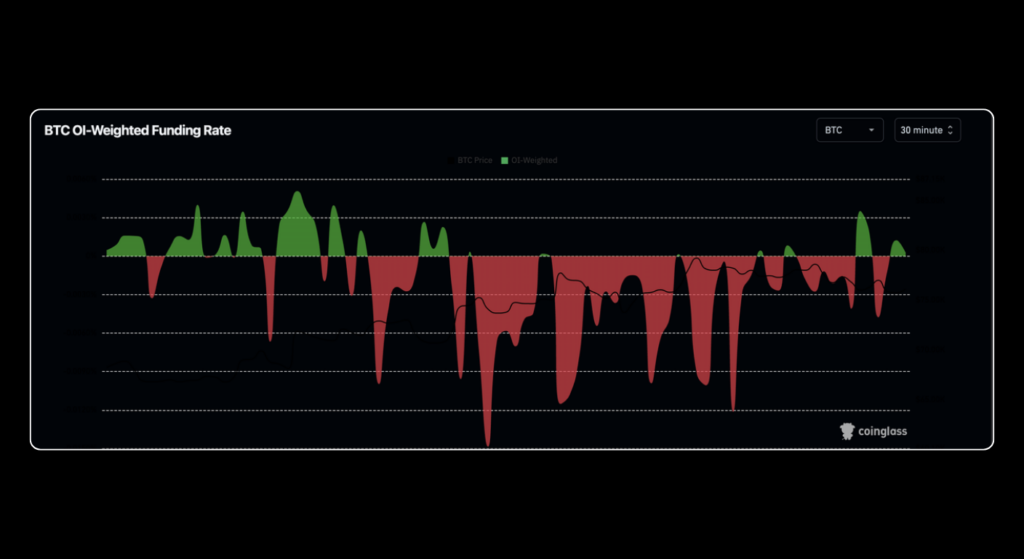
The April BTC futures funding rate dynamics further reflected that most traders maintained a bearish outlook, broadly failing to anticipate such a strong monthly rally. As short positions accumulated, funding rates remained persistently negative, indicating that short-side demand significantly outpaced long-side demand. On April 14, BTC perpetual funding rates briefly dropped to -0.0148%, hitting a nearly two-year low and signaling that short sellers were paying a steep premium to long holders, with market sentiment overwhelmingly bearish. Funding rates continued hovering near -0.010% for an extended period thereafter, not recovering above zero until the final days of the month, demonstrating a clear lag between market positioning and actual price action.
1.2 Bitcoin Institutional Holdings — MSTR Significantly Increases Position
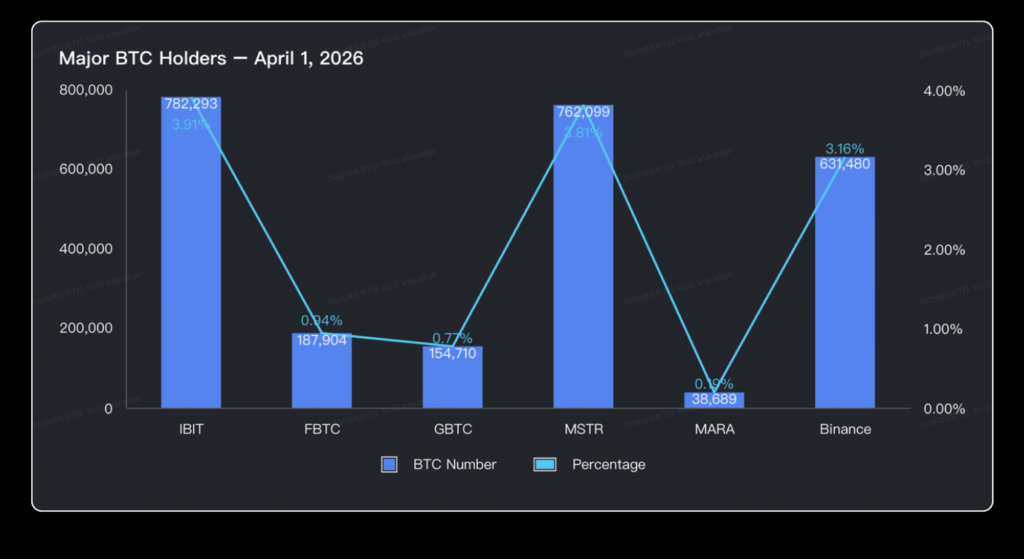
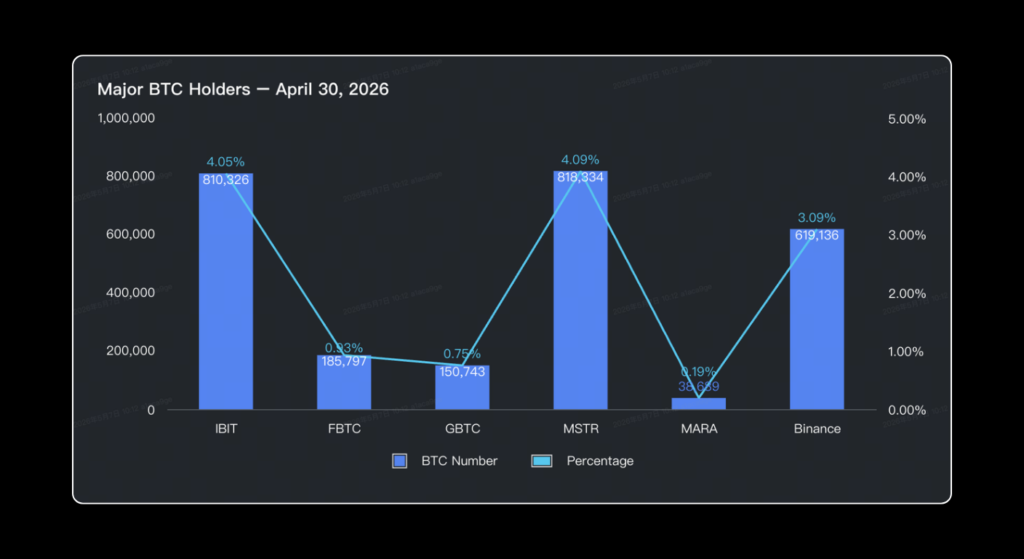
In April 2026, institutional holding data showed that large institutional investors broadly chose to accumulate BTC spot during market pullbacks, while some retail traders tended to sell into strength, creating a clear “institutions accumulating, retail distributing” dynamic. IBIT, currently the largest Bitcoin spot ETF by assets, added a cumulative 28,033 BTC in April, bringing its total BTC holdings to over 4% of the circulating supply. MSTR further cemented its position as the world’s largest institutional BTC holder, acquiring a cumulative 56,235 BTC in April and raising its total BTC holdings to 4.09% of total supply. Against a backdrop of divided market sentiment, institutional conviction in Bitcoin’s long-term value remained strong.
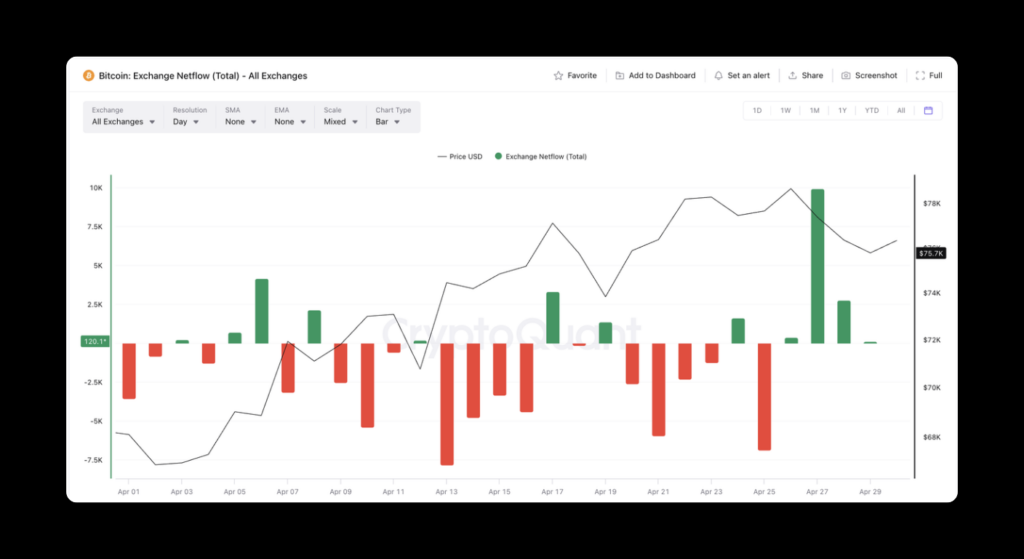
On the other hand, Binance, whose platform wallets serve as a key barometer of retail capital flows, recorded a net reduction of 12,344 BTC in April. Concurrently, on-chain data platform CryptoQuant reported that overall exchange BTC reserves posted a sustained net outflow trend throughout April, indicating that Bitcoin was steadily moving off exchanges. Taken together, the combination of institutional accumulation and exchange net outflows suggests that April’s strong BTC rally was primarily driven by institutional capital.
1.3 Bitcoin Network Hashrate — Miner Confidence Not Yet Restored
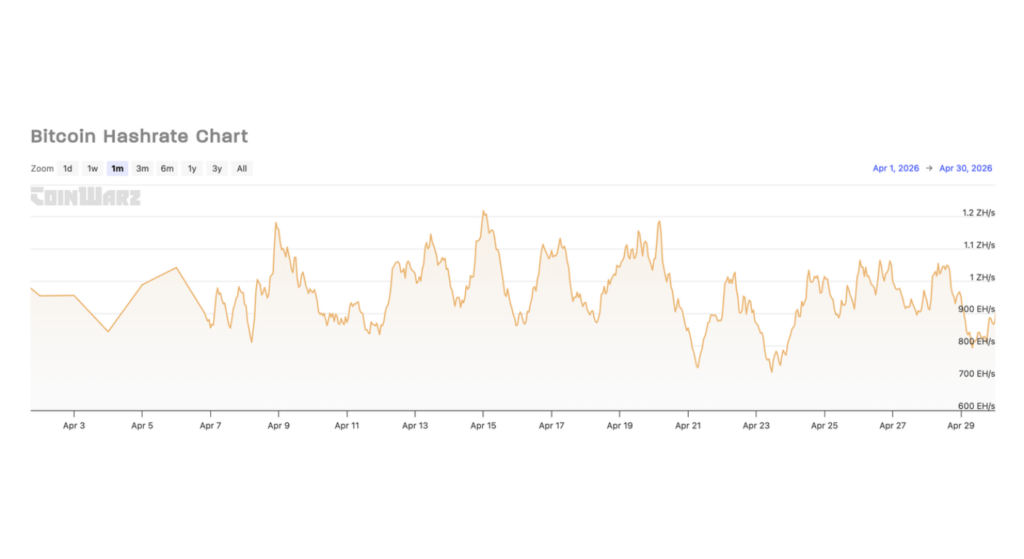
In contrast to BTC’s strong price recovery in April, the mining community, which represents one class of long-term holders, had not yet fully regained confidence in the market. Throughout April, Bitcoin’s total network hashrate broadly trended lower with volatility, hitting a monthly low of 750 EH/s on April 23. This indicates that despite the price recovery, some miners maintained a cautious outlook on future price action, and the willingness to expand hashrate had not yet meaningfully recovered.
2. April Ethereum Price Review and Market Analysis
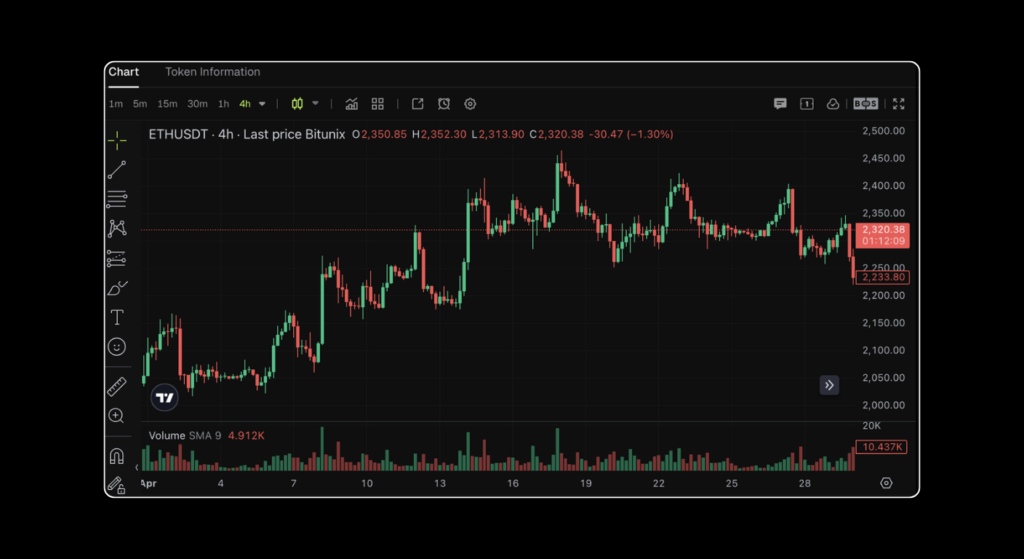
Viewed from the candlestick chart, ETH’s price action in April was highly correlated with BTC, with both assets maintaining a ranging upward trajectory. The key distinction was that BTC’s advance was more consistent and steady, quickly resuming its uptrend after minor pullbacks, whereas ETH experienced deeper retracements with more pronounced consolidation patterns. ETH opened the month at $2,050 and subsequently climbed to an interim high of $2,450 on April 17. The market then entered a brief corrective consolidation phase, with ETH price settling in the $2,300 to $2,350 range by month-end.
2.1 Ethereum Futures Trading — Leveraged Shorts Hold the Edge
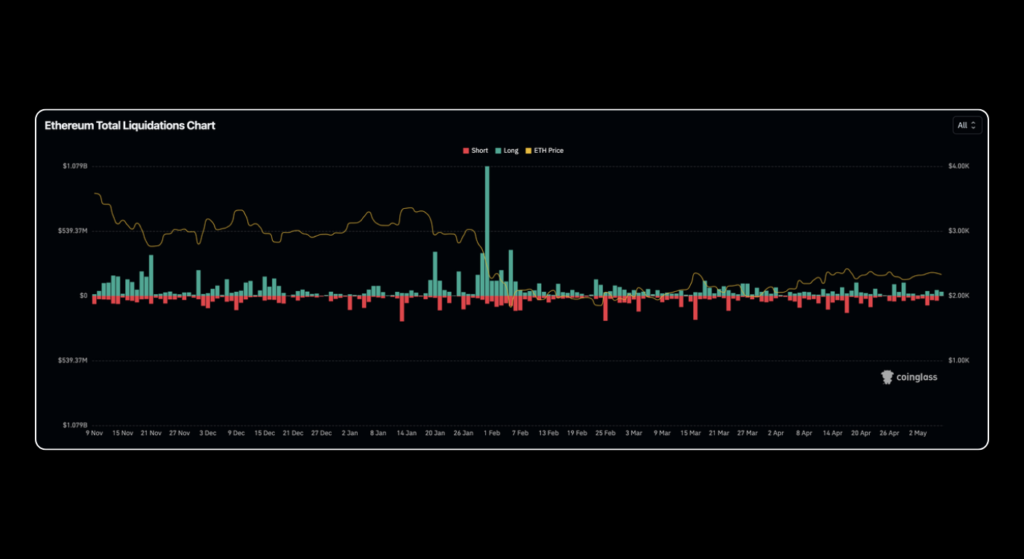
In terms of futures liquidations, ETH’s dynamics closely mirrored those of BTC, with overall liquidation volume contracting significantly compared to February and March levels. Benefiting from the broader recovery in crypto market sentiment, ETH liquidation activity was predominantly short-side. The liquidation peak coincided with April 17, on which single-day liquidations reached $142 million.
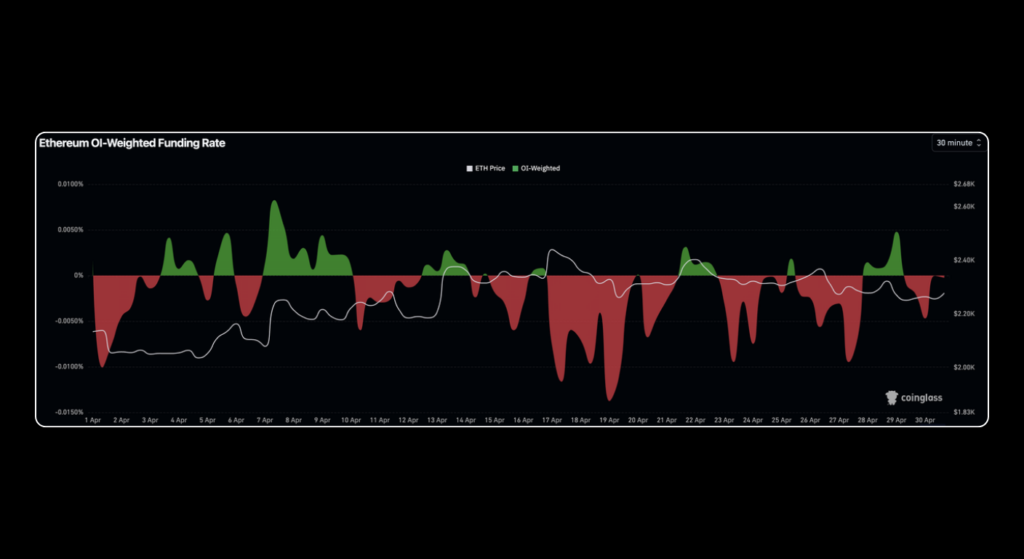
Examining the funding rate dynamics, while leveraged short positions held a relative advantage at certain points, ETH perpetual funding rates spent noticeably less time in negative territory compared to BTC. This suggests that futures traders maintained relatively resilient bullish expectations for ETH’s near-term price trajectory. The funding rate hit an interim low of -0.0138% on April 19.
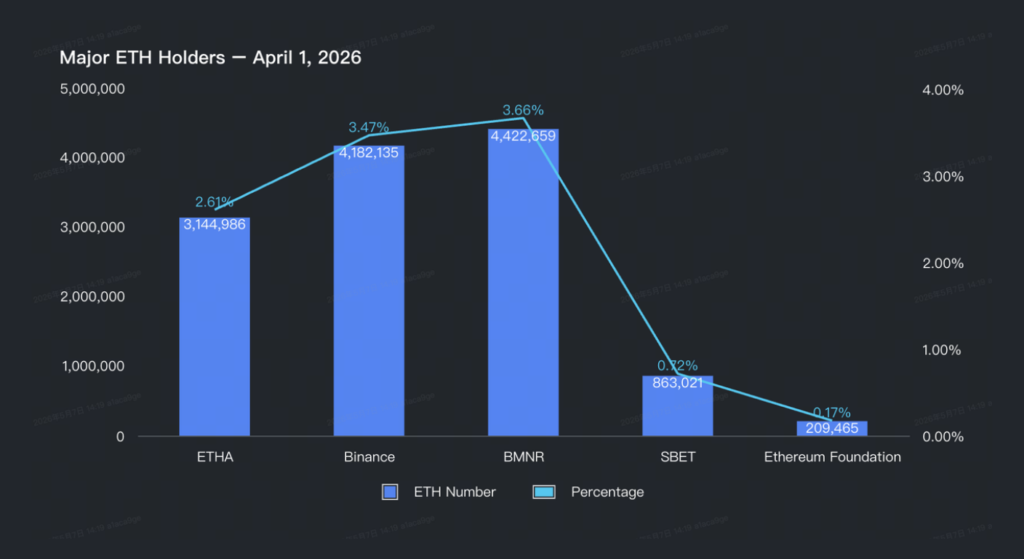
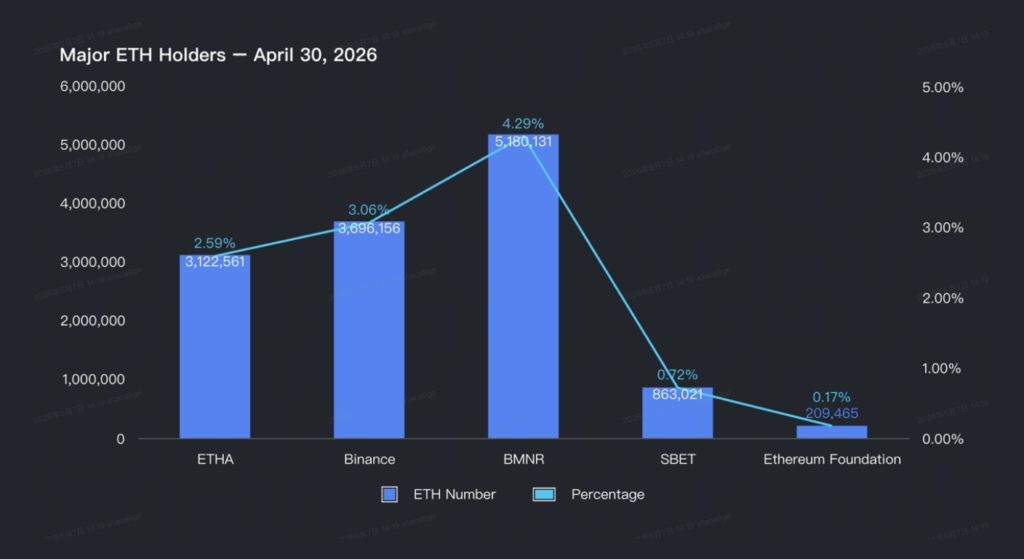
On the institutional holdings front, BMNR currently holds the largest single-entity ETH position of any institution. The company continued its accumulation strategy throughout April, with total holdings now representing 4.29% of ETH’s total supply, further widening its lead. In contrast, some institutions and trading platforms showed outflow trends: ETHA reduced its holdings by a cumulative 22,425 ETH in April, while Binance recorded a significant reduction with cumulative outflows of 757,472 ETH. These figures reflect the fact that market participants remain sharply divided on ETH’s near-term outlook, with no clear consensus between bulls and bears, impeding any coordinated upward price momentum.
2.3 Ethereum Staking — April Records a Net Decline of 1.32 Million ETH
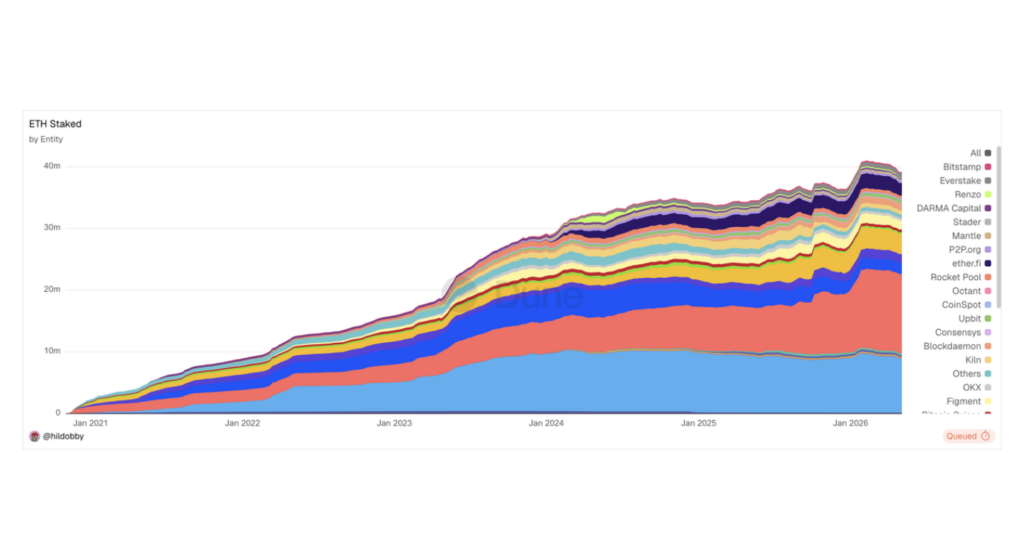
In April 2026, Ethereum’s total staked supply showed a notable declining trend. Total network staking volume declined from approximately 40.49 million ETH at the start of the month to 39.17 million ETH by month-end, representing a net monthly decrease of 1.32 million ETH. Against this backdrop of broad outflows, BMNR demonstrated strong counter-trend accumulation momentum, emerging as the primary driver of staking inflows for the month. Its staked position surged from 3.33 million ETH at the start of the month to 4.03 million ETH by month-end, significantly expanding its influence in the staking market. In contrast, liquid staking leader Lido, while still holding the top market share position, saw its staking volume decline from 9.10 million to 8.75 million ETH, reflecting partial withdrawal or reallocation of liquid staking capital.
3. On-Chain Data Overview
3.1 Major L1 Chains — On-Chain Activity Cools Off
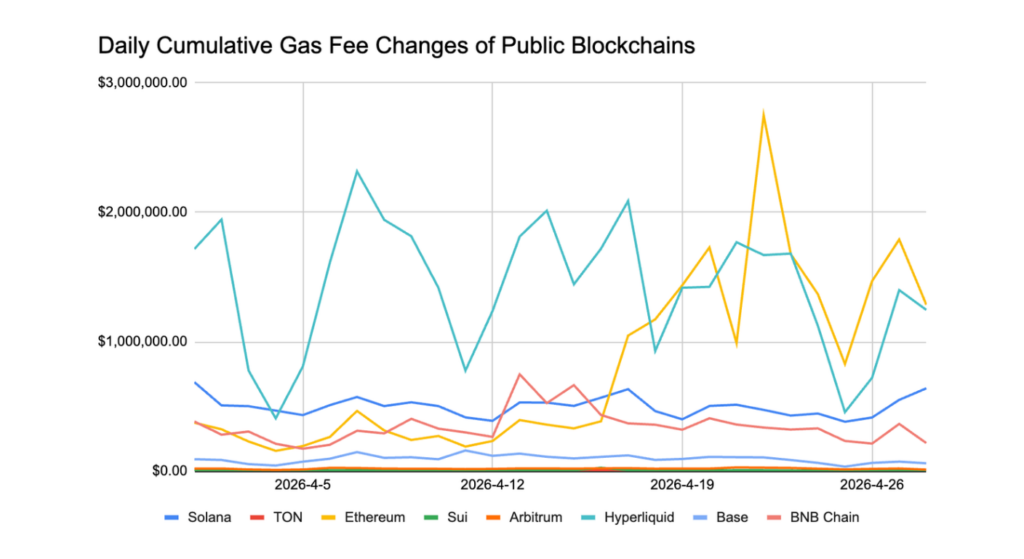
In sharp contrast to the strong price rallies seen in ETH, BTC, and BNB, on-chain activity cooled further from March levels in April, exhibiting a clear “price-up, volume-down” divergence. Among major Layer 1 chains, Hyperliquid retained the top spot with an average daily gas spend of $1.42 million, though this figure declined 11.8% month-over-month as overall activity contracted. Ethereum’s average daily gas fees in April came in at $810,000, marking a new year-to-date low for 2026. Solana, BNB Chain, and Base ranked third through fifth respectively, indicating that despite the recovery in trading sentiment, actual on-chain demand and user activity remained in a period of cyclical adjustment.
3.2 DEX and Perp DEX — Trading Volumes Decline Across the Board
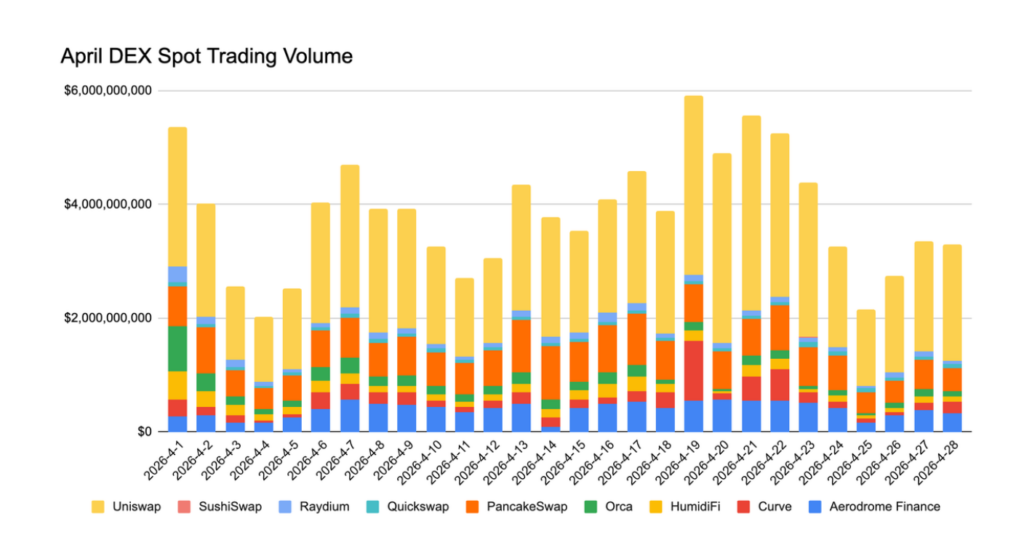
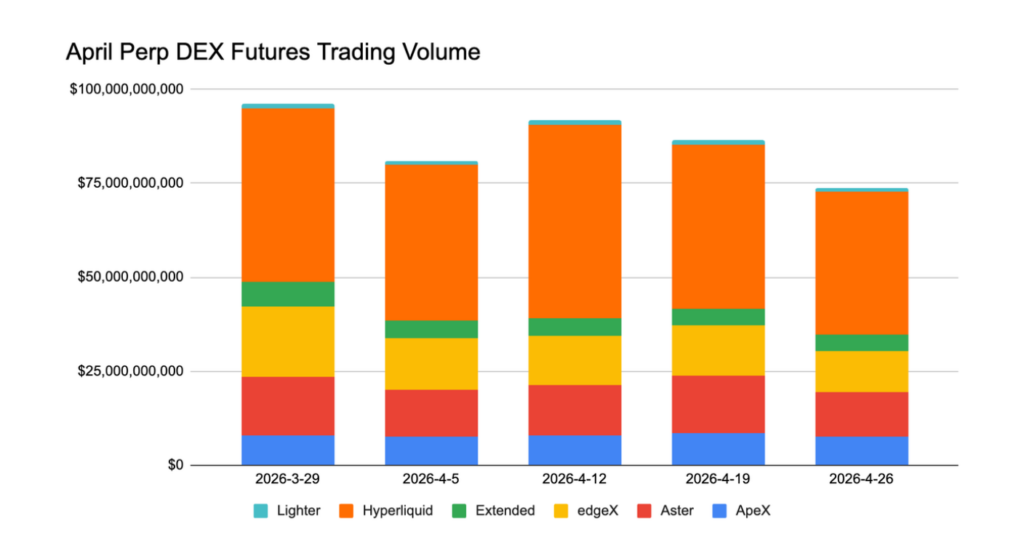
In April, trading volumes on decentralized exchanges (DEXs) and perpetual DEXs (Perp DEXs) declined month-over-month from March. In the spot market segment, Uniswap demonstrated relative resilience with average daily trading volume of $2.07 billion, broadly flat compared to March. Meanwhile, PancakeSwap, Aerodrome, and Raydium all recorded varying degrees of volume decline, further reinforcing Uniswap’s dominance in the spot DEX segment. In the Perp DEX sector, Hyperliquid saw trading volume contract 11.2% month-over-month amid broader market headwinds, but maintained its top position with an average daily volume of $6.2 billion in absolute terms. Aster and edgeX ranked second and third respectively, each posting approximately $1.9 billion in average daily volume.
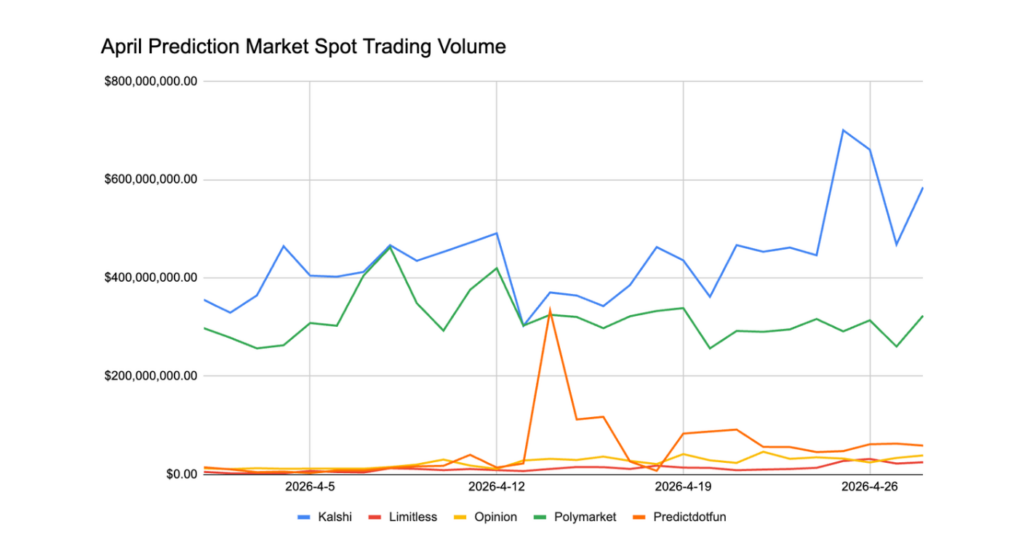
The prediction market sector continued its growth trajectory in April. Kalshi’s average daily trading volume reached $446 million, up 10.9% month-over-month from March. Polymarket’s average daily volume stood at $315 million, down 7.6% from March. From a structural standpoint, Kalshi’s volume was primarily concentrated in sports-related markets, and the further increase in April volume was likely driven largely by high-profile sporting events including the NBA Playoffs and the UEFA Champions League. By contrast, other prediction market platforms such as Opinion, Predict.fun, and Limitless maintained relatively modest overall trading volumes, falling short of posing any meaningful challenge to the Kalshi-Polymarket duopoly in the near term.
4. Product Evolution
4.1 Polymarket Plans Major Trading Engine Overhaul and Launches Native Stablecoin Polymarket USD
On-chain prediction market platform Polymarket announced plans to roll out a major upgrade to its trading infrastructure within the next 2 to 3 weeks, including a rebuilt matching engine, a new order book architecture, and the introduction of a native stablecoin, Polymarket USD. The centerpiece of the upgrade is Polymarket CTF Exchange V2, which aims to improve matching efficiency, reduce the number of operations required for order validation and matching, and lower gas costs. The new order data structure will streamline field counts to improve overall execution efficiency. V2 will also introduce an upgraded Central Limit Order Book (CLOB), combining an off-chain order book with on-chain settlement.
This upgrade represents Polymarket’s move toward higher-performance and lower-cost trading infrastructure, which should improve user experience and market liquidity. The introduction of a native stablecoin also signals a maturing ecosystem, which could further strengthen on-platform capital circulation and user retention.
4.2 Hyperliquid Mainnet Launches Priority Fee Mechanism; Users Can Pay HYPE for Priority Data Access and Order Submission
Hyperliquid founder Jeff announced via Discord that the priority fee mechanism has gone live on mainnet in alpha mode, including Gossip Priority Fees (for priority data reads) and Order Priority Fees (for priority order submission), with full details available in the official documentation. Based on user feedback, the cap on order priority fees has been reduced from 20 bps to 8 bps. Order priority fees currently apply only to Immediate-or-Cancel (IOC) orders on HIP-3 assets.
The mechanism essentially introduces a “pay-for-priority” trading execution model designed to improve execution efficiency for high-frequency or large-volume traders. The reduction of the fee cap reflects the team’s effort to balance user experience with market fairness, avoiding excessively high costs that could deter participation.
4.3 Ripple’s Enterprise Crypto Treasury System Launches Native Digital Asset Support
Ripple announced that its enterprise crypto treasury system, Ripple Treasury, has added Digital Asset Accounts and Unified Treasury features, enabling corporate treasury teams to manage both fiat and digital assets within a single platform. The system allows for direct management of assets such as RLUSD and XRP, and integrates seamlessly into existing treasury workflows without relying on separate wallets, exchanges, or custodial platforms, thereby lowering the barrier to enterprise adoption.
This release builds on Ripple’s prior acquisition of enterprise treasury management platform GTreasury, with the goal of embedding crypto capabilities into established corporate treasury infrastructure. As stablecoin and digital asset adoption grows, enterprise demand for on-chain treasury management continues to rise. This upgrade marks an accelerating integration of crypto assets into traditional corporate finance, helping to advance the broader institutional adoption trajectory. By lowering technical and operational barriers, Ripple is well-positioned to gain a first-mover advantage in the enterprise treasury market and strengthen its infrastructure standing.
5. Trading Signals
5.1 Bitcoin May Form a Hard Bottom in the $55,000–$60,000 Range by End of 2026
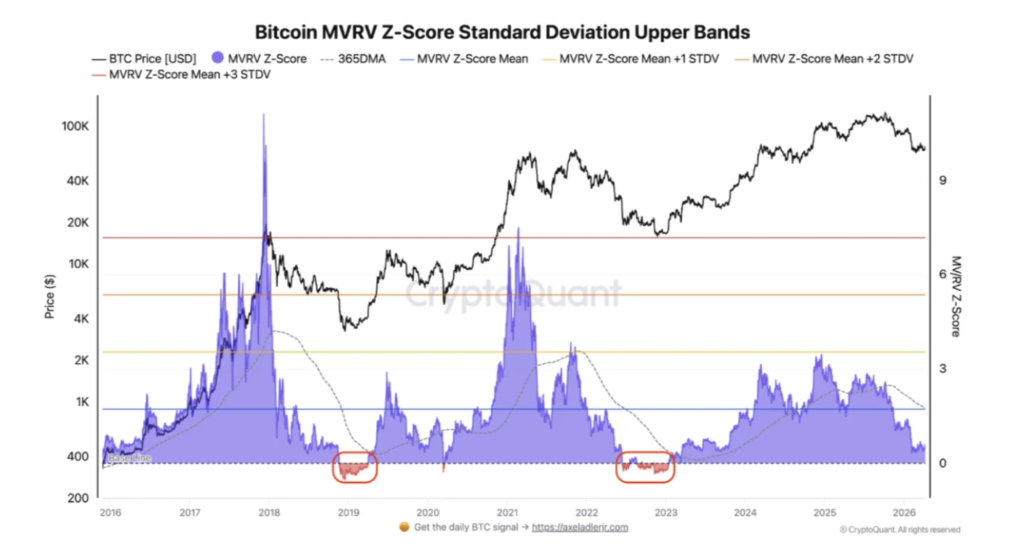
On April 10, CryptoQuant analyst Sunny noted that Bitcoin has not yet fully bottomed in the current bear market cycle, estimating that the definitive cycle bottom may form around December 2026 in the $55,000 to $60,000 price range, and that this cycle may require a final capitulation event before a true bottom can be established. The analysis is based on multiple on-chain indicators including the MVRV Z-Score. While the indicator has cooled significantly from prior highs, it has not yet entered negative (undervalued) territory. Historically, every bear market cycle bottom has coincided with this indicator falling below zero, indicating that the market has not yet reached a state of peak pessimism.
Following historical cycle patterns, the market may enter approximately a two-year accumulation phase after bottoming at end of 2026. With the 2028 Bitcoin halving adding further tailwinds, the next bull market peak could materialize in the second half of 2029.
5.2 Bitcoin Returns to Key Cost Basis; Short-Term Buyers Near Breakeven
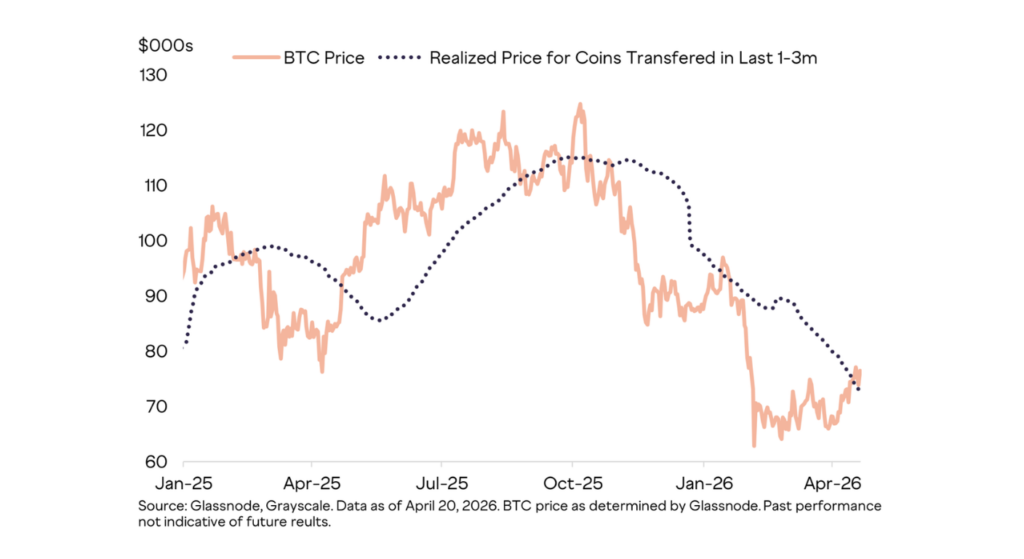
On April 22, Grayscale analyst Zach Pandl disclosed data showing that Bitcoin has rallied more than 20% from its early February low of approximately $63,000. With the current price at approximately $76,000, marginally above the average cost basis of approximately $74,000 for buyers in the past 1 to 3 months, the majority of short-term investors are now near or above their breakeven level. The analysis suggests that if prices continue higher, more recent buyers will move into profit, which is commonly regarded as one of the key early signals of a bull market. However, Bitcoin remains below its October 2025 all-time high. Market commentary points to the $65,000 to $70,000 range as having established a relatively solid interim support base during this recovery.
5.3 An OG Whale Sells 800 Billion SHIB; Total Profit Exceeds $660 Million at a 48,000x Return
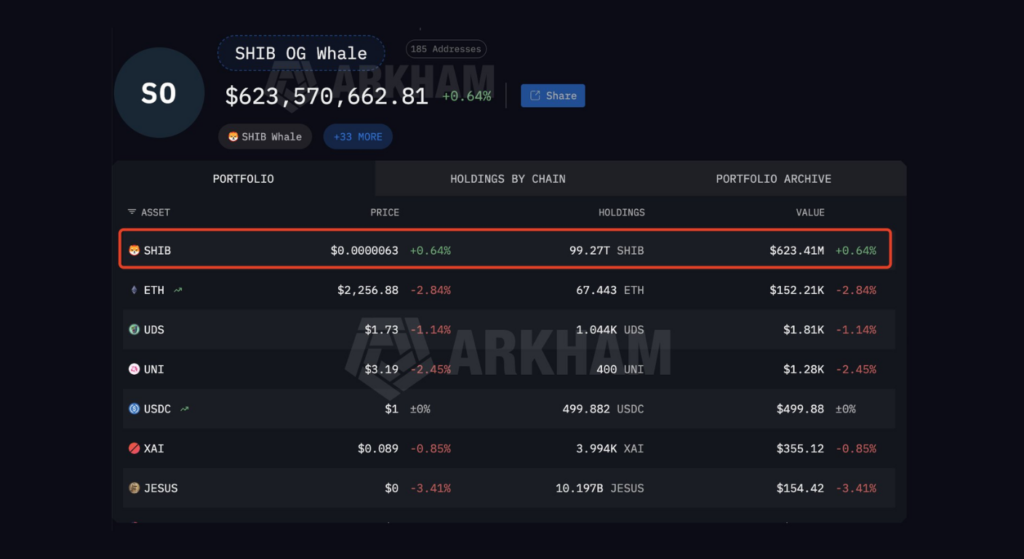
On April 30, according to Lookonchain monitoring, an OG whale sold 800 billion SHIB tokens valued at approximately $4.9 million. The whale had originally purchased 103.33 trillion SHIB for $13,760, which reached a peak value of $8.9 billion. Over the past several years, the whale has sold a cumulative 4.06 trillion SHIB for $37.6 million and currently still holds 99.27 trillion SHIB valued at approximately $625.41 million, representing 16.84% of the total supply. The whale’s total realized and unrealized profit now exceeds $660 million, representing a return of approximately 48,000x.
This case once again highlights the explosive gains that early meme coin participants can realize during extreme market conditions, while also underscoring the risks associated with highly concentrated token supply. Should the whale continue to sell, it could exert significant downward price pressure on the market.
6. Policy Highlights
6.1 Clarity Act Enters Committee Review; Stablecoin Yield Provisions May Be Clarified
On April 29, U.S. Senator Thom Tillis moved to advance the Clarity Act into the markup stage before the Senate Banking Committee, stating that the legislative process has achieved “substantial consensus” and that it is now time to move into formal proceedings. Senator Tillis stated on the floor of Congress that he would request the committee chair to schedule a markup session following the congressional recess, and that he expects the legislative text on stablecoin yield provisions to be released 4 to 5 days before the markup to allow industry stakeholders to review it in advance.
Most banking sector concerns regarding the risks associated with stablecoin yield have been addressed in discussions, with remaining objectors encouraged to “engage in good faith to improve the legislation.” Regarding concerns about the potential criminal liability implications for software developers under 1960-era statutes, Senator Tillis expressed broad support for the legislative framework proposed by Senator Cynthia Lummis. These statements signal that U.S. crypto regulatory legislation is accelerating toward substantive progress on both stablecoin frameworks and developer liability definitions.
6.2 12 European Banks Collaborate to Develop a MiCA-Compliant Euro Stablecoin
On April 21, a consortium of 12 European banks led by Qivalis selected Fireblocks to provide the underlying infrastructure, to jointly develop a euro stablecoin compliant with the MiCA regulatory framework. The stablecoin is planned for launch in the second half of 2026, pending approval from De Nederlandsche Bank. It will be backed on a 1:1 euro reserve basis and issued as an e-money instrument under Dutch regulatory oversight, primarily targeting institutional settlement, treasury management, and asset tokenization use cases. Fireblocks will provide tokenization, wallet, and compliance tooling support, including identity verification and sanctions screening capabilities.
This joint push by European banks toward a compliant stablecoin reflects traditional financial institutions proactively embracing on-chain financial infrastructure in an effort to secure a first-mover advantage within the regulatory framework. The implementation of MiCA also provides a clear compliance pathway for stablecoins, which could accelerate the euro’s penetration into on-chain financial systems.
6.3 Japan’s Cabinet Approves Bill Classifying Crypto Assets as Financial Instruments
On April 10, according to the Nikkei, Japan’s government approved an amendment to the Financial Instruments and Exchange Act (FIEA) at a Cabinet meeting. The amendment formally classifies crypto assets (virtual currencies) as financial instruments for the first time, and prohibits insider trading based on non-public information. Issuers of crypto assets will also be required to make annual disclosures to promote a sound and transparent market environment. If passed in the current parliamentary session, the legislation is expected to take effect as early as fiscal year 2027.
Previously, Japan’s Financial Services Agency (FSA) regulated crypto assets primarily under the Payment Services Act, treating them as payment instruments. However, as the use of crypto as an investment vehicle has grown significantly in recent years, the government determined it appropriate to bring crypto under the FIEA regulatory framework. Additionally, the designation for registered entities will be updated from “crypto asset exchange operators” to “crypto asset trading operators.”
7. Security Incidents
In April 2026, the crypto industry recorded 40 security incidents with total losses exceeding $500 million, marking it as one of the most severe months for security incidents year-to-date. Notably, two separate incidents in the same month each exceeded $200 million in losses, highlighting systemic vulnerabilities across the industry in both asset security and protocol design.
On April 1, Drift Protocol was exploited for approximately $285 million, making it the second-largest DeFi security incident in the Solana ecosystem after the Wormhole bridge exploit. On April 18, Kelp DAO suffered an attack resulting in approximately $293 million in losses. Analysis indicates the incident stemmed primarily from risk exposure created by a single DVN (Decentralized Verification Node) configuration, with the attack’s impact largely isolated to its rsETH holdings.
Date
Project
Losses
Incident Summary
April 1
Drift Protocol
$285M
The attack involved social engineering to steal multi-sig keys, as well as exploiting Solana’s “durable nonce” feature to execute unauthorized transactions. The attacker swapped stolen assets via Jupiter to USDC and bridged to Ethereum to purchase ETH.
April 13
Dango
$1.9M
The attacker exploited a vulnerability in the insurance fund logic to steal USDC collateral. The flaw lay in the insurance fund allowing anyone to donate without verifying that donation amounts were positive. Thanks to cross-chain bridge rate limits, $410,000 USDC was bridged to Ethereum, with the remaining amount recovered.
April 13
Hyperbridge
$2.5M
Hyperbridge’s gateway contract was exploited; the attacker forged messages to tamper with the admin permissions of the Polkadot token contract on Ethereum, minting and selling 1 billion tokens for approximately $2.5 million in profit.
April 16
Grinex
$15M
Exchange Grinex, registered in Kyrgyzstan and connected to the Russian crypto market, suspended withdrawals and trading following a large-scale cyberattack. The attacker stole approximately $15 million from Grinex-linked wallets, converting funds to TRX and ETH via Tron and Ethereum.
April 18
Kelp DAO
$293M
Hackers compromised the downstream RPC infrastructure relied upon by the LayerZero DVN, obtained the RPC node list used by the DVN, breached two independent RPC nodes, replaced the op-geth binary, and forged messages using a custom payload.
Structurally, April’s security incidents were characterized by both high frequency and high aggregate losses, reflecting that as capital flows increase and protocol complexity grows, the industry continues to exhibit significant shortcomings in risk controls, architectural redundancy, and security auditing. This is particularly acute in the context of the growing prevalence of cross-chain bridges, restaking protocols, and modular architecture designs, where a single misconfiguration or access control flaw can readily escalate into a systemic risk event.
Going forward, protocols must establish a higher-standard balance between product innovation and security mechanisms, such as implementing multi-layer verification, increasing the frequency and depth of security audits, and improving incident response capabilities for anomalous scenarios, in order to sustain long-term operational resilience as capital continues to flow in.
8. Event Horizon
Date
Event
Overview
May 1
RWA Summit Dubai 2026
Focused on the on-chain tokenization trend for real-world assets (RWAs), covering tokenization pathways and compliance frameworks for bonds, real estate, and private assets.
May 7
Consensus 2026
One of the most influential crypto conferences globally, covering core topics including regulatory policy, Layer 1/Layer 2 infrastructure, AI+Crypto, DeFi, and institutional adoption.
May 13
Digital Assets Week USA
Targeting institutional investors and Wall Street participants, with a focus on the role of digital assets in capital markets, including custody, ETFs, derivatives, and compliance frameworks.
May 20
Global RegTech Summit
Discussion on the convergence of fintech and regulatory technology, including digital identity, compliance automation, and regulatory reporting, with its core significance being the advancement of “regulatable decentralization.”
May 21
Fed FOMC Meeting Minutes Release
Markets will closely watch the Fed’s latest stance on inflation, the rate cut trajectory, and liquidity policy. A continued hawkish posture could weigh on global risk asset appetite.
Looking ahead to May 2026, the crypto market is entering a critical window where three major themes converge: industry narratives, regulatory policy, and macro liquidity conditions. From RWA tokenization and AI+Crypto to institutional-grade digital asset allocation, multiple international conferences are expected to further sharpen market focus on Web3 infrastructure and regulatory compliance. The Global RegTech Summit and ongoing U.S. regulatory discussions also indicate that the world is accelerating its exploration of a “regulatable decentralization” framework. Meanwhile, the Fed’s FOMC meeting minutes, due May 21, are likely to serve as a key variable influencing global risk asset trends.
Conclusion
April 2026’s crypto market demonstrated significant price resilience under the support of improving macroeconomic conditions and strong institutional capital flows, successfully establishing an interim base. However, the persistent “price-up, volume-down” divergence and the frequency of major security incidents serve as a reminder that investors should remain vigilant about weak on-chain demand and systemic protocol risks, even as sentiment recovers. As global regulatory frameworks such as MiCA and the Clarity Act advance substantively, the industry is accelerating toward a new era of compliance and institutional-grade adoption.
Looking to May, the market will seek new catalysts under the dual guidance of major industry summits and Federal Reserve macro policy signals. In an environment where opportunities and challenges coexist, traders are advised to closely monitor platform market data and macroeconomic indicators. While capitalizing on market recovery opportunities, it is essential to apply strict take-profit and stop-loss discipline, manage leverage risk prudently, and navigate volatile market conditions with resilience and discipline.
About Bitunix
Bitunix is a global cryptocurrency derivatives exchange trusted by over 5 million users across more than 100 countries. The platform is committed to providing a transparent, compliant, and secure trading environment for every user. Bitunix offers a fast registration process and a user-friendly verification system supported by mandatory KYC to ensure safety and compliance. With global standards of protection through Proof of Reserves (POR) and the Bitunix Care Fund, Bitunix prioritizes user trust and fund security. The K-Line Ultra chart system delivers a seamless trading experience for both beginners and advanced traders, while leverage of up to 200x and deep liquidity make Bitunix one of the most dynamic platforms in the market.
Disclaimer: Trading digital assets involves risk and may result in the loss of capital. Always do your own research. Terms, conditions, and regional restrictions may apply.
Table Of Contents
Ready To Place Your Next Trade?
Choose a market, set your order, and manage risk in one place.
AG | Content Manager | Bitunix
May 18, 2026 No Comments
Explore how top traders balance crypto volatility and TradFi macro trends in 2026. Join the Bitunix Showdown Tournament and compete for 630,000 USDT in prizes.
AG | Content Manager | Bitunix
May 12, 2026 No Comments
Compare Bitunix, BingX and BloFin for fiat-to-crypto buying in 2026, including local currency options, payment methods, fees, safety and trading access.
AG | Content Manager | Bitunix
May 12, 2026 No Comments
Compare Coinbase and Kraken in 2026, including US availability, restricted regions, fees, security tools, mobile access, trading services and user eligibility.
AG | Content Manager | Bitunix
May 12, 2026 No Comments
Compare Bitunix, KuCoin and BingX across security, fees, futures trading, mobile access, trading tools and user experience to choose the best crypto exchange in 2026.