Profit and Loss (PNL) is one of the most important metrics in crypto trading. It measures how your trades are performing and determines whether you are making gains or losses. In crypto, there are two main types of PNL. Unrealized PNL reflects potential gains or losses on open positions, while Realized PNL shows the actual profit or loss once a position has been closed.
In this guide, we explain what each means, provide formulas, and walk you through step-by-step calculations with practical crypto trading examples.
What is PNL in Trading?
PNL, or Profit and Loss, represents the outcome of your trading activity. In crypto:
- Unrealized PNL shows your current profit or loss on open trades based on the mark price.
- Realized PNL records confirmed profits or losses after you close a position, factoring in fees and funding.
Most crypto exchanges display both metrics so you can monitor your performance in real time.
Unrealized PNL Meaning and Definition
Unrealized PNL is the potential profit or loss of an open trade if you were to close it at the current mark price. It is sometimes called paper profit or paper loss because the result is not yet finalized.
Formula for linear (USDT-margined) contracts:
Unrealized PNL = (Mark Price − Entry Price) × Position Size for long positions
Unrealized PNL = (Entry Price − Mark Price) × Position Size for short positions
Example:
- Entry: $30,000
- Mark Price: $32,000
- Position Size: 1 BTC Unrealized PNL = (32,000 − 30,000) × 1 = $2,000
This profit is only potential. If the price moves back down before you close, your unrealized PNL decreases.
Realized PNL Meaning
Realized PNL is the profit or loss after a position is closed. It includes actual trade execution and subtracts trading fees and any funding payments or credits.
Formula:
Realized PNL = (Exit Price − Entry Price) × Position Size − Trading Fees ± Funding Fees
Example:
- Entry: $30,000
- Exit: $32,000
- Position Size: 1 BTC
- Fees: $100
- Funding Paid: $200
Realized PNL = (32,000 − 30,000) × 1 − 100 − 200 = $1,700
Step-by-Step: How to Calculate Unrealized PNL
- Check contract type Confirm whether you are trading a linear USDT-margined contract or an inverse coin-margined contract. The formulas differ.
- Identify your position direction Long positions benefit from rising prices, while short positions benefit from falling prices.
- Collect key inputs Look at your exchange interface for the Entry Price, Mark Price, and Position Size.
- Apply the correct formula
- For longs: (Mark − Entry) × Size
- For shorts: (Entry − Mark) × Size
- Relate to margin To calculate return on equity, divide Unrealized PNL by your position margin. This shows how leverage affects your gains or losses.
Worked Example (Short Position):
- Entry: $30,000
- Mark: $28,900
- Size: 2 BTC Unrealized PNL = (30,000 − 28,900) × 2 = $2,200
Step-by-Step: How to Calculate Realized PNL
- Record entry and exit prices Note the average entry price and the price where you closed the trade.
- Compute gross PNL
- Long: (Exit − Entry) × Size
- Short: (Entry − Exit) × Size
- Subtract fees Include taker or maker fees from both opening and closing trades.
- Adjust for funding Add or subtract funding fees depending on whether you paid or received them during the holding period.
- Arrive at net PNL This is your final realized profit or loss.
Worked Example (Long Position):
- Entry: $30,000
- Exit: $32,000
- Size: 1 BTC
- Fees: $60 open, $80 close
- Funding Paid: $200 Gross PNL = $2,000 Realized PNL = 2,000 − 60 − 80 − 200 = $1,660
Unrealized vs Realized PNL at a Glance
| Feature |
Unrealized PNL |
Realized PNL |
| Applies to |
Open positions |
Closed positions |
| Price basis |
Mark Price |
Actual Exit Price |
| Includes fees/funding |
No |
Yes |
| Affects |
Margin balance and liquidation risk |
Account balance and withdrawable funds |
| Tax relevance |
Not taxable until closed |
Taxable once realized |
Factors That Influence PNL in Crypto Trading
- Price volatility: Sudden swings can rapidly change unrealized PNL and trigger liquidation.
- Leverage: Higher leverage increases exposure and risk.
- Funding rates: Regular payments between longs and shorts can reduce or increase realized PNL.
- Trading fees: Maker and taker fees directly affect realized outcomes.
Common Mistakes When Calculating PNL
- Using last traded price instead of mark price for unrealized PNL.
- Ignoring funding fees, which can add up during long holding periods.
- Forgetting trading fees, which can significantly impact realized profits.
- Misunderstanding the role of leverage. Leverage does not multiply cash PNL, it reduces margin required and affects ROI percentages.
Conclusion
Understanding how to calculate unrealized PNL and realized PNL is essential for managing crypto trades, assessing risks, and making informed decisions. Unrealized PNL helps you track open positions and monitor liquidation risk, while realized PNL confirms actual profit or loss after closing trades. By using the correct formulas, accounting for leverage, funding, and fees, and avoiding common mistakes, traders can achieve more accurate performance tracking and better portfolio management.
FAQs
1. What is unrealized PNL?
Unrealized PNL is the potential profit or loss of an open trade, based on the current market price compared to your entry price. It is not final until you close the position.
2. What does unrealized P&L mean?
It means paper profit or loss. The value changes in real time as the market price moves.
3. What is realized and unrealized PnL?
Realized PNL is the confirmed profit or loss after closing a position. Unrealized PNL is the profit or loss you would have if you closed right now.
4. What does PnL mean in the stock or crypto market?
PNL means profit and loss, showing the financial outcome of trading activities in stocks, crypto, or other assets.
5. What is unrealized PnL in copy trading?
In copy trading, unrealized PNL shows the open profits or losses of the trader you are copying. Your account mirrors those results in real time.
6. What is the difference between daily P&L and unrealized P&L?
Daily P&L shows the profit or loss for one day, including closed trades. Unrealized P&L only shows open positions.
7. What does realized PnL mean?
It is the actual profit or loss after selling or closing a position, including fees and funding.
8. What is the meaning of realized P&L?
It refers to locked-in profit or loss that affects your account balance.
9. What is the difference between unrealized and realized accounting?
Unrealized accounting tracks open market fluctuations. Realized accounting records only closed outcomes that affect cash flow and reporting.
About Bitunix
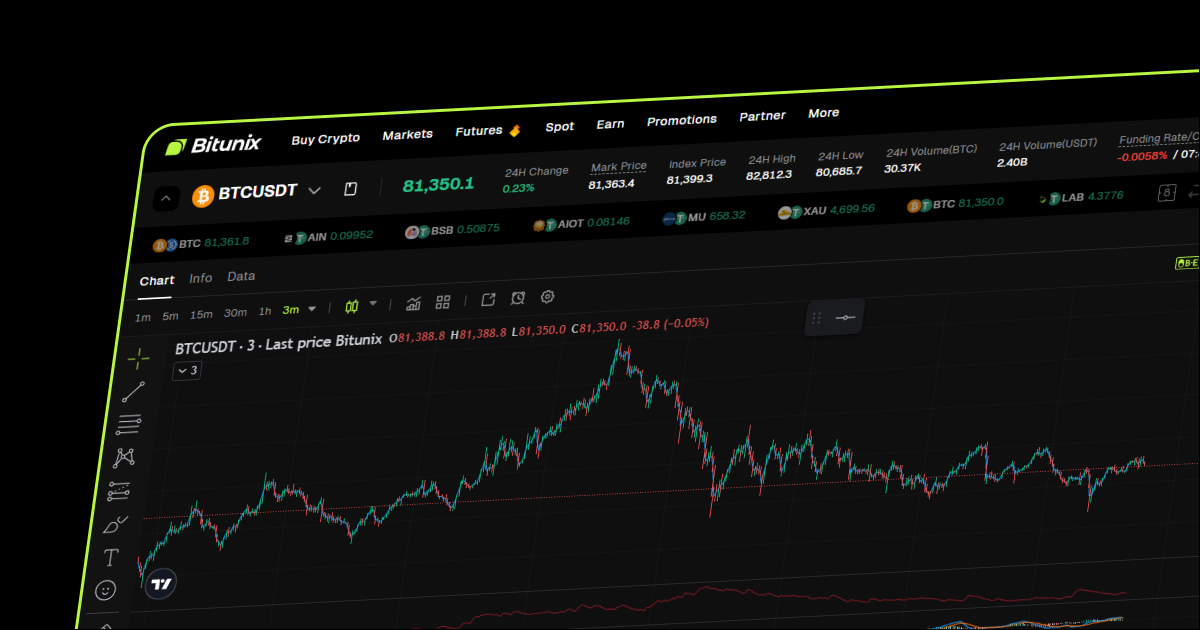
Bitunix is one of the world’s fastest growing professional derivatives exchanges, trusted by over 3 million users across more than one hundred countries. Ranked among the top exchanges on major data aggregators, Bitunix processes billions in daily volume and offers a comprehensive suite of products including perpetual futures with high leverage, spot markets, and copy trading. Users can trade bitcoin and other major cryptocurrencies on the platform, taking advantage of advanced trading features. Known for its Ultra K line trading experience and responsive support, Bitunix provides a secure, transparent, and rewarding environment for both professional and everyday traders. Bitunix Academy adds structured lessons so you can build skills while you trade.
Bitunix Global Accounts
X | Telegram Announcements | Telegram Global | CoinMarketCap | Instagram | Facebook | LinkedIn | Reddit | Medium
Disclaimer: Trading digital assets involves risk and may result in the loss of capital. Always do your own research. Terms, conditions, and regional restrictions may apply.