Aigensy Price Prediction 2026-2030: Can This AI Crypto Deliver?
Explore Aigensy price prediction 2026-2030, AIGENSY token outlook, AI crypto catalysts, key risks, market trends, and what traders should know.

As we head into 2026, the Layer 1 blockchain space has evolved dramatically. Following years of head-to-head competition, ecosystem expansion, and capital reallocation, traders and HODLers now face a different challenge than simply identifying which Layer 1 possesses the most robust theoretical transaction speed. Instead, the pivotal question is: which Layer 1 protocols are poised to endure in 2026, boasting active development, persistent demand for users, liquidity that runs deep, and strong long-term credibility?
For the active trader seeking the top Layer 1s this year, this isn’t just an academic debate. When committing capital to a Layer 1 platform, you are effectively making a long-term commitment to the blockchain’s native token, its staking mechanisms, the DeFi products that run on it, and the general market dynamic that defines the chain. While it is theoretically possible for Layer 1s that struggle to maintain momentum to still be performing well when they are losing developer activity, the reality is that the opposite is more common: losing out to projects that have stagnated. Even if a Layer 1 still operates fine, a Layer 1 that loses developer attention, users, or liquidity depth may underperform in the long run.
The dynamic between Layer 1 and Layer 2 is far more nuanced than it was in earlier years in 2026. Layer 2s have claimed a significant portion of base layer throughput, especially within the Ethereum ecosystem. Still, Layer 1s remain essential as settlement layers, liquidity sources, and pillars of staking and security. What is the best Layer 1 for staking? What Layer 1 possesses the deepest DeFi liquidity? Which Layer 1 has the greatest potential for survival? These remain the core questions when traders consider how to place their capital over the long term. This piece reviews the current state of Layer 1 comparisons, outlines the criteria for Layer 1 survival, and offers a practical guide to committing liquidity to a Layer 1 for the long haul.
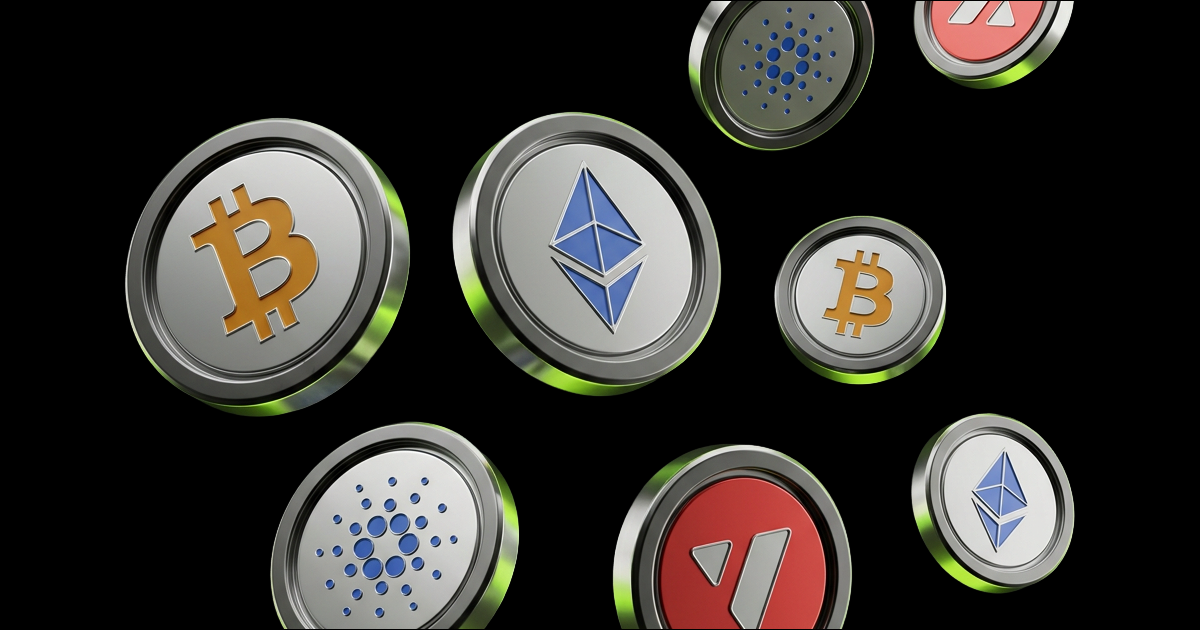
A Layer 1 blockchain serves as the foundational infrastructure for a blockchain network. It processes and validates transactions, enforces the consensus mechanism, and provides the security guarantees upon which applications depend. Layer 1s typically feature their own native tokens, a network of validators (or miners), and a set of protocol governance rules. Some prominent examples of Layer 1s are Bitcoin, Ethereum, Solana, Avalanche, BNB Chain, and Cardano. Every blockchain implements its own unique consensus mechanism, token economic design, and ecosystem development strategy. Some Layer 1 chains aim to emphasize decentralization and security, while others focus on high throughput and on-chain developer accessibility.
By definition, a Layer 1 blockchain acts as the foundation for a Layer 2 protocol. A Layer 2 protocol is a secondary blockchain that runs on top of a Layer 1 to increase its speed or to provide custom functionality. The Layer 2 blockchain needs the underlying Layer 1 blockchain to confirm and validate transactions and provide security guarantees to its users. The Layer 1 vs. Layer 2 debate is relevant because the two tiers of the blockchain stack fill different roles, and therefore present very different risk-reward dynamics for traders.
The crypto industry has experienced numerous cycles of hype for Layer 1 projects. During each cycle, some Layer 1s have emerged as market leaders, while others have faded into obscurity. Many Layer 1s that enjoyed significant momentum in previous market cycles have lost relevance, only to be replaced by newer Layer 1s. In 2026, the question of which Layer 1 will emerge as the winner is particularly important, and here’s why.
The crypto market has historically favored the concentration of capital. A significant portion of liquidity is now being absorbed by fewer and fewer networks in the Layer 1 layer. A handful of top chains make up a disproportionately large percentage of total value locked, trading volume, and developer activity. Conversely, other networks in the layer are losing their ability to attract users and capital.
As Layer 2 networks have taken over transaction volume that was previously handled on Layer 1, this development has changed the financial incentives of Layer 1s in a significant manner. That change has particularly affected Layer 1s with a reliance on transaction fees to secure their networks.
The attention and involvement of developers are often a sign of whether an ecosystem will succeed over the long run. As a Layer 1 is pushed out of developers’ mindshare, it is typically followed by a decrease in the number of applications released on it and a decrease in the frequency of new protocol upgrades.
With the increasing involvement of financial institutions in the crypto ecosystem, it has become more important for Layer 1s to establish strong compliance frameworks. As asset managers, custodians, and trading firms become more selective in where they place their capital, the competition between various networks has intensified.
The evolving regulatory landscape in major countries around the world has resulted in some Layer 1 networks being treated differently than others in a number of ways. In jurisdictions where there is a lack of regulatory clarity, institutional investors and developers are often hesitant to build on a given network.
When it comes to determining what will make or break Layer 1 networks in 2026, it is not just one or two factors that should be weighed; rather, a number of different factors should be analyzed.
When examining the health of a Layer 1 blockchain network, it is important to analyze a number of metrics related to the developer count. When looking at this metric, one might consider looking at the monthly developer count, the total number of code commits, and the frequency with which a network’s protocol is upgraded.
Total value locked on a network provides insight into the level of activity and capital in the ecosystem. When evaluating Total Value Locked, it is important to examine the value that has been locked into the network’s DeFi protocols. This number can be used to determine the amount of capital at risk within the network’s ecosystem.
Daily active user counts can provide insight into how many people are actually using a network and why they’re using it. If a network has a high number of daily active users, it can indicate that users find value in the network and are using it for more than simply speculation.
A measure of the value traded in the network can be determined by looking at the daily, weekly, and monthly transaction volumes. When determining transaction volumes for a network, the total amount of value transferred over that network can be used to gain insight into the economic activity of a network.
A key aspect of network security is how many fees are paid by its users; the more fees paid, the more incentive users have to continue using the network. Fees paid by users can be used to secure a network and provide rewards for the security providers of a network.
Staking is a process of locking up tokens in a network in order to participate in consensus and earn rewards in return. When looking into whether a Layer 1 blockchain is good for staking, it is important to consider how much staking is rewarded, the length of time that the funds must be locked up for, how much risk there is of being penalized, and how decentralized the validators are.
The degree to which a network can be considered secure and decentralized depends on the number of validators that are active on the network. A network is more susceptible to centralization when the number of validators is low. If a network has a relatively low number of validators, there is a high risk that the network will become centralised and vulnerable to attacks.
To evaluate a cryptocurrency network, it is important to examine the economic model of its native token. The token economics of a blockchain network include its distribution schedule, the fee burn mechanism, the staking rewards, and the inflation rate. These features, and others like them, can be used to evaluate a Layer 1 blockchain token’s long-term value.
When assessing whether a Layer 1 blockchain ecosystem will be successful, it is important to consider the amount of capital that has been invested in it by venture capital firms. In the context of Layer 1 blockchain, ecosystem funding can take the form of a foundation’s treasury, grant programs, and venture funding. Ecosystem funding has the potential to provide financial support for the development of Layer 1 blockchain networks, as well as the applications that are being built on top of them.
Interoperability allows different blockchain networks to exchange value and information with one another. Interoperability is an important factor in the success of a Layer 1 network because it makes it easier for users to transfer assets between networks. For the interoperability of a Layer 1 network to be assessed, it is important to consider the types of bridges it supports, the types of wrapped assets it supports, and its relationships with other interoperable Layer 1 and Layer 2 networks.
The extent to which a Layer 1 blockchain network is perceived as safe and legal by regulatory authorities is an important factor in its adoption. When considering the degree of regulatory clarity of a Layer 1 blockchain, it is important to assess whether the project has been approved by regulatory authorities in the US and EU.
The following overview examines the major Layer 1 networks that traders consider when allocating capital in 2026. Each network has distinct strengths and trade-offs.
Bitcoin remains the most established Layer 1 by market capitalization and institutional adoption. Its role as a store of value and reserve asset has strengthened through institutional product development. Bitcoin’s transaction throughput is limited by design, with Layer 2 solutions handling higher-frequency activity. For traders parking liquidity long-term, Bitcoin offers the deepest liquidity, the broadest institutional access, and the longest operational track record.
Ethereum continues to operate as the largest smart contract platform by total value locked and developer activity. Its transition to proof of stake, ongoing protocol upgrades, and the maturation of its Layer 2 ecosystem have shaped its 2026 positioning. Ethereum supports the largest DeFi ecosystem, the most diverse application landscape, and significant institutional integration. Bitunix ETH trading allows users to access ETH markets through the platform’s spot and futures infrastructure.
Solana has emerged as a leading high-throughput Layer 1, with significant growth in DeFi, consumer applications, and trading activity. The network’s performance characteristics support use cases that require fast execution and low transaction costs. Solana vs Ethereum 2026 comparisons highlight different design priorities, with Solana emphasizing performance and Ethereum emphasizing decentralization through Layer 2 scaling. Users can trade SOL on Bitunix through the platform’s supported markets.
BNB Chain remains active with significant user activity and DeFi integration. Its close relationship with the broader Binance ecosystem affects both its strengths and its risk profile. BNB Chain supports a wide range of applications and continues to attract retail user activity.
Avalanche supports multiple subnets and has positioned itself for institutional and enterprise use cases. Its consensus mechanism allows customizable subnet configurations, which has attracted specific application categories. Avalanche’s long-term positioning depends on continued ecosystem growth and subnet adoption.
Cardano emphasizes a research-driven development approach and a distinct technical architecture. Its ecosystem has grown slowly compared to competitors, and its long-term positioning depends on execution against its development roadmap.
Several other Layer 1 networks remain active, including newer entrants that have emerged in recent years. These networks vary widely in adoption, liquidity, and long-term prospects. Traders evaluating these networks should apply the same survival framework that applies to larger Layer 1s.
Staking is a mechanism that lets investors looking to hold for the long haul accrue returns in return for helping to secure the network. Several factors should influence your choice of a Layer 1 for staking.
Staking yields can vary substantially from one L1 to another. Higher yields may indicate higher inflation rates or relatively low levels of staking, not necessarily more favorable economics. It is worth assessing yield levels relative to token emissions and projected returns.
Staking protocols have different lockup and unbonding durations. Some protocols permit immediate unstaking while others require that funds remain locked for a period of several days or weeks. The terms of locking determine the degree of liquidity available to a staker.
Penalties imposed on validators for misbehavior are different from protocol to protocol. While delegating to reputable validators should significantly mitigate the risk of slashing, you will remain exposed to a degree of slashing. It is essential to understand the protocols’ slashing policies before you stake.
A validator’s identity impacts both returns and risks. Validator pools that are decentralized and have a demonstrated performance record should generally produce better results than pools with little history or limited diversity.
Liquid staking enables investors to retain access to their tokens while still earning their staking rewards. These assets can be employed in decentralized finance (DeFi) applications to generate further income. It must be recognized that utilizing liquid staking products introduces additional smart contract and counterparty risks.
Staking rewards are treated as taxable income in numerous jurisdictions, typically as income at the point of receipt. It is important to know how your jurisdiction taxes staking proceeds before deploying capital.
When an investor plans to hold their assets for long durations, an L1’s DeFi liquidity has a direct effect on the usability of their position within the platform’s financial infrastructure.
Deep liquidity enables investors to enter and leave positions without having a substantial effect on the price level. Networks with a more mature and established DeFi ecosystem normally provide better liquidity than newly launched or smaller networks.
Having access to native or bridged stablecoins impacts an investor’s ability to manage their exposure within a particular L1 ecosystem. A platform with wide stablecoin coverage will allow for a wider range of trading and yield generation strategies.
Bridges link L1 networks to others to facilitate the movement of capital between various ecosystems. Past breaches in bridge security have led to substantial losses and secure bridge infrastructure will continue to play a vital role when deploying cross-chain strategies.
Support from centralized exchanges impacts the ease of transferring between tokens native to an L1 and those in other markets. Bitunix provides trading in major Layer 1 assets, including ETH on Bitunix, SOL on Bitunix, and Bitunix crypto futures.
DeFi applications built on any Layer 1 present differing profit possibilities. The liquidity and risk characteristics of lending platforms, AMMs, and engineered yield vehicles fluctuate among different protocols.
Bitunix is committed to delivering a practical entry point to the crypto economy for users through a derivatives trading platform built to support the main Layer 1 platforms. Bitunix’s Layer 1 trading interface grants access to spot markets for key protocols, plus Bitunix crypto futures with leverage of up to 200x on the assets that are eligible.
SOL traders on Bitunix have the ability to participate in both spot and futures markets through a unified user experience. On Bitunix, ETH trading offers traders both spot exposure and derivatives. Traders can allocate and position Layer 1 exposure across multiple strategies and spot and derivative positions on Bitunix. In addition to charting features, Bitunix Crypto offers the K-Line Ultra chart system that caters to novice and veteran traders and technical analysis tools that cater to Layer 1 token trading. Bitunix Crypto offers a single trading platform that gives Layer 1 crypto investors both spot exposure and futures for hedging or directional positioning purposes. Bitunix supports user security and account protection with its Proof of Reserves transparency and the Bitunix Care Fund. Furthermore, Bitunix also has a mandatory KYC protocol for compliance and account protection.
Parking liquidity long-term in Layer 1 ecosystems requires a framework. Let’s review how traders can evaluate Layer 1 allocations with this framework.
The timeframe of your intended holding period determines what matters the most about each Layer 1. A trader with a multi-year holding time will place emphasis on the longer-term Layer 1 survival factors while a trader with a shorter timeframe will weigh the shorter-term momentum and liquidity factors more.
A Layer 1 investor should not concentrate their entire basket in a single Layer 1 but, instead, should spread exposure across many Layer 1s. If investors have exposure across many credible Layer 1 networks and platforms they are not overly exposed to any single Layer 1’s ecosystem issues.
Layer 1 spot holdings give traders exposure to the success of the Layer 1s. Traders who choose to stack staking or DeFi yield positions on top of spot exposure in the Layer 1 are increasing their return but adding risk. Traders should balance their spot and yield exposure based on their risk profile.
With derivatives like Bitunix crypto futures, traders can hedge their spot exposure or manage directional risk and adjust positioning without liquidating their core positions. However, like all trades, derivatives should have careful position sizing and risk management strategies.
Layer 1s change and shift over time. Traders must regularly review ecosystem health indicators such as developer activity, total value locked, and growth metrics to monitor ecosystem health. Traders can change and adjust their Layer 1 exposure based on these shifts.
Traders who park liquidity long-term in Layer 1 should have stablecoin or cash reserves to add to positions or rotate into other opportunities when drawdowns occur. Liquidity reserves enable traders to be flexible without pressuring them to liquidate core Layer 1 positions during temporary drawdowns.
Traders who take long-term positions in Layer 1 networks will have different tax considerations than those who trade short-term. Layer 1 holdings, staking, and DeFi yield will all have different tax implications. Traders should understand the tax rules that govern these positions in their jurisdiction.
Traders who are parking liquidity long-term in Layer 1 networks may use different security measures based on their specific use case. Some traders may use a secure hardware wallet for Layer 1 self-custody positions while traders that actively trade their Layer 1 positions may store their funds in the exchange where they do their trading. It depends on each trader’s specific use case what kind of storage strategy is best for them.
Even seasoned Layer 1 and altcoin traders can make mistakes when allocating to Layer 1s for long-term investment. These include:
Layer 1 narratives change rapidly but fundamentals like developer activity and user growth are less frequent. Layer 1 investing in Layer 1s based on the short-term narrative alone will usually disappoint because traders do not consider whether there are fundamental strengths or weaknesses that justify the investment.
For Stakers and DeFi investors, risk is not just limited to price. The Layer 1s they stake or the smart contracts that host their DeFi liquidity can become compromised through poor validator behavior or compromised contracts and bridges.
Too much reliance on a single network heightens exposure to risks unique to that ecosystem. Spreading investments across multiple networks mitigates the potential fallout if one underperforms.
Layer 2 solutions are reshaping the value proposition for certain Layer 1 protocols. Investors who fail to account for the role of Layer 2s may reach inaccurate conclusions about the future viability of base layer chains.
Bitunix crypto futures offer up to 200x leverage on eligible pairs, yet employing such high leverage significantly raises the probability of liquidation. Strategies focused on long-term holding are generally more suitable for low or zero leverage, spot positions, or a combination thereof.
Earnings from staking, decentralized finance yields, and trading gains all carry tax consequences. Investors who neglect tax planning may incur unforeseen tax bills that erode their net investment returns.
Maintaining long-term positions demands the ability to endure temporary price swings. Exiting positions during market dips or prematurely chasing upside momentum can negate the advantages of a long-term approach.
The longevity of a Layer 1 protocol hinges on factors like developer activity, total value locked, user adoption, validator decentralization, ecosystem funding, and regulatory stance. Layer 1 chains that demonstrate strength across these metrics stand the best chance of staying relevant in 2026.
The optimal Layer 1 for staking varies according to an individual’s yield targets, staking duration, potential slashing penalties, validator distribution, and tax considerations. Investors should assess platforms through the lens of their personal investment goals instead of simply prioritizing yield.
The distinctions between Layer 1 and Layer 2 influence trading costs, finality of transactions, security frameworks, and the composition of the broader ecosystem. For example, investors might choose Layer 1s for transaction settlement or high-value transfers, whereas Layer 2s may serve as a better fit for trading strategies requiring higher activity.
Trading of SOL is available on Bitunix via spot and futures markets. Layer 1 trading on Bitunix grants access to prominent Layer 1 cryptocurrencies in addition to the K-Line Ultra graphing interface and mobile trading options.
Bitunix ETH trading encompasses both spot and futures markets for the Ethereum token within the Bitunix exchange. Spot market exposure for ETH is available, and Bitunix crypto futures are designed to support risk management of directional exposure and hedge existing holdings.
Layer 1 DeFi liquidity measures the volume of capital residing within DeFi ecosystems built atop a specific Layer 1 network. Sufficient liquidity provides for smoother trading conditions, increased yield opportunities, and greater participation in on-chain applications.
Comparisons between Solana and Ethereum in 2026 underscore divergent priorities. While Solana prioritizes processing power and affordability of transactions at the base network level, Ethereum prioritizes decentralization while relying on Layer 2 networks for increased capacity. Both networks boast expansive ecosystems with high levels of developer engagement.
Positions meant for long-term staking work best with minimal or no leverage on either spot or derivative markets. Although Bitunix crypto futures permit up to 200x leverage on select trading pairs, elevated leverage elevates liquidation risk and is better applied to trading strategies.
The Layer 1 blockchain comparison heading into 2026 reflects a maturing market in which capital, developers, and users have concentrated in a smaller number of credible networks. Layer 1 chain survival depends on a combination of developer activity, total value locked, user growth, validator decentralization, ecosystem funding, and regulatory positioning. Networks with strong fundamentals across these factors are best positioned to remain relevant through the next market cycle.
For traders parking liquidity long-term, the best Layer 1 crypto allocation depends on time horizon, risk tolerance, and portfolio goals. Bitcoin, Ethereum, and Solana stand out as established networks with deep liquidity and active ecosystems. Other Layer 1s may offer specific advantages for certain use cases, but allocation decisions should be grounded in fundamentals rather than short-term narratives.
Practical Layer 1 strategies combine spot exposure for clean upside participation, staking or DeFi yield for additional return, and derivatives for risk management. Diversification across multiple credible Layer 1s reduces ecosystem-specific risk, while regular monitoring of network health indicators supports informed adjustments over time.
Bitunix is a global cryptocurrency derivatives exchange trusted by over 5 million users across more than 100 countries. The platform is committed to providing a transparent, compliant, and secure trading environment for every user. Bitunix offers a fast registration process and a user-friendly verification system supported by mandatory KYC to ensure safety and compliance. With global standards of protection through Proof of Reserves (POR) and the Bitunix Care Fund, Bitunix prioritizes user trust and fund security. The K-Line Ultra chart system delivers a seamless trading experience for both beginners and advanced traders, while leverage of up to 200x and deep liquidity make Bitunix one of the most dynamic platforms in the market.
Bitunix Global Accounts
X | Telegram Announcements | Telegram Global | CoinMarketCap | Instagram | Facebook | LinkedIn | Reddit | Medium
Disclaimer: Trading digital assets involves risk and may result in the loss of capital. Always do your own research. Terms, conditions, and regional restrictions may apply.