Published on September 3, 2025 by AG - Content Manager • 15 min read
Funding rates are one of the most important mechanics in crypto perpetual futures. They can increase trading costs, reduce hedge performance, or create additional income depending on whether a trader is paying or receiving funding.
For hedgers, funding rates matter because a hedge is not only affected by price movement. It is also affected by the cost of holding the futures position. A short hedge may protect a Bitcoin holder from downside risk, but if funding is negative, that hedge may become more expensive. A long hedge may provide upside exposure, but if funding is positive, the trader may pay funding while holding it.
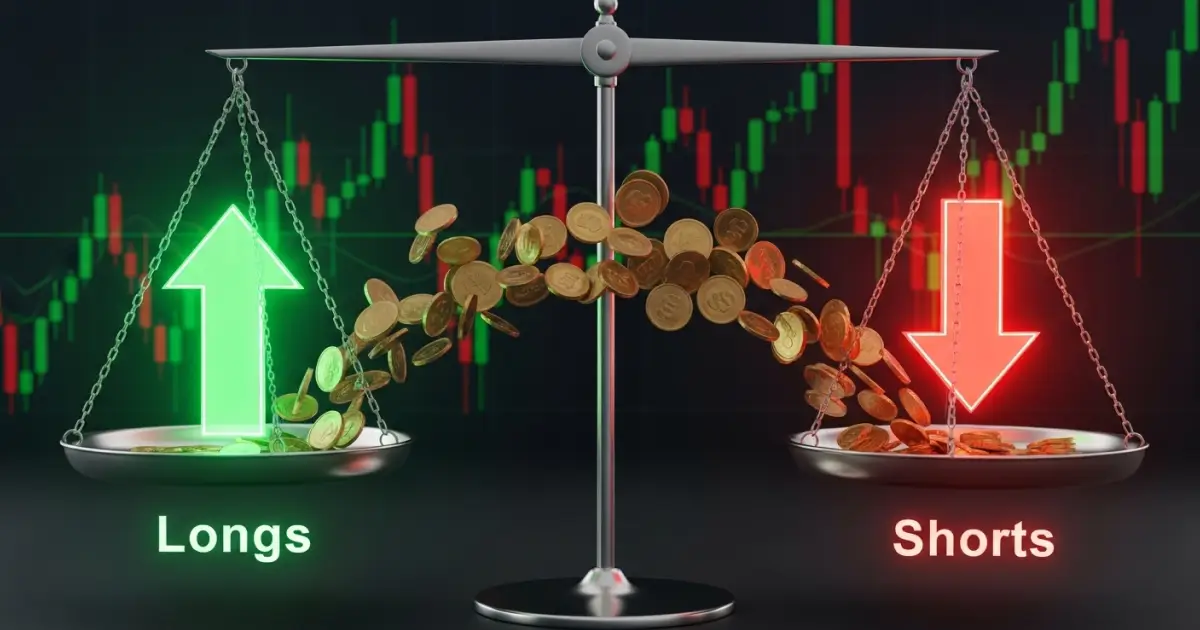
In simple terms, a positive funding rate means longs pay shorts. A negative funding rate means shorts pay longs. Understanding this difference helps traders plan better hedges, estimate net profitability, and avoid unexpected costs.
This guide explains how positive and negative funding rates work, how they affect hedging profitability, and how traders can monitor funding rates on Bitunix.
What Are Funding Rates?
Funding rates are periodic payments exchanged between long and short traders in perpetual futures markets. They help keep the perpetual futures price close to the underlying spot price.
Perpetual futures do not have an expiry date. Because there is no fixed settlement date, the contract price can move above or below the spot price. Funding rates help reduce this gap by encouraging balance between long and short demand.
Funding is not usually paid directly to the exchange. Instead, it is exchanged between traders who hold long and short positions.
Positive vs Negative Funding Rates
The direction of the funding rate determines who pays and who receives.
Funding Rate
Who Pays
Who Receives
Common Market Meaning
Positive Funding
Long traders
Short traders
More demand for longs
Negative Funding
Short traders
Long traders
More demand for shorts
When funding is positive, traders holding long positions pay traders holding short positions. When funding is negative, traders holding short positions pay traders holding long positions.
This matters for hedgers because the hedge position may either earn funding or pay funding while it is open.
Why Funding Rates Exist
Funding rates exist because perpetual futures have no expiration date. Traditional futures eventually settle or expire, which helps bring the futures price closer to the spot price. Perpetual futures need another mechanism to create that alignment.
If the perpetual futures price trades above the spot price, funding often turns positive. This makes long positions more expensive and rewards shorts, encouraging the market to rebalance.
If the perpetual futures price trades below the spot price, funding often turns negative. This makes short positions more expensive and rewards longs, again encouraging the contract price to move closer to spot.
How Often Are Funding Payments Made on Bitunix?
On Bitunix, funding is usually charged every 8 hours at 00:00, 08:00, and 16:00 UTC. However, the funding time may be adjusted for certain trading pairs depending on market conditions.
Users only pay or receive funding if the position is open at the funding time. If a position is closed before the funding fee is charged, no funding fee is payable for that interval.
This is important for hedging because holding time directly affects funding cost or funding income.
Positive Funding Rates Explained
A positive funding rate usually happens when the perpetual futures price is above the spot price. This often occurs when more traders are taking long positions and market sentiment is bullish.
When funding is positive:
Long traders pay funding.
Short traders receive funding.
Long hedges become more expensive.
Short hedges may become more profitable.
Positive Funding Example
Assume the following:
Item
Value
BTC Spot Price
$81,000
BTC Perpetual Price
$81,200
Funding Rate
0.0002
Short Futures Position
$100,000
Funding received by the short position:
$100,000 × 0.02% = $20
In this example, the short trader receives $20 at the funding interval if the position is open when funding is charged.
For a hedger who is holding BTC spot and shorting BTC perpetual futures, positive funding can help offset holding risk and improve hedge profitability.
Negative Funding Rates Explained
A negative funding rate usually happens when the perpetual futures price is below the spot price. This often occurs when more traders are taking short positions and market sentiment is bearish.
When funding is negative:
Short traders pay funding.
Long traders receive funding.
Short hedges become more expensive.
Long hedges may become more profitable.
Negative Funding Example
Assume the following:
Item
Value
ETH Spot Price
$3,000
ETH Perpetual Price
$2,950
Funding Rate
-0.01%
Long Futures Position
$50,000
Funding received by the long position:
$50,000 × 0.01% = $5
In this example, the long trader receives $5 at the funding interval if the position is open when funding is charged.
For a trader using a long hedge, negative funding can reduce holding cost or create additional income.
How Funding Rates Affect Hedging Profitability
Hedging profitability depends on more than price movement. Funding rates can change the final result.
A hedge may protect the portfolio but still become costly if the trader pays funding repeatedly. On the other hand, a hedge may become more efficient if the trader receives funding while the hedge is open.
Short Hedge With Positive Funding
A short hedge is commonly used by traders who already own crypto and want protection against downside risk.
For example, a trader owns BTC in spot and opens a short BTC perpetual futures position to hedge against a possible price drop.
If funding is positive, the short futures position receives funding. This can improve the hedge because the trader receives payments while staying protected.
This setup can be useful when:
The trader holds spot BTC.
The market is bullish or overheated.
Long demand is high.
Funding is positive.
The trader wants downside protection without selling spot BTC.
Short Hedge With Negative Funding
A short hedge becomes more expensive when funding is negative because shorts pay longs.
This can reduce hedging profitability, especially if the position stays open across multiple funding intervals.
For example, a trader holds BTC spot and shorts BTC perpetual futures. If funding is negative for several days, the trader keeps paying funding while maintaining the hedge.
This may still be acceptable if the hedge protects against a larger price decline, but the cost must be included in the strategy.
Long Hedge With Negative Funding
A long hedge may be used by traders who want upside exposure while holding stablecoins or reducing spot exposure.
If funding is negative, the long futures position receives funding. This can make the hedge more attractive because the trader gains upside exposure and receives funding payments.
This setup may be useful when:
The trader holds stablecoins.
The market is bearish or heavily shorted.
Funding is negative.
The trader wants upside exposure without buying spot immediately.
Long Hedge With Positive Funding
A long hedge becomes more expensive when funding is positive because longs pay shorts.
This can reduce profitability if the long hedge is held for many funding periods. A trader expecting a price increase may still choose to hold the long position, but funding cost should be included in the expected return.
Funding Cost Formula
A simplified funding calculation is:
Funding Payment = Position Value × Funding Rate
If the trader is on the receiving side, this becomes funding income.
If the trader is on the paying side, this becomes funding cost.
Example:
Item
Value
Position Value
100,000 USDT
Funding Rate
0.03%
Funding payment:
100,000 × 0.03% = 30 USDT
If the trader pays funding, the cost is 30 USDT.
If the trader receives funding, the income is 30 USDT.
Daily Funding Cost Example
Funding can look small for one interval, but it can add up.
Assume:
Item
Value
Position Value
100,000 USDT
Funding Rate
0.02%
Funding Intervals Per Day
3
Funding per interval:
100,000 × 0.02% = 20 USDT
Daily funding:
20 × 3 = 60 USDT
If this continues for 7 days:
60 × 7 = 420 USDT
This shows why hedgers should monitor funding before holding perpetual futures positions for long periods.
Funding Rates as a Market Sentiment Signal
Funding rates can also help traders understand market sentiment.
Positive funding may suggest:
More demand for longs
Bullish sentiment
Perpetual price trading above spot
Possible overcrowded long positioning
Negative funding may suggest:
More demand for shorts
Bearish sentiment
Perpetual price trading below spot
Possible overcrowded short positioning
However, funding rates should not be used alone. A high positive funding rate does not guarantee a market top, and a negative funding rate does not guarantee a reversal. Strong trends can continue for longer than expected.
Funding Rates and Basis Trading
Some traders use funding rates in basis or cash-and-carry-style strategies. For example, a trader may hold spot BTC and short BTC perpetual futures to collect positive funding while reducing directional exposure.
This type of strategy may look simple, but it has risks:
Funding rates can flip.
Spot and futures prices can move differently.
Slippage can reduce returns.
Trading fees can reduce profit.
Liquidation risk can still exist on the futures leg.
Exchange and custody risks remain.
Funding strategies should be tested carefully before using large capital.
Risks of Funding Rate Strategies
Funding rates can improve hedging profitability, but they also introduce risks.
Risks and Their Explanations:
Funding Flip Risk — Funding can change from positive to negative or negative to positive
Holding Cost — Repeated payments can reduce profit over time
Leverage Risk — Futures positions may face liquidation if leverage is too high
Slippage — Entry and exit prices may differ from expectations
Liquidity Risk — Some pairs may have weaker order book depth
Overcrowded Trade Risk — Many traders may enter the same funding strategy
Fees — Trading fees can reduce net profitability
Volatility — Sharp moves can overwhelm funding income
A funding rate strategy should always include risk management.
How to Use Funding Rates in a Hedging Strategy
Funding rates can help traders decide whether a hedge is worth holding.
Check Funding Before Opening the Hedge
Before opening a perpetual futures hedge, check whether you will likely pay or receive funding.
If you are opening a short hedge, positive funding can be beneficial because shorts receive funding. If you are opening a long hedge, negative funding can be beneficial because longs receive funding.
Estimate Funding Cost
Calculate expected funding cost using position value and funding rate. If the hedge will stay open for several days, multiply the expected funding cost across multiple intervals.
For example, if funding is charged three times a day, even a small funding rate can become meaningful over a full week.
Compare Funding Cost With Hedge Benefit
A hedge may still be useful even if it costs money, but the protection should justify the cost.
For example, paying funding may be acceptable if the hedge protects against a major downside move. However, if the hedge cost is too high compared with the risk being reduced, the strategy may need adjustment.
Monitor Funding Changes
Funding rates are not fixed. A profitable funding setup can change quickly if market sentiment shifts.
A trader receiving funding today may start paying funding later if the market changes direction or positioning becomes crowded.
Avoid Excessive Leverage
Funding income can be wiped out by liquidation if leverage is too high. Hedgers should use leverage carefully and keep liquidation price at a safe distance from the market price.
Use Stop Loss and Risk Controls
A hedge should still have risk controls, especially if it is not fully delta-neutral.
Stop loss orders, position sizing, and margin monitoring can help prevent funding strategies from becoming uncontrolled losses.
How Bitunix Helps Traders Monitor Funding Rates
Bitunix provides funding rate information for perpetual futures contracts. Users can pay or receive funding depending on position direction and funding rate, and funding is usually charged every 8 hours at 00:00, 08:00, and 16:00 UTC.
Bitunix futures features may help traders manage funding-related strategies through:
Real-time funding rate display
Futures contract pages
Long and short position tools
Cross and isolated margin modes
Take-profit and stop-loss settings
Leverage adjustment
Futures calculators where available
Mobile trading access
Users should always check the live funding rate on the specific contract before opening or holding a position.
Practical Funding Rate Checklist
Before using funding rates in a hedge, ask:
Is funding positive or negative?
Am I on the paying side or receiving side?
How large is my position value?
How many funding intervals will I hold through?
What is the estimated funding cost or income?
Can funding flip while I hold the hedge?
Are fees and slippage included?
Is liquidation risk controlled?
Does the hedge still make sense if funding changes?
Is my hedge size correct?
This checklist helps traders treat funding as part of net profitability, not as an afterthought.
Conclusion
Funding rates are a key part of perpetual futures trading. Positive funding means long traders pay short traders. Negative funding means short traders pay long traders. For hedgers, this can directly affect profitability.
A short hedge may become more profitable when funding is positive because the short position receives funding. A long hedge may become more profitable when funding is negative because the long position receives funding. However, funding rates can change quickly, and repeated funding payments can become expensive when the trader is on the paying side.
On Bitunix, funding is usually charged every 8 hours at 00:00, 08:00, and 16:00 UTC, and users only pay or receive funding if the position is open at the funding time. Traders should check the live funding rate, estimate funding cost, manage leverage, and include funding in every hedging plan.
FAQ
What is a funding rate in crypto futures?
A funding rate is a periodic payment exchanged between long and short traders in perpetual futures. It helps keep the perpetual contract price close to the spot price.
What does a positive funding rate mean?
A positive funding rate means long traders pay short traders. It often happens when the perpetual futures price trades above the spot price.
What does a negative funding rate mean?
A negative funding rate means short traders pay long traders. It often happens when the perpetual futures price trades below the spot price.
How do funding rates affect hedging?
Funding rates affect the cost or income of holding a futures hedge. A hedge can become more profitable if it receives funding, or more expensive if it pays funding.
When does a short hedge benefit from funding?
A short hedge benefits when funding is positive because short traders receive funding from long traders.
When does a long hedge benefit from funding?
A long hedge benefits when funding is negative because long traders receive funding from short traders.
How often is funding paid on Bitunix?
Funding is usually charged every 8 hours at 00:00, 08:00, and 16:00 UTC. Timing may change for some pairs depending on market conditions.
Do I pay funding if I close before the funding time?
No. Users only pay or receive funding if the position is open at the funding time. If the position is closed before funding is charged, no funding fee is payable for that interval.
Can funding rates make a hedge profitable without price movement?
Yes. If a hedge receives funding, it may generate income even if price does not move much. However, fees, slippage, leverage risk, and funding changes must still be considered.
Are funding rate strategies risk-free?
No. Funding strategies are not risk-free. Funding can flip, markets can move sharply, fees and slippage can reduce returns, and leveraged futures positions can face liquidation.
Glossary
Funding Rate: A periodic payment exchanged between long and short traders in perpetual futures.
Positive Funding: A funding condition where long traders pay short traders.
Negative Funding: A funding condition where short traders pay long traders.
Perpetual Futures: Futures contracts with no expiry date that use funding rates to stay close to spot prices.
Spot Price: The current market price of an asset in the spot market.
Perpetual Price: The price of the perpetual futures contract.
Long Position: A position that profits when price rises.
Short Position: A position that profits when price falls.
Hedging: A strategy used to reduce risk by opening a position that offsets another exposure.
Short Hedge: A hedge using a short futures position to protect against downside risk.
Long Hedge: A hedge using a long futures position to gain upside exposure or offset short-side risk.
Basis: The difference between spot price and futures price.
Funding Income: Funding received by a trader on the receiving side of the funding payment.
Funding Cost: Funding paid by a trader on the paying side of the funding payment.
Leverage: A tool that increases market exposure using margin. It can increase both gains and losses.
Margin: Collateral used to open and maintain a futures position.
Liquidation: Forced closure of a leveraged position when margin becomes insufficient.
Slippage: The difference between expected execution price and actual execution price.
Liquidity: The ease of buying or selling an asset without causing a major price change.
Delta-Neutral: A strategy designed to reduce directional price exposure by balancing long and short positions.
About Bitunix
Bitunix is a global cryptocurrency derivatives exchange trusted by over 5 million users across more than 100 countries. The platform is committed to providing a transparent, compliant, and secure trading environment for every user. Bitunix offers a fast registration process and a user-friendly verification system supported by mandatory KYC to ensure safety and compliance. With global standards of protection through Proof of Reserves (POR) and the Bitunix Care Fund, Bitunix prioritizes user trust and fund security. The K-Line Ultra chart system delivers a seamless trading experience for both beginners and advanced traders, while leverage of up to 200x and deep liquidity make Bitunix one of the most dynamic platforms in the market.
Disclaimer: Trading digital assets involves risk and may result in the loss of capital. Always do your own research. Terms, conditions, and regional restrictions may apply.l restrict
Table Of Contents
Ready To Place Your Next Trade?
Choose a market, set your order, and manage risk in one place.
AG | Content Manager | Bitunix
May 27, 2026 No Comments
Learn how stablecoin regulation in 2026, the GENIUS Act, AML rules, DeFi yield limits, and stablecoin payments may affect crypto traders and everyday users.
AG | Content Manager | Bitunix
May 27, 2026 No Comments
Discover which Layer 1 blockchains will survive 2026 and learn how traders can park liquidity long-term across the best L1 crypto networks with Bitunix tools.